THE ADVENTURE COLLECTIVE® · Independent discovery and booking for outdoor travel

Spend a focused morning at San José del Cabo's estuary, where guided walks reveal endemic species like Xantus's Hummingbird and Belding's yellowthroat. This 2.5-hour tour blends science, close-up birding, and practical conservation work in a compact coastal refuge.
Spend a focused morning at San José del Cabo's estuary, where guided walks reveal endemic species like Xantus's Hummingbird and Belding's yellowthroat. This 2.5-hour tour blends science, close-up birding, and practical conservation work in a compact coastal refuge.
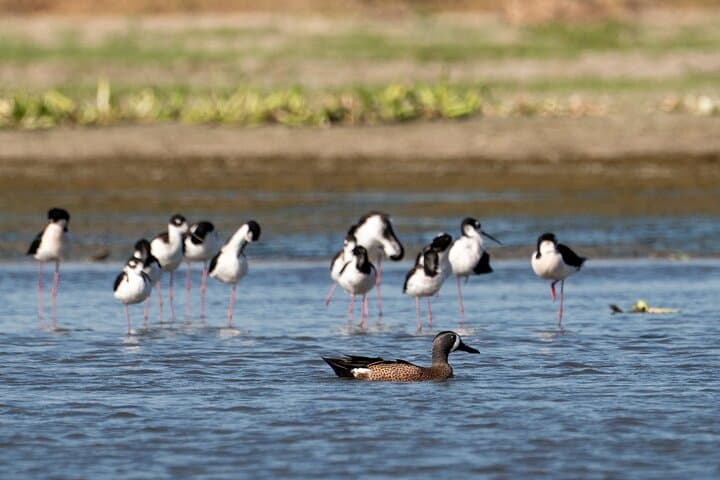
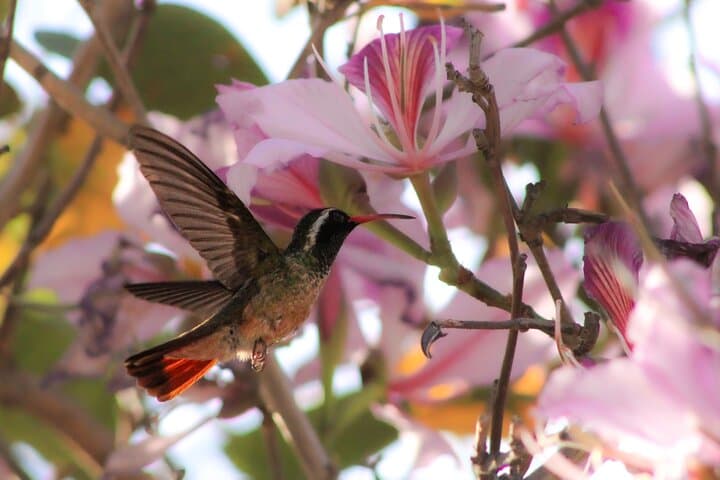
A hush settles over the estuary before the sun fully breaks the horizon; the water holds a pale silver that the herons and egrets seem to test with slow, precise steps. On a guided morning at San José del Cabo's bird sanctuary, binoculars become instruments of translation — a blur resolves into the copper throat of a Xantus's Hummingbird, the stiff silhouette of a gray thrasher, then the quick yellow flash of a Belding's yellowthroat. The guide's voice is quiet but exact, pointing out field marks while encouraging observers to log sightings into ongoing citizen-science projects.
Verified experiences and guided adventures in the surrounding area.
Operated by Anda Expeditions · San José del Cabo, Baja California Sur
A hush settles over the estuary before the sun fully breaks the horizon; the water holds a pale silver that the herons and egrets seem to test with slow, precise steps. On a guided morning at San José del Cabo's bird sanctuary, binoculars become instruments of translation — a blur resolves into the copper throat of a Xantus's Hummingbird, the stiff silhouette of a gray thrasher, then the quick yellow flash of a Belding's yellowthroat. The guide's voice is quiet but exact, pointing out field marks while encouraging observers to log sightings into ongoing citizen-science projects.
This estuary sits where desert meets the Sea of Cortez, a geomorphic hinge shaped by seasonal runoff and tidal influence. Over centuries these salt flats and channels have funneled migration corridors, turning the lagoon into a reliable stopover for shorebirds and a refuge for regionally endemic species. Indigenous communities and later ranching settlements recognized the estuary's value; today, conservation groups work alongside local authorities to balance tourism, fishing, and habitat protection.
The experience is both natural history and cultural contact. Guides often share how seasonal rains swell the arroyo, reshaping channels and the distribution of vegetation, and how the site's designation as a protected area has helped vulnerable populations recover. For travelers, the sanctuary is less about a single sighting than about the rhythm of the place — the way the tide rearranges sandbars, the insistence of a kestrel hovering like punctuation, the way migratory flocks sweep in and out as if on schedule.
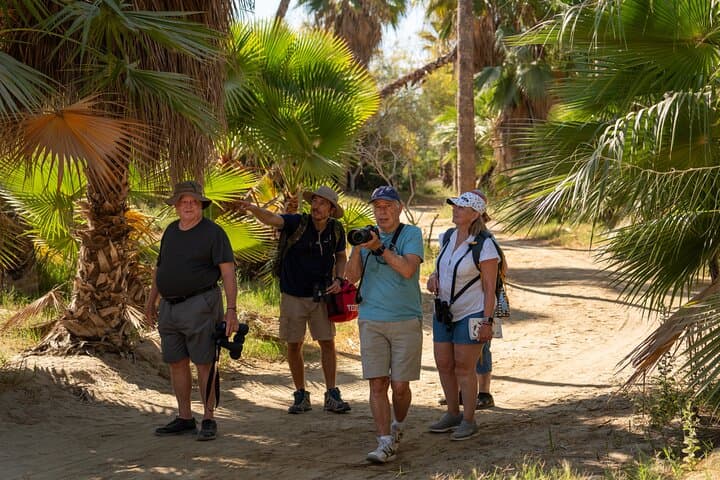
Practicalities matter: the tour runs roughly two and a half hours and is accessible to most visitors, with short, flat walks across packed earth and boardwalk. Mornings are best — light levels are kinder for spotting and birds are most active before midday heat builds. Bring sun protection, quiet shoes, and a refillable water bottle; guides supply binoculars and a field guide, plus bottled water and snacks. Expect small groups and the chance to contribute observations to scientific databases — your notes help ongoing conservation.
For photographers, low-angle light in the first hour highlights plumage and creates long reflections; but patience and silence are the real tools. Respect local rules: stay on paths, keep voices low, and follow the guide's positioning so birds aren't flushed. Whether you arrive as a casual nature-lover or an experienced birder, the sanctuary delivers a concentrated lesson in the ecology of Baja's coast and an opportunity to be a small, useful part of its stewardship.
easy.
2–3 hours.
Suitable for most fitness levels; involves short, flat walks and brief standing periods.
The guided birding tour runs approximately 150 minutes (about 2.5 hours).
Yes—this tour is designed for all fitness and experience levels; guides teach identification and observation techniques.
Yes; the operator provides binoculars and a field guide, though many participants prefer to bring their own optics.
Expect hummingbirds (including Xantus's), herons, egrets, shorebirds, gray thrasher, and Belding's yellowthroat, plus seasonal migrants.
Light, neutral-colored clothing, comfortable walking shoes, sun protection, and a light layer for early-morning breezes.
Yes—families are welcome; small children should be supervised and able to walk short distances or be carried.
The estuary has long been a seasonal waypoint for Indigenous peoples and later ranching communities; recent protection efforts recognize its role on Pacific flyways.
Participation supports local monitoring programs—guides log sightings to scientific databases, and staying on paths helps protect fragile marsh vegetation.
Anda Expeditions operates guided outdoor trips and adventures with an emphasis on safety, stewardship, and memorable experiences.

A hush settles over the estuary before the sun fully breaks the horizon; the water holds a pale silver that the herons and egrets seem to test with slow, precise steps. On a guided morning at San José del Cabo's bird sanctuary, binoculars become instruments of translation — a blur resolves into the copper throat of a Xantus's Hummingbird, the stiff silhouette of a gray thrasher, then the quick yellow flash of a Belding's yellowthroat. The guide's voice is quiet but exact, pointing out field marks while encouraging observers to log sightings into ongoing citizen-science projects.
A hush settles over the estuary before the sun fully breaks the horizon; the water holds a pale silver that the herons and egrets seem to test with slow, precise steps. On a guided morning at San José del Cabo's bird sanctuary, binoculars become instruments of translation — a blur resolves into the copper throat of a Xantus's Hummingbird, the stiff silhouette of a gray thrasher, then the quick yellow flash of a Belding's yellowthroat. The guide's voice is quiet but exact, pointing out field marks while encouraging observers to log sightings into ongoing citizen-science projects.
This estuary sits where desert meets the Sea of Cortez, a geomorphic hinge shaped by seasonal runoff and tidal influence. Over centuries these salt flats and channels have funneled migration corridors, turning the lagoon into a reliable stopover for shorebirds and a refuge for regionally endemic species. Indigenous communities and later ranching settlements recognized the estuary's value; today, conservation groups work alongside local authorities to balance tourism, fishing, and habitat protection.
The experience is both natural history and cultural contact. Guides often share how seasonal rains swell the arroyo, reshaping channels and the distribution of vegetation, and how the site's designation as a protected area has helped vulnerable populations recover. For travelers, the sanctuary is less about a single sighting than about the rhythm of the place — the way the tide rearranges sandbars, the insistence of a kestrel hovering like punctuation, the way migratory flocks sweep in and out as if on schedule.
Practicalities matter: the tour runs roughly two and a half hours and is accessible to most visitors, with short, flat walks across packed earth and boardwalk. Mornings are best — light levels are kinder for spotting and birds are most active before midday heat builds. Bring sun protection, quiet shoes, and a refillable water bottle; guides supply binoculars and a field guide, plus bottled water and snacks. Expect small groups and the chance to contribute observations to scientific databases — your notes help ongoing conservation.
For photographers, low-angle light in the first hour highlights plumage and creates long reflections; but patience and silence are the real tools. Respect local rules: stay on paths, keep voices low, and follow the guide's positioning so birds aren't flushed. Whether you arrive as a casual nature-lover or an experienced birder, the sanctuary delivers a concentrated lesson in the ecology of Baja's coast and an opportunity to be a small, useful part of its stewardship.