THE ADVENTURE COLLECTIVE® · Independent discovery and booking for outdoor travel

Walk from the intimate alleys of Castello into the glittering interior of Saint Mark’s Basilica on a 2.5-hour guided tour. Expect Byzantine mosaics, Doge-era history, and practical tips for navigating Venice’s streets and tides.
Walk from the intimate alleys of Castello into the glittering interior of Saint Mark’s Basilica on a 2.5-hour guided tour. Expect Byzantine mosaics, Doge-era history, and practical tips for navigating Venice’s streets and tides.
The morning air in Venice moves like a slow current; it slips under arcades and through the narrow ‘‘calli’’ and finds you standing before the eastern façade of Saint Mark’s Square. On this guided walking tour the city first presents itself at ground level—cobbled alleys, leaning walls, the hush of early boats—then opens into the basilica’s glittering interior, where light pools off tesserae and every surface seems to hold a story.
Verified experiences and guided adventures in the surrounding area.
Operated by Venice Events srl · Venice, Veneto
The morning air in Venice moves like a slow current; it slips under arcades and through the narrow ‘‘calli’’ and finds you standing before the eastern façade of Saint Mark’s Square. On this guided walking tour the city first presents itself at ground level—cobbled alleys, leaning walls, the hush of early boats—then opens into the basilica’s glittering interior, where light pools off tesserae and every surface seems to hold a story.
The route begins at Calle larga de l’Ascension, a stone-flagged artery behind the Correr Museum, and winds through the residential Castello quarter before returning to Saint Mark’s to enter the Golden Basilica. Castello still carries the imprint of a republic built on trade: Gothic palaces rubbed by salt air, small campi where merchants once bargained, and a network of bridges bridging private lives and public spectacle. The Basilica itself is a surviving fragment of Venice’s Byzantine ambition—mosaics, spolia columns, and marble floors salvaged and reworked from across the Mediterranean when Venice stood as a crossroads between east and west.
Geologically the city is a patchwork of timber piles and alluvial silt; architecturally, it’s a city that learned to stand on water. The mosaics inside Saint Mark’s, many dating to the 11th and 12th centuries, reflect not only religious art but also the mercantile reach of Venice—materials and motifs arriving from Constantinople, Syria, and beyond. Culturally, the tour threads civic power and daily life: you’ll pass the Doge’s Palace, the renaissance clock tower, Campo Santa Maria Formosa and the equestrian statue of Bartolomeo Colleoni—each site offering a concrete link to the city’s political and artistic history.
Practical details matter here. The combined tour runs about 2.5 hours with a skip-the-line entrance to Saint Mark’s at roughly 10:45 a.m. Knees and shoulders must be covered inside the basilica; backpacks and large bags are not permitted. The tour operates in English, French, Spanish, or German and accommodates up to 20 travelers. High tides, religious ceremonies, or official events can close the basilica with little notice—plan a buffer day in your itinerary if this visit is the centerpiece of your trip.
For an ideal morning: start early, carry a small water bottle, wear comfortable, non-slip shoes for uneven stone and occasional wet steps, and stow valuables in a secure cross-body bag for canal-side crowds. Listen for the guide’s rhythm—history narrated beside narrow canals, then the silence inside the basilica where gold mosaics seem to move when sunlight shifts. The tour is not an abstract lecture but a paced encounter: landscape, politics, and craft converging in public squares and sacred spaces. It’s Venice in human scale—wet, stubborn, and luminous.
easy.
2–3 hours.
Comfortable walking fitness for 2–3 hours on flat but uneven cobblestones; frequent short pauses.
Meet 15 minutes before departure at Calle larga de l’Ascension behind the Correr Museum; look for the TURIVE assistant near the San Marco post office.
Yes—skip-the-line entry to the basilica interior is included in this combined tour, though closures for ceremonies can occur.
Children under 6 may require ID to verify age; strollers are allowed but the basilica has steps and limited stroller access inside.
No—the itinerary includes narrow alleys, bridges, and steps; the basilica visit is not guaranteed to be accessible for wheelchairs.
Live commentary is provided in English, French, Spanish, or German, with a personal audio system and headset for clarity.
If Saint Mark’s is closed due to ceremony or high water, guides will adjust the route and provide historical commentary from outside; refunds are subject to the operator’s policy.
Saint Mark’s Basilica became Venice’s ducal chapel in the 9th–11th centuries; much of the gold mosaic work reflects Byzantine artisanship and trade links with Constantinople.
Venice faces overtourism and rising tides; support small local businesses, avoid single-use plastics, and follow on-site rules to reduce wear on historic fabric.
Venice Events srl operates guided outdoor trips and adventures with an emphasis on safety, stewardship, and memorable experiences.
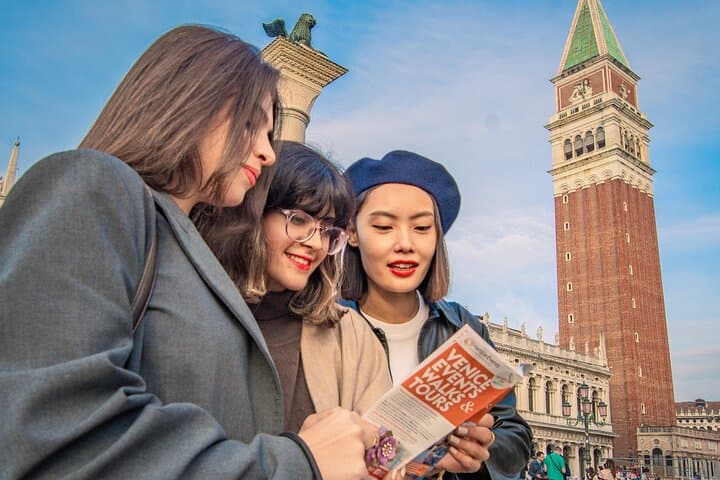
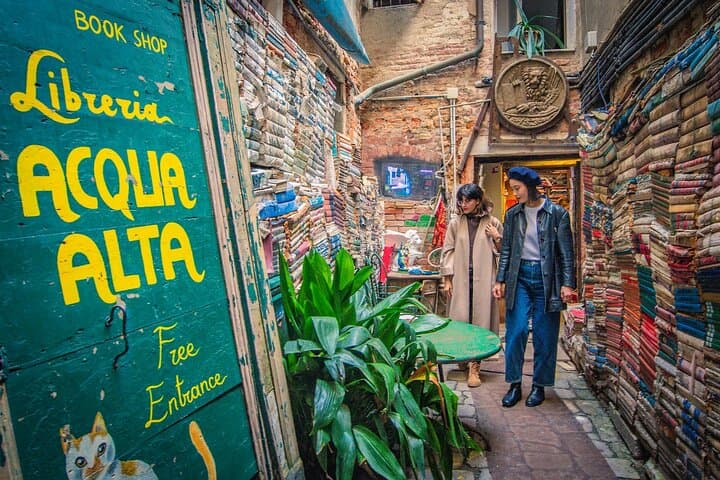

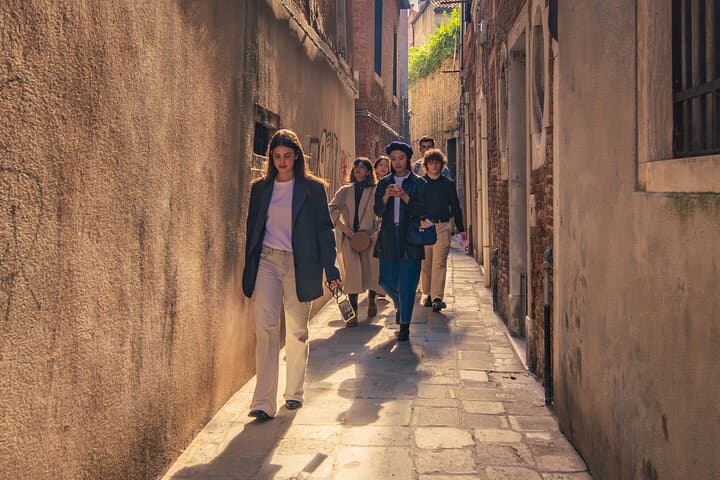
The morning air in Venice moves like a slow current; it slips under arcades and through the narrow ‘‘calli’’ and finds you standing before the eastern façade of Saint Mark’s Square. On this guided walking tour the city first presents itself at ground level—cobbled alleys, leaning walls, the hush of early boats—then opens into the basilica’s glittering interior, where light pools off tesserae and every surface seems to hold a story.
The morning air in Venice moves like a slow current; it slips under arcades and through the narrow ‘‘calli’’ and finds you standing before the eastern façade of Saint Mark’s Square. On this guided walking tour the city first presents itself at ground level—cobbled alleys, leaning walls, the hush of early boats—then opens into the basilica’s glittering interior, where light pools off tesserae and every surface seems to hold a story.
The route begins at Calle larga de l’Ascension, a stone-flagged artery behind the Correr Museum, and winds through the residential Castello quarter before returning to Saint Mark’s to enter the Golden Basilica. Castello still carries the imprint of a republic built on trade: Gothic palaces rubbed by salt air, small campi where merchants once bargained, and a network of bridges bridging private lives and public spectacle. The Basilica itself is a surviving fragment of Venice’s Byzantine ambition—mosaics, spolia columns, and marble floors salvaged and reworked from across the Mediterranean when Venice stood as a crossroads between east and west.
Geologically the city is a patchwork of timber piles and alluvial silt; architecturally, it’s a city that learned to stand on water. The mosaics inside Saint Mark’s, many dating to the 11th and 12th centuries, reflect not only religious art but also the mercantile reach of Venice—materials and motifs arriving from Constantinople, Syria, and beyond. Culturally, the tour threads civic power and daily life: you’ll pass the Doge’s Palace, the renaissance clock tower, Campo Santa Maria Formosa and the equestrian statue of Bartolomeo Colleoni—each site offering a concrete link to the city’s political and artistic history.
Practical details matter here. The combined tour runs about 2.5 hours with a skip-the-line entrance to Saint Mark’s at roughly 10:45 a.m. Knees and shoulders must be covered inside the basilica; backpacks and large bags are not permitted. The tour operates in English, French, Spanish, or German and accommodates up to 20 travelers. High tides, religious ceremonies, or official events can close the basilica with little notice—plan a buffer day in your itinerary if this visit is the centerpiece of your trip.
For an ideal morning: start early, carry a small water bottle, wear comfortable, non-slip shoes for uneven stone and occasional wet steps, and stow valuables in a secure cross-body bag for canal-side crowds. Listen for the guide’s rhythm—history narrated beside narrow canals, then the silence inside the basilica where gold mosaics seem to move when sunlight shifts. The tour is not an abstract lecture but a paced encounter: landscape, politics, and craft converging in public squares and sacred spaces. It’s Venice in human scale—wet, stubborn, and luminous.