THE ADVENTURE COLLECTIVE® · Independent discovery and booking for outdoor travel

Leave the Gold Coast for a day in Byron Bay: a practical transfer that drops you at Cape Byron Lighthouse and the town’s beaches and cafes. This is a transport service rather than a guided tour—perfect for independent explorers who want a hassle‑free day trip.
Leave the Gold Coast for a day in Byron Bay: a practical transfer that drops you at Cape Byron Lighthouse and the town’s beaches and cafes. This is a transport service rather than a guided tour—perfect for independent explorers who want a hassle‑free day trip.
A morning bus leaves Surfers Paradise before the sun fully warms the Pacific. The coach hums north along the coastal highway, and by the time you crest the last headland Byron Bay opens up—a bright town, a working lighthouse perched on weathered cliffs, and a shoreline that dares you to slow down.
Verified experiences and guided adventures in the surrounding area.
Operated by JPT Tour Group (Australian Day Tours) · Byron Bay, New South Wales
A morning bus leaves Surfers Paradise before the sun fully warms the Pacific. The coach hums north along the coastal highway, and by the time you crest the last headland Byron Bay opens up—a bright town, a working lighthouse perched on weathered cliffs, and a shoreline that dares you to slow down.
Cape Byron Lighthouse, built at the turn of the 20th century, marks Australia’s easternmost point and sits on ancient volcanic headland rock. The town that grew below it evolved from a 19th‑century coastal settlement into the relaxed, alternative community known today for surf breaks, cafes and markets. Local Arakwal custodians maintain cultural connections to the land and you’ll see conservation signs and boardwalks protecting fragile dunes.
This offering is a transfer rather than a guided tour: expect a 7–8 hour round trip with roughly 1.5–2 hours driving each way (about 90 km). Typical stops are a short walk to the lighthouse (3 km northeast of the township) and free time in Byron town for beach strolls, lunch and shopping (meals at own expense). Pack for direct sun, exposed headlands and variable coastal winds; the lighthouse walk involves uneven steps and short climbs.
Timing matters—pickups start around 7:55am in Surfers Paradise with an afternoon return (commonly departing town at 3:00pm). Bring water, sun protection and comfortable shoes. For photographers, early light on the headland is best; if visiting in winter, scan the horizon for migrating whales. The transfer delivers access and time, leaving exploration and pace up to you.
easy.
7–8 hours.
Light fitness required—able to do short walks and climb stairs; not strenuous but expect standing and brief hikes.
This product is a transfer only—transport to Byron Bay with scheduled stops but no guided commentary; time in town is independent.
Pickups typically start at Novotel Surfers Paradise around 7:55am; the coach usually departs Byron Bay for the return around 3:00pm—confirm exact times with the operator.
No—meals are at your own expense; the town has cafes, pubs and takeaway options near the beach and main street.
Yes—there’s a short walk to Cape Byron Lighthouse and public beaches for swimming, but swim between flags and follow local surf safety advice.
Cape Byron Lighthouse began operation in 1901 and stands on headland rock formed by ancient volcanic activity; the area has long significance for the Arakwal people.
Dune boardwalks and signage protect fragile vegetation; visitors are encouraged to stick to paths and respect indigenous sites and local wildlife.
JPT Tour Group (Australian Day Tours) operates guided outdoor trips and adventures with an emphasis on safety, stewardship, and memorable experiences.
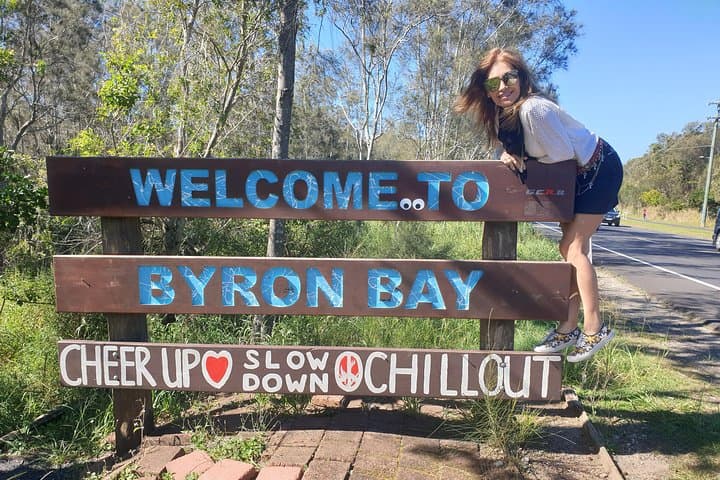

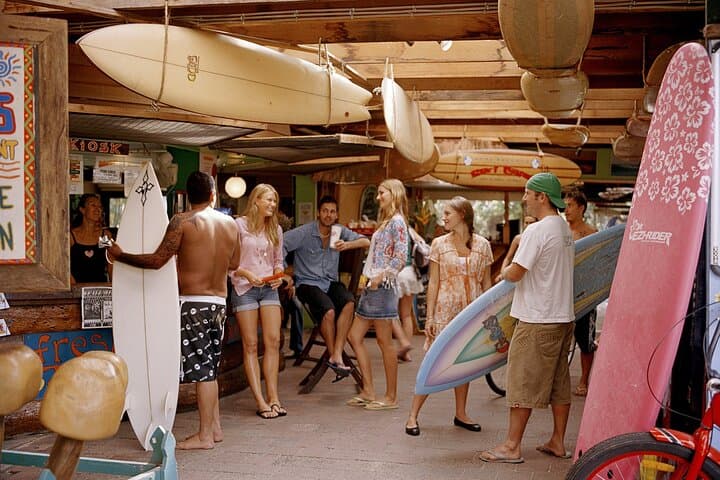
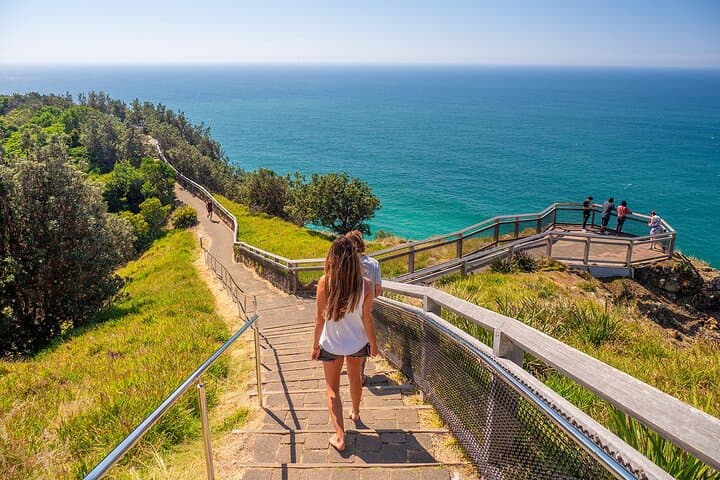
A morning bus leaves Surfers Paradise before the sun fully warms the Pacific. The coach hums north along the coastal highway, and by the time you crest the last headland Byron Bay opens up—a bright town, a working lighthouse perched on weathered cliffs, and a shoreline that dares you to slow down.
A morning bus leaves Surfers Paradise before the sun fully warms the Pacific. The coach hums north along the coastal highway, and by the time you crest the last headland Byron Bay opens up—a bright town, a working lighthouse perched on weathered cliffs, and a shoreline that dares you to slow down.
Cape Byron Lighthouse, built at the turn of the 20th century, marks Australia’s easternmost point and sits on ancient volcanic headland rock. The town that grew below it evolved from a 19th‑century coastal settlement into the relaxed, alternative community known today for surf breaks, cafes and markets. Local Arakwal custodians maintain cultural connections to the land and you’ll see conservation signs and boardwalks protecting fragile dunes.
This offering is a transfer rather than a guided tour: expect a 7–8 hour round trip with roughly 1.5–2 hours driving each way (about 90 km). Typical stops are a short walk to the lighthouse (3 km northeast of the township) and free time in Byron town for beach strolls, lunch and shopping (meals at own expense). Pack for direct sun, exposed headlands and variable coastal winds; the lighthouse walk involves uneven steps and short climbs.
Timing matters—pickups start around 7:55am in Surfers Paradise with an afternoon return (commonly departing town at 3:00pm). Bring water, sun protection and comfortable shoes. For photographers, early light on the headland is best; if visiting in winter, scan the horizon for migrating whales. The transfer delivers access and time, leaving exploration and pace up to you.