THE ADVENTURE COLLECTIVE® · Independent discovery and booking for outdoor travel

Skim crystal bays and limestone cliffs on a 60-minute seaplane flight over Coron. This short aerial tour packs Kayangan Lake, Twin Lagoons, Black Island and Calauit’s sanctuary into one unforgettable loop.
Skim crystal bays and limestone cliffs on a 60-minute seaplane flight over Coron. This short aerial tour packs Kayangan Lake, Twin Lagoons, Black Island and Calauit’s sanctuary into one unforgettable loop.
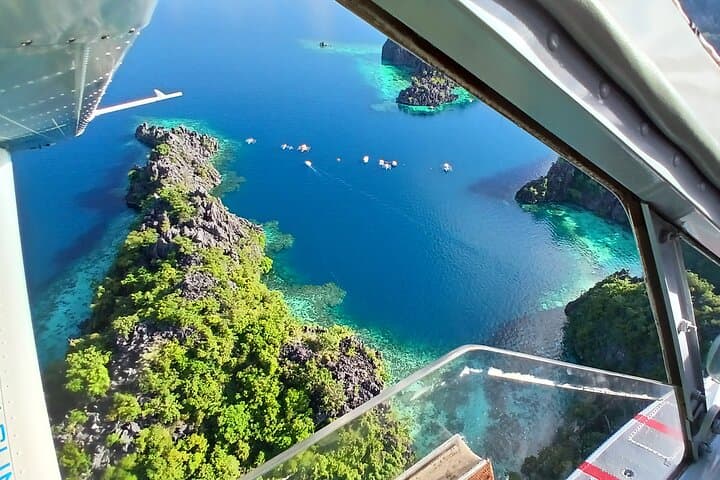
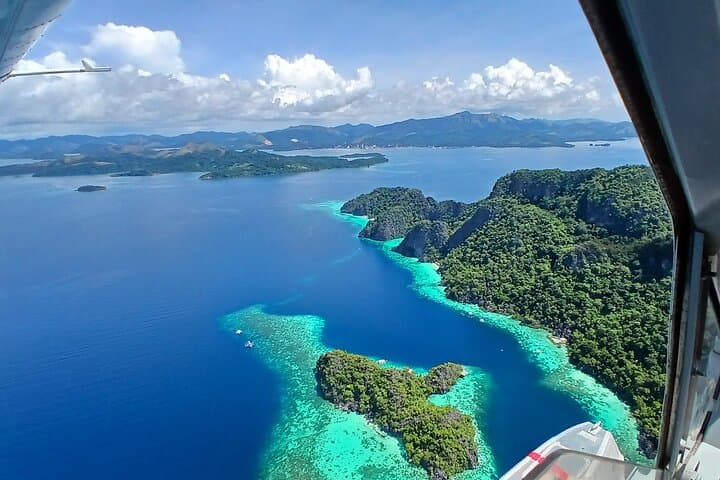
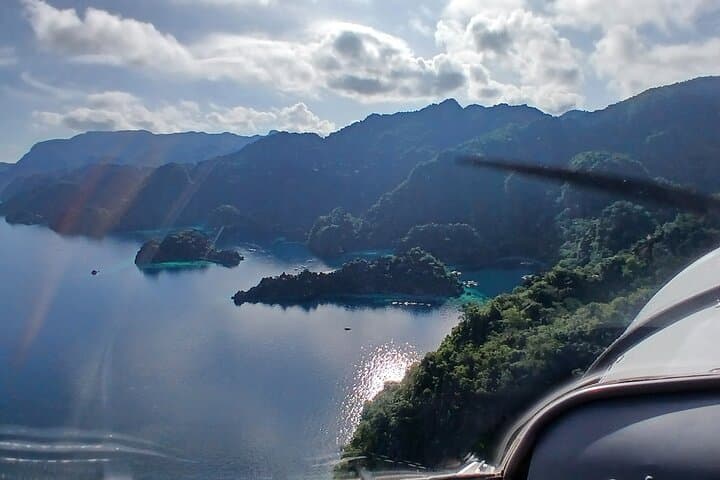
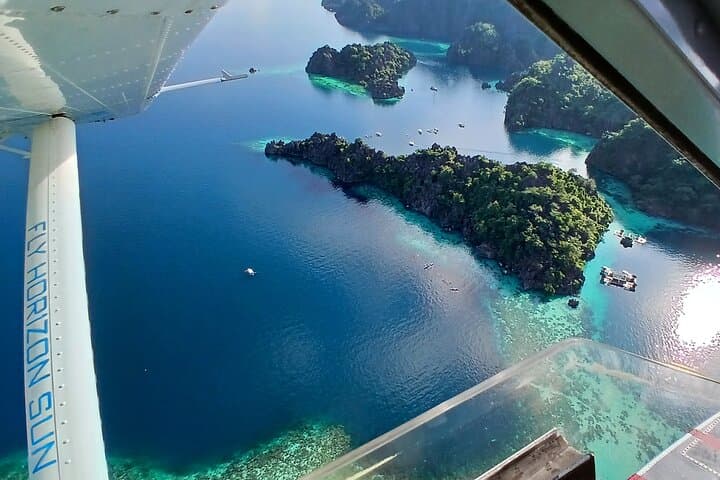
The plane hums as floats skim clear water and the shoreline falls away — below, twin lagoons flash turquoise like cut glass set into towering limestone walls. On takeoff you feel the salt-scented air push against the cabin as islands, reefs and hidden beaches unspool beneath the windows: Kayangan Lake’s bright inlet, the shipwreck shadows by Maricaban Bay, and Black Island’s cliff faces punctured with caves.
Verified experiences and guided adventures in the surrounding area.
Operated by Horizon Sun Charters · Coron, Palawan
The plane hums as floats skim clear water and the shoreline falls away — below, twin lagoons flash turquoise like cut glass set into towering limestone walls. On takeoff you feel the salt-scented air push against the cabin as islands, reefs and hidden beaches unspool beneath the windows: Kayangan Lake’s bright inlet, the shipwreck shadows by Maricaban Bay, and Black Island’s cliff faces punctured with caves.
This corner of northern Palawan is shaped by karst geology: steep limestone outcrops formed from ancient reefs, uplifted and eroded into dramatic cliffs and narrow channels. The area is also culturally important to the Tagbanua people and, on Calauit, an unusual post-colonial wildlife reserve where transplanted African species share habitat with native fauna.
From above the landscape reads as a mix of reef, lagoon and forest — a useful vantage for understanding tidal patterns and how reefs cradle sandbars. The flight is sightseeing first: photographers, naturalists and travelers short on time can see Coron’s highlights in an hour while still getting transfers and briefings before and after.
Practical details matter: bookings often include private van transfers and require weight and passenger information for safety and load calculations. The experience is suitable for most fitness levels but not recommended for pregnant travelers or those with serious back or heart conditions. Aim for morning flights for calmer seas and softer light; bring sun protection, a light windbreaker for open-air ramps, and a camera with a polarizing filter to cut glare. Expect a steady safety briefing, quick water takeoff and landing, and a compact window-seat spectacle of Palawan’s coastline.
easy.
1–2.5 hours.
Suitable for most travelers in average health; must be able to board small aircraft and follow safety instructions.
The seaplane flight itself is about 60 minutes, though total booking time including transfers and briefings can extend to around 1.5–2.5 hours.
Flights operate from the Coron/Busuanga area and typically include private van transfers from the town or pier to the seaplane departure point.
Operators require passenger weights for load balancing; infants may ride on laps but policies and safety briefings cover age and weight specifics, so disclose ages at booking.
This activity is not recommended for travelers with serious back, spinal, or cardiovascular issues due to the nature of sea takeoffs and possible bumps.
Coron and surrounding islands have WWII wreck sites and long-standing Tagbanua cultural ties; many of the islands were shaped by centuries of reef growth and local maritime livelihoods.
The region balances tourism with reef protection; visitors should avoid touching coral, follow waste-free practices, and respect protected areas and local communities.
Horizon Sun Charters operates guided outdoor trips and adventures with an emphasis on safety, stewardship, and memorable experiences.
The plane hums as floats skim clear water and the shoreline falls away — below, twin lagoons flash turquoise like cut glass set into towering limestone walls. On takeoff you feel the salt-scented air push against the cabin as islands, reefs and hidden beaches unspool beneath the windows: Kayangan Lake’s bright inlet, the shipwreck shadows by Maricaban Bay, and Black Island’s cliff faces punctured with caves.
The plane hums as floats skim clear water and the shoreline falls away — below, twin lagoons flash turquoise like cut glass set into towering limestone walls. On takeoff you feel the salt-scented air push against the cabin as islands, reefs and hidden beaches unspool beneath the windows: Kayangan Lake’s bright inlet, the shipwreck shadows by Maricaban Bay, and Black Island’s cliff faces punctured with caves.
This corner of northern Palawan is shaped by karst geology: steep limestone outcrops formed from ancient reefs, uplifted and eroded into dramatic cliffs and narrow channels. The area is also culturally important to the Tagbanua people and, on Calauit, an unusual post-colonial wildlife reserve where transplanted African species share habitat with native fauna.
From above the landscape reads as a mix of reef, lagoon and forest — a useful vantage for understanding tidal patterns and how reefs cradle sandbars. The flight is sightseeing first: photographers, naturalists and travelers short on time can see Coron’s highlights in an hour while still getting transfers and briefings before and after.
Practical details matter: bookings often include private van transfers and require weight and passenger information for safety and load calculations. The experience is suitable for most fitness levels but not recommended for pregnant travelers or those with serious back or heart conditions. Aim for morning flights for calmer seas and softer light; bring sun protection, a light windbreaker for open-air ramps, and a camera with a polarizing filter to cut glare. Expect a steady safety briefing, quick water takeoff and landing, and a compact window-seat spectacle of Palawan’s coastline.