THE ADVENTURE COLLECTIVE® · Independent discovery and booking for outdoor travel

Walk from Bussana Nuova through olive terraces to Old Bussana, a former earthquake ruin revived into an artists’ village. Expect short climbs, cobbled lanes, open studios and an included focaccia aperitivo with sea views.
Walk from Bussana Nuova through olive terraces to Old Bussana, a former earthquake ruin revived into an artists’ village. Expect short climbs, cobbled lanes, open studios and an included focaccia aperitivo with sea views.
A narrow stone lane climbs out of olive groves and Mediterranean scrub, and the sea slides into view—deep blue, always present. Walkers begin in Bussana Nuova and follow a shaded track that threads through vineyards and rosemary-scented slopes until the ruined façades and bright studio doors of Old Bussana appear. The place feels like a village paused between two centuries: collapsed church walls and low stone houses now painted and animated by studios, galleries and quiet terraces with sea views.
Verified experiences and guided adventures in the surrounding area.
Operated by Diego De Santis · Sanremo, Liguria
A narrow stone lane climbs out of olive groves and Mediterranean scrub, and the sea slides into view—deep blue, always present. Walkers begin in Bussana Nuova and follow a shaded track that threads through vineyards and rosemary-scented slopes until the ruined façades and bright studio doors of Old Bussana appear. The place feels like a village paused between two centuries: collapsed church walls and low stone houses now painted and animated by studios, galleries and quiet terraces with sea views.
The village was abandoned after the 1887 earthquake and lay empty for decades until artists and craftspeople repopulated it in the mid-20th century, turning decay into ateliers. Geologically, this stretch of Liguria is a band of folded limestone and clay soils cut by steep coastal gullies; the paths are mostly compact dirt and old stonework with short, steady climbs rather than technical trails. Culturally the walk blends rural Ligurian life—olive terraces, vineyards, focaccia—with contemporary maker culture: ceramicists, painters and jewelers work in small rooms open to visitors.
Practical guidance: expect a mostly easy, pedestrian route of roughly 2–4 km round-trip with 100–200 m of cumulative gain over uneven stone and footpaths. Wear sturdy walking shoes, bring water and sun protection, and plan for 2–3 hours including stops at studios and an included aperitivo of Ligurian focaccia. Public transport serves the area but check schedules; Old Bussana is pedestrian-only, so luggage and strollers are impractical. Visit mid-morning for galleries and late afternoon for golden light on the terraces.
easy.
2–3 hours.
Suitable for walkers in average fitness; includes short climbs and standing while visiting studios.
The walking portion is short—typically 2–4 km round-trip—depending on how many workshops you visit; allow 2–3 hours total including stops.
Old Bussana is primarily pedestrian with uneven stone surfaces and steps; it is not fully accessible for wheelchairs or those with significant mobility constraints.
An aperitivo featuring Ligurian focaccia is included; additional food or purchases at cafes and studios are usually pay-as-you-go.
Many artists welcome photos but you should always ask first; some may sell work or request a small fee for commercial use of images.
Old Bussana was largely abandoned after an 1887 earthquake and was repopulated by artists in the mid-20th century, transforming ruins into creative workshops.
The village’s stone structures and terraces are fragile; visitors should stick to paths, avoid climbing on ruins and support local artisans to help sustain the community.
Diego De Santis operates guided outdoor trips and adventures with an emphasis on safety, stewardship, and memorable experiences.
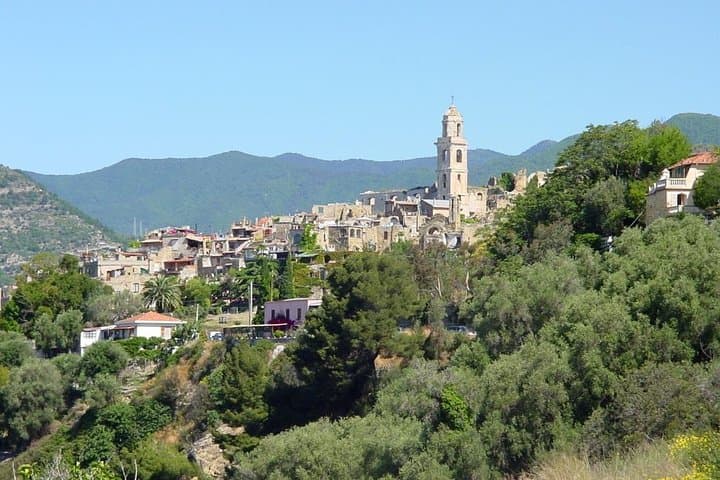
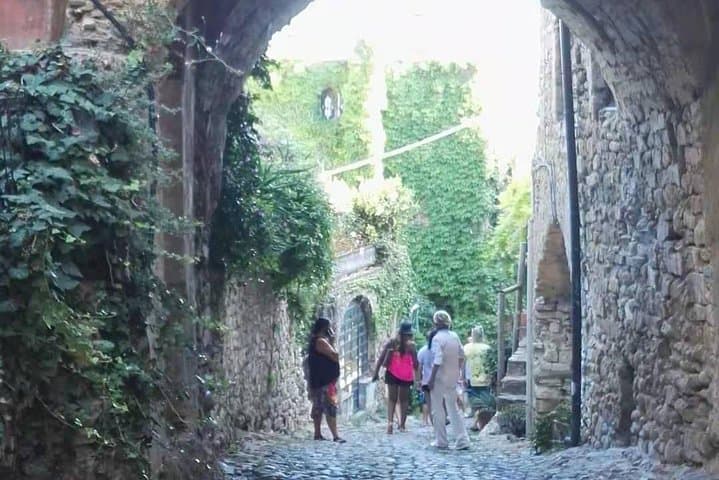
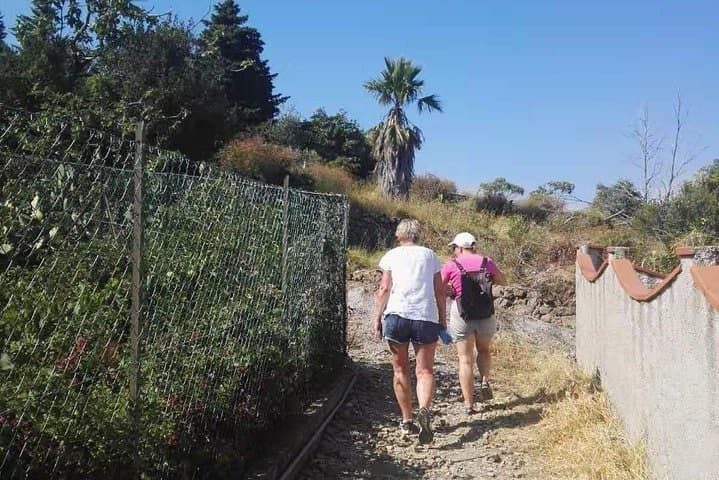
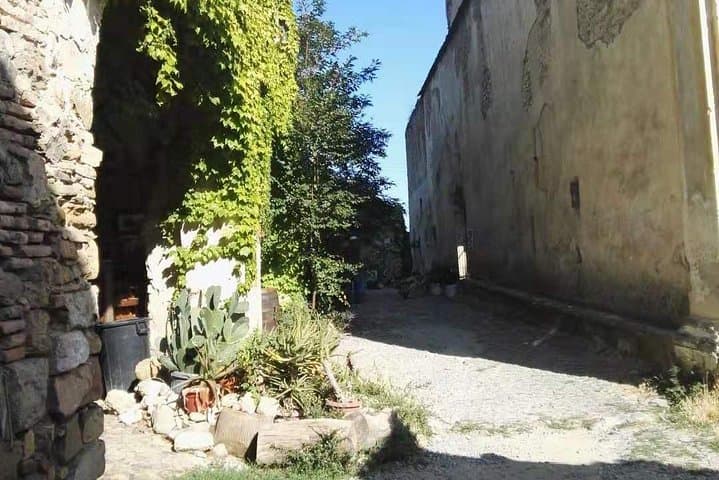
A narrow stone lane climbs out of olive groves and Mediterranean scrub, and the sea slides into view—deep blue, always present. Walkers begin in Bussana Nuova and follow a shaded track that threads through vineyards and rosemary-scented slopes until the ruined façades and bright studio doors of Old Bussana appear. The place feels like a village paused between two centuries: collapsed church walls and low stone houses now painted and animated by studios, galleries and quiet terraces with sea views.
A narrow stone lane climbs out of olive groves and Mediterranean scrub, and the sea slides into view—deep blue, always present. Walkers begin in Bussana Nuova and follow a shaded track that threads through vineyards and rosemary-scented slopes until the ruined façades and bright studio doors of Old Bussana appear. The place feels like a village paused between two centuries: collapsed church walls and low stone houses now painted and animated by studios, galleries and quiet terraces with sea views.
The village was abandoned after the 1887 earthquake and lay empty for decades until artists and craftspeople repopulated it in the mid-20th century, turning decay into ateliers. Geologically, this stretch of Liguria is a band of folded limestone and clay soils cut by steep coastal gullies; the paths are mostly compact dirt and old stonework with short, steady climbs rather than technical trails. Culturally the walk blends rural Ligurian life—olive terraces, vineyards, focaccia—with contemporary maker culture: ceramicists, painters and jewelers work in small rooms open to visitors.
Practical guidance: expect a mostly easy, pedestrian route of roughly 2–4 km round-trip with 100–200 m of cumulative gain over uneven stone and footpaths. Wear sturdy walking shoes, bring water and sun protection, and plan for 2–3 hours including stops at studios and an included aperitivo of Ligurian focaccia. Public transport serves the area but check schedules; Old Bussana is pedestrian-only, so luggage and strollers are impractical. Visit mid-morning for galleries and late afternoon for golden light on the terraces.