THE ADVENTURE COLLECTIVE® · Independent discovery and booking for outdoor travel

Spend a long winter day from Busan exploring Kookmin Healing Park’s frozen playfields, then choose between Gyeongju’s UNESCO temple and historic streets or Daegu’s markets and icy mountain trails. This one-day tour blends outdoor activity with cultural stops—ideal for travelers who can manage a full, brisk day.
Spend a long winter day from Busan exploring Kookmin Healing Park’s frozen playfields, then choose between Gyeongju’s UNESCO temple and historic streets or Daegu’s markets and icy mountain trails. This one-day tour blends outdoor activity with cultural stops—ideal for travelers who can manage a full, brisk day.
A pale sun slides across a low winter sky as the coach threads north from Busan, windows rimed with frost. By midmorning the landscape opens into Kookmin Healing Park: gullies rimmed in ice, sleds carving bright arcs, and a narrow canoe channel where glassy water dares you to move. The air is sharp; each breath foregrounds the quiet—wind rubbing at exposed trees, the creek nudging its own frozen bank.
Verified experiences and guided adventures in the surrounding area.
Operated by TOURSTORY · Busan, Busan
A pale sun slides across a low winter sky as the coach threads north from Busan, windows rimed with frost. By midmorning the landscape opens into Kookmin Healing Park: gullies rimmed in ice, sleds carving bright arcs, and a narrow canoe channel where glassy water dares you to move. The air is sharp; each breath foregrounds the quiet—wind rubbing at exposed trees, the creek nudging its own frozen bank.
This one-day loop pairs outdoor play with Korea’s deep past. Gyeongju was the Silla Kingdom’s capital and Bulguksa Temple, a 8th-century Buddhist complex, holds UNESCO recognition for its stone pagodas and carved heritage. In contrast, Daegu’s Seomun Market and nearby Biseulsan trails show Korea’s living culture, where market life and mountain air meet. Geologically, these low mountains are folded Mesozoic sediment and granite outcrops that catch ice in unique curtains each winter.
Practical planning matters: expect a long day (about 11–14 hours) with short walks on icy trails, guided transfers by coach, and optional canoeing payable onsite. Dress warm in layers, bring traction devices for icy paths, and carry small cash for canoe fees and market snacks. Timing matters—arrive early in Busan, follow guide instructions near historic sites, and keep cameras ready: light and ice change fast.
Whether choosing Gyeongju’s ancient stones or Daegu’s market energy, the tour balances brisk outdoor moments with cultural stops—accessible for most travelers who can handle a full winter day on foot.
easy.
11–14 hours.
Suitable for travelers in reasonable health who can manage multiple short walks on cold, sometimes icy ground.
The tour lasts about 11–14 hours; exact return time depends on traffic and the seasonal itinerary but expect a late-evening return to Busan.
No—Kookmin Healing Park’s canoe experience is payable onsite in cash (approx. KRW 30,000–50,000 depending on boat size).
Yes—infants ride on laps and strollers are possible, but inform the operator in advance to plan vehicle space and accessibility needs.
Yes—English and Chinese speaking guides are provided as part of the tour inclusions.
Gyeongju was the Silla Kingdom’s capital; Bulguksa Temple (UNESCO since 1995) preserves carved stone pagodas and wooden halls from Korea’s classical era.
Winter ice features are delicate—stay on marked paths, avoid breaking icicles or moving stones, and follow leave-no-trace principles to protect fragile habitats.
TOURSTORY operates guided outdoor trips and adventures with an emphasis on safety, stewardship, and memorable experiences.
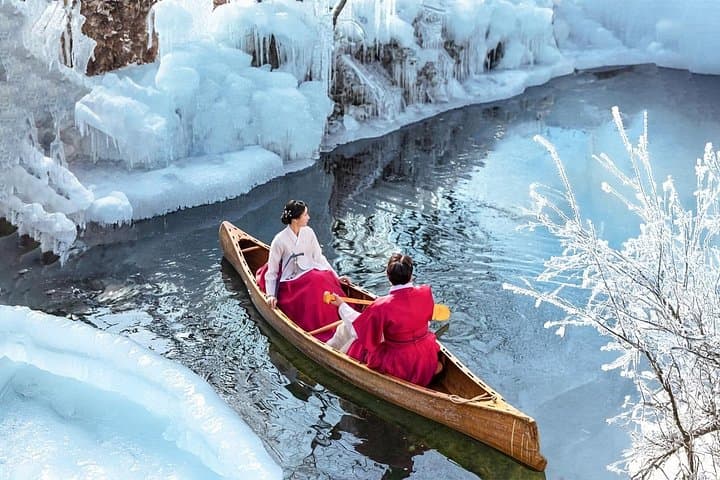
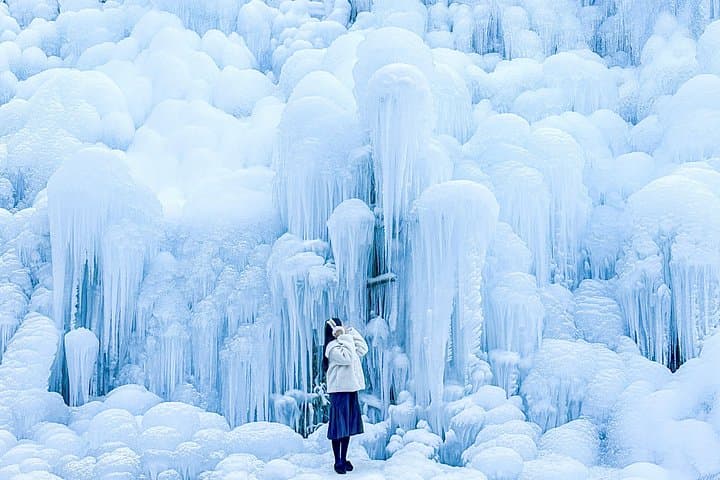
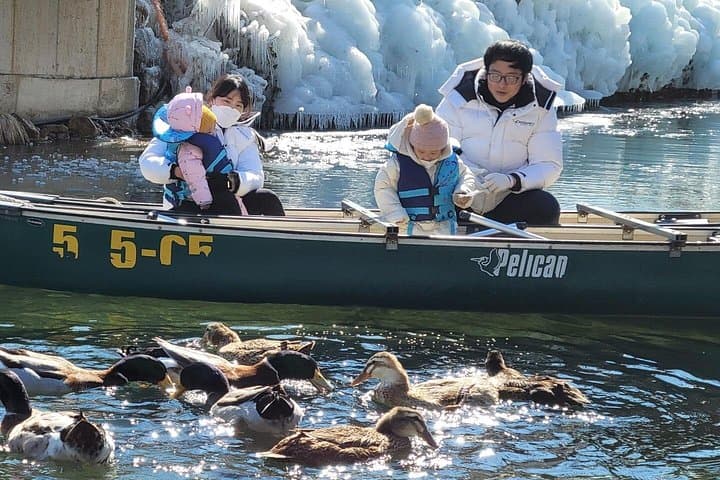
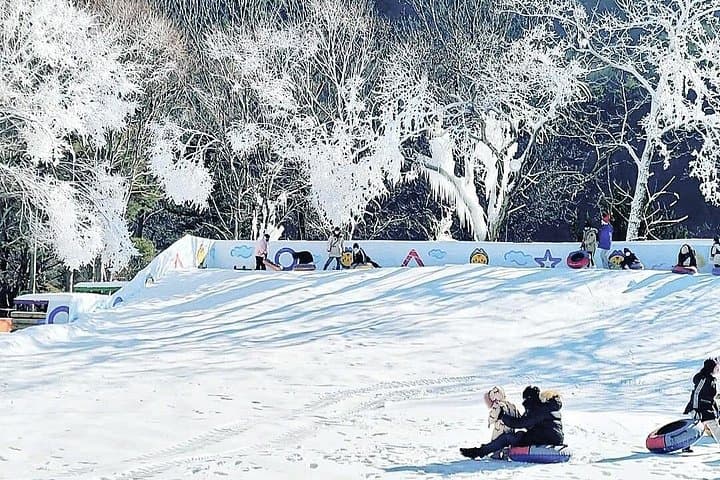
A pale sun slides across a low winter sky as the coach threads north from Busan, windows rimed with frost. By midmorning the landscape opens into Kookmin Healing Park: gullies rimmed in ice, sleds carving bright arcs, and a narrow canoe channel where glassy water dares you to move. The air is sharp; each breath foregrounds the quiet—wind rubbing at exposed trees, the creek nudging its own frozen bank.
A pale sun slides across a low winter sky as the coach threads north from Busan, windows rimed with frost. By midmorning the landscape opens into Kookmin Healing Park: gullies rimmed in ice, sleds carving bright arcs, and a narrow canoe channel where glassy water dares you to move. The air is sharp; each breath foregrounds the quiet—wind rubbing at exposed trees, the creek nudging its own frozen bank.
This one-day loop pairs outdoor play with Korea’s deep past. Gyeongju was the Silla Kingdom’s capital and Bulguksa Temple, a 8th-century Buddhist complex, holds UNESCO recognition for its stone pagodas and carved heritage. In contrast, Daegu’s Seomun Market and nearby Biseulsan trails show Korea’s living culture, where market life and mountain air meet. Geologically, these low mountains are folded Mesozoic sediment and granite outcrops that catch ice in unique curtains each winter.
Practical planning matters: expect a long day (about 11–14 hours) with short walks on icy trails, guided transfers by coach, and optional canoeing payable onsite. Dress warm in layers, bring traction devices for icy paths, and carry small cash for canoe fees and market snacks. Timing matters—arrive early in Busan, follow guide instructions near historic sites, and keep cameras ready: light and ice change fast.
Whether choosing Gyeongju’s ancient stones or Daegu’s market energy, the tour balances brisk outdoor moments with cultural stops—accessible for most travelers who can handle a full winter day on foot.