THE ADVENTURE COLLECTIVE® · Independent discovery and booking for outdoor travel

Explore Busan’s best in four hours: colorful Gamcheon Village, the live stalls of Jagalchi Market, the buzz of BIFF Square and the maze of Gukje Market, finishing with views from Yongdusan Park. This guided walking tour mixes local food, history, and hilltop panoramas.
Explore Busan’s best in four hours: colorful Gamcheon Village, the live stalls of Jagalchi Market, the buzz of BIFF Square and the maze of Gukje Market, finishing with views from Yongdusan Park. This guided walking tour mixes local food, history, and hilltop panoramas.
You step off the bus into a slice of Busan where sea wind tugs at your jacket and alleys climb like carved staircases. The Gamcheon Culture Village rises ahead—houses painted in bold blocks, stairways threaded with murals and narrow courtyards that feel more like a neighborhood open studio than a tourist stop. The harbor below sings with gulls and the steady pull of fishing vessels that have fed this city for generations.
Verified experiences and guided adventures in the surrounding area.
Operated by Guydeez · Busan, Busan
You step off the bus into a slice of Busan where sea wind tugs at your jacket and alleys climb like carved staircases. The Gamcheon Culture Village rises ahead—houses painted in bold blocks, stairways threaded with murals and narrow courtyards that feel more like a neighborhood open studio than a tourist stop. The harbor below sings with gulls and the steady pull of fishing vessels that have fed this city for generations.
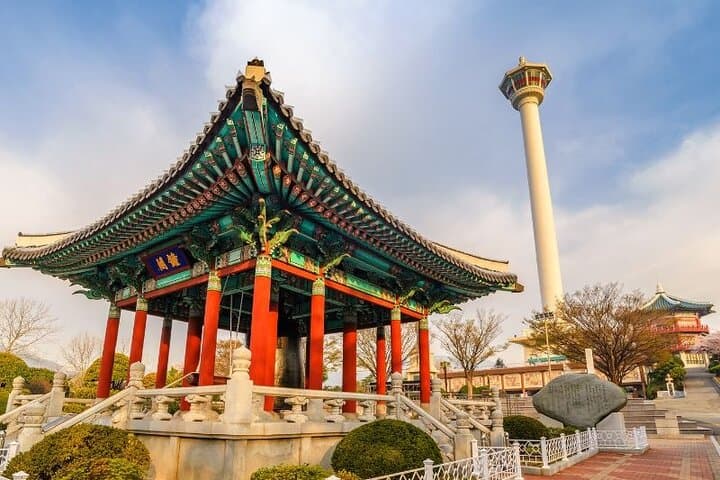
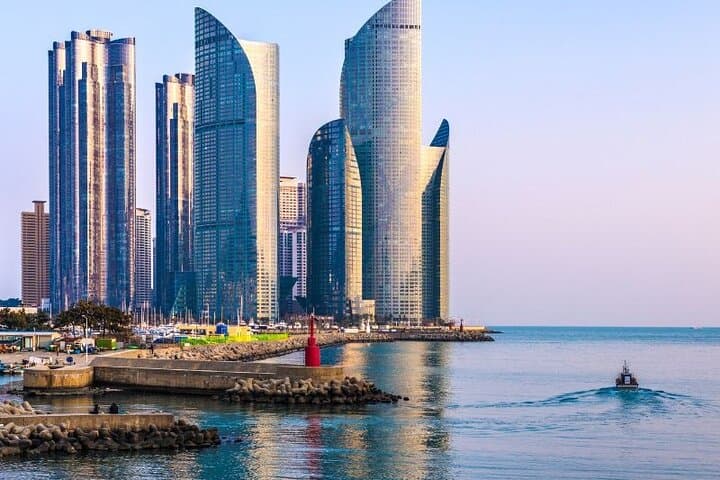
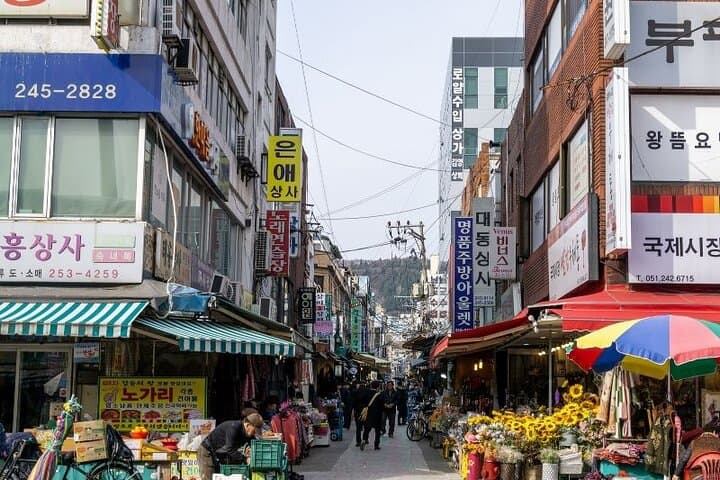
Gamcheon’s rebirth from a postwar hillside settlement into an artist-driven quarter is recent—community-led restoration in the 2000s layered murals and craft shops over older stone walls. Jagalchi Market, by contrast, is rooted in Busan’s role as Korea’s maritime gateway: rows of stalls display glinting fish, live shellfish and the brisk choreography of seafood sellers. Nearby BIFF Square and Gukje Market trace Busan’s commercial and cinematic rise, while Yongdusan Park offers a high vantage to read the city’s mix of modern skyline and working port.
Expect four hours of urban hiking: steep steps and paved lanes, occasional crowds, and sensory overload at seafood counters. Practical notes: start early to beat peak crowds, bring cash for small vendors, and be ready to climb—some viewpoints require short uphill walks. Wear grippy shoes for wet market floors, pack a light rain layer in spring and summer monsoons, and keep a portable charger for photos. A local guide will thread context—history, food etiquette, and shortcut routes—so you leave having tasted the city and understood why Busan still turns to the sea.
easy.
3.5–4 hours.
Moderate urban fitness: able to handle stair climbs and standing at market stalls; suitable for most walkers.
Parts of the itinerary such as Jagalchi Market and Gukje Market are wheelchair accessible, but Gamcheon Village includes steep steps and narrow alleys that limit full accessibility.
The tour includes visits to markets with opportunities to purchase and sample seafood; specific tastings may be at your own expense unless stated otherwise.
Guides are available in English, Spanish, French and Italian; private or small-group options can be requested when booking.
A minimum of two participants is required for the group option; private tours are available subject to availability.
Gamcheon was a hillside shantytown after the Korean War that was revitalized in the 2000s through community art projects and public-private investment, transforming it into a cultural village.
Support local vendors, avoid single-use plastics when possible, and respect mural spaces—these small actions help maintain the village and market environments.
Guydeez operates guided outdoor trips and adventures with an emphasis on safety, stewardship, and memorable experiences.

You step off the bus into a slice of Busan where sea wind tugs at your jacket and alleys climb like carved staircases. The Gamcheon Culture Village rises ahead—houses painted in bold blocks, stairways threaded with murals and narrow courtyards that feel more like a neighborhood open studio than a tourist stop. The harbor below sings with gulls and the steady pull of fishing vessels that have fed this city for generations.
You step off the bus into a slice of Busan where sea wind tugs at your jacket and alleys climb like carved staircases. The Gamcheon Culture Village rises ahead—houses painted in bold blocks, stairways threaded with murals and narrow courtyards that feel more like a neighborhood open studio than a tourist stop. The harbor below sings with gulls and the steady pull of fishing vessels that have fed this city for generations.
Gamcheon’s rebirth from a postwar hillside settlement into an artist-driven quarter is recent—community-led restoration in the 2000s layered murals and craft shops over older stone walls. Jagalchi Market, by contrast, is rooted in Busan’s role as Korea’s maritime gateway: rows of stalls display glinting fish, live shellfish and the brisk choreography of seafood sellers. Nearby BIFF Square and Gukje Market trace Busan’s commercial and cinematic rise, while Yongdusan Park offers a high vantage to read the city’s mix of modern skyline and working port.
Expect four hours of urban hiking: steep steps and paved lanes, occasional crowds, and sensory overload at seafood counters. Practical notes: start early to beat peak crowds, bring cash for small vendors, and be ready to climb—some viewpoints require short uphill walks. Wear grippy shoes for wet market floors, pack a light rain layer in spring and summer monsoons, and keep a portable charger for photos. A local guide will thread context—history, food etiquette, and shortcut routes—so you leave having tasted the city and understood why Busan still turns to the sea.