THE ADVENTURE COLLECTIVE® · Independent discovery and booking for outdoor travel

Float above Busan’s rugged coast in a Sky Capsule, then travel inland to Gyeongju’s UNESCO-listed temples and royal tombs. This full-day outing blends seaside panoramas with centuries-old Silla history — all in one long, rewarding day.
Float above Busan’s rugged coast in a Sky Capsule, then travel inland to Gyeongju’s UNESCO-listed temples and royal tombs. This full-day outing blends seaside panoramas with centuries-old Silla history — all in one long, rewarding day.
You step into a pastel capsule as the coast slides beneath you — the Sky Capsule hovers 7–10 meters above Haeundae’s cliffs and the sea stretches, restless and bright, daring you to look away. The capsule’s slow arc gives the coastline a cinematic sweep; salt-slick wind teases camera straps and the city’s modern edge falls behind as the bus hums north toward Gyeongju.
Verified experiences and guided adventures in the surrounding area.
Operated by TOURSTORY · Busan, Busan
You step into a pastel capsule as the coast slides beneath you — the Sky Capsule hovers 7–10 meters above Haeundae’s cliffs and the sea stretches, restless and bright, daring you to look away. The capsule’s slow arc gives the coastline a cinematic sweep; salt-slick wind teases camera straps and the city’s modern edge falls behind as the bus hums north toward Gyeongju.
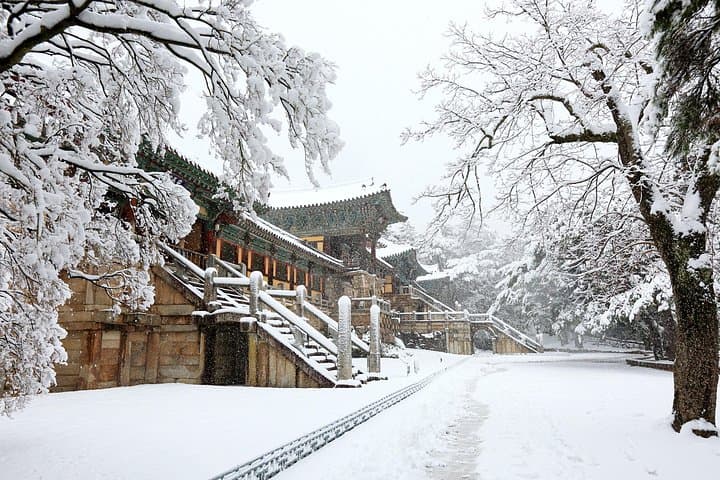
The day threads two distinct Korean chapters: Busan’s coastal reinvention and Gyeongju’s Silla legacy. Haeundae Blue Line Park repurposes an old rail corridor into a 4.8 km seaside promenade, while Haedong Yonggungsa is one of Korea’s rare seaside temples dating to the late 14th century. Bulguksa, a UNESCO World Heritage site, preserves 8th-century stone pagodas and stairways carved with ritual precision — the stones speak of a courtly civilization that set Korea’s religious and artistic tone for centuries.
Expect mostly easy walking across paved coastal trails, temple courtyards, and museum-like outdoor sites. Terrain is flat to gently graded; elevation change is minimal but surfaces can be uneven in heritage areas. The schedule is long — roughly 11–12 hours including round-trip transport — so plan for a day out rather than a half-day jaunt.
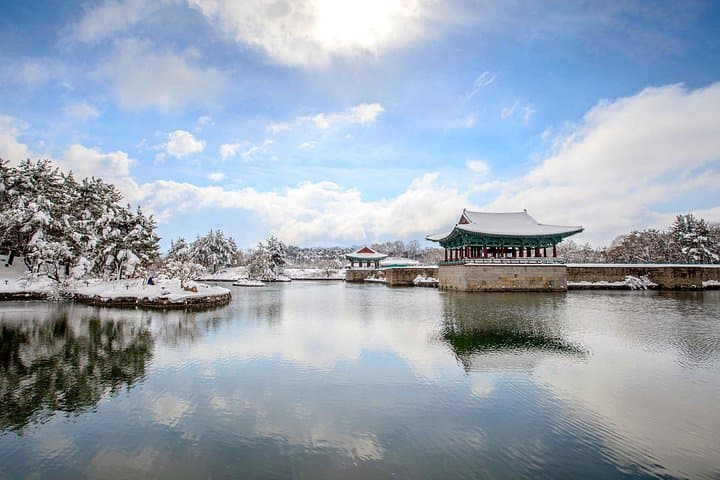
Practical edge: carry local currency for lunch on Cheongsapo or Mipo, bring a compact rain shell in spring and summer storms, and time your visit to Donggung & Wolji for dusk when the reflecting pond takes on a quiet glow. Keep to marked paths at historic sites and follow guide instructions — preservation is part of the experience.
easy.
11–12 hours.
Suitable for most fitness levels; requires prolonged standing and moderate walking across uneven surfaces throughout the day.
This tour typically departs from central Busan pickup points; confirm pickup details at booking and arrive early to designated meeting locations.
Yes — the Blueline Park Sky Capsule ticket and listed admission fees are included in the tour fare.
Infants can ride in strollers and on laps; the tour notes stroller accessibility but inform the operator in advance if bringing a stroller or wheelchair.
The itinerary may be adjusted for weather or traffic; cancellations for a full refund require notice at least 24 hours before departure per the policy.
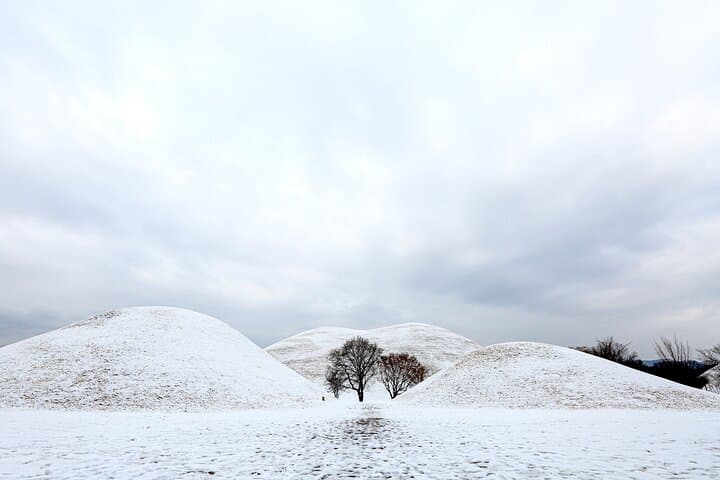
Gyeongju was the capital of the Silla Kingdom (57 BCE–935 CE); Bulguksa and the Gyeongju Historic Areas preserve monuments and royal tombs that document a crucial era of Korean statecraft and Buddhist art.
UNESCO designation means visitor behavior matters: stay on paths, avoid climbing ruins, and support local conservation by not feeding wildlife and disposing of waste responsibly.
TOURSTORY operates guided outdoor trips and adventures with an emphasis on safety, stewardship, and memorable experiences.
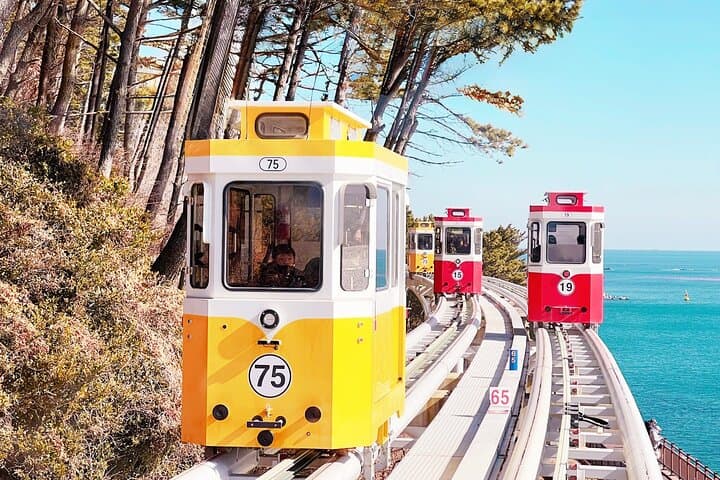
You step into a pastel capsule as the coast slides beneath you — the Sky Capsule hovers 7–10 meters above Haeundae’s cliffs and the sea stretches, restless and bright, daring you to look away. The capsule’s slow arc gives the coastline a cinematic sweep; salt-slick wind teases camera straps and the city’s modern edge falls behind as the bus hums north toward Gyeongju.
You step into a pastel capsule as the coast slides beneath you — the Sky Capsule hovers 7–10 meters above Haeundae’s cliffs and the sea stretches, restless and bright, daring you to look away. The capsule’s slow arc gives the coastline a cinematic sweep; salt-slick wind teases camera straps and the city’s modern edge falls behind as the bus hums north toward Gyeongju.
The day threads two distinct Korean chapters: Busan’s coastal reinvention and Gyeongju’s Silla legacy. Haeundae Blue Line Park repurposes an old rail corridor into a 4.8 km seaside promenade, while Haedong Yonggungsa is one of Korea’s rare seaside temples dating to the late 14th century. Bulguksa, a UNESCO World Heritage site, preserves 8th-century stone pagodas and stairways carved with ritual precision — the stones speak of a courtly civilization that set Korea’s religious and artistic tone for centuries.
Expect mostly easy walking across paved coastal trails, temple courtyards, and museum-like outdoor sites. Terrain is flat to gently graded; elevation change is minimal but surfaces can be uneven in heritage areas. The schedule is long — roughly 11–12 hours including round-trip transport — so plan for a day out rather than a half-day jaunt.
Practical edge: carry local currency for lunch on Cheongsapo or Mipo, bring a compact rain shell in spring and summer storms, and time your visit to Donggung & Wolji for dusk when the reflecting pond takes on a quiet glow. Keep to marked paths at historic sites and follow guide instructions — preservation is part of the experience.