THE ADVENTURE COLLECTIVE® · Independent discovery and booking for outdoor travel

See Busan’s waterfront light up on a 3–4 hour small-group evening tour that visits BEXCO, Hwangnyeongsan observatory, Gwangalli Beach, and The Bay 101. Optional night ferry and hotel pickup make it an easy way to sample the city’s best night views.
See Busan’s waterfront light up on a 3–4 hour small-group evening tour that visits BEXCO, Hwangnyeongsan observatory, Gwangalli Beach, and The Bay 101. Optional night ferry and hotel pickup make it an easy way to sample the city’s best night views.
The city lights of Busan unfold like a coastal constellation as the tour van threads through seaside avenues. You step out at Gwangalli Beach with the Gwangan (Diamond) Bridge arcing above, its lights tracing the water; later, from The Bay 101 the mirrored high-rises of Marine City push the skyline forward while the sea air pushes back, a steady, salt-scented companion. Higher up, Hwangnyeongsan’s observatory gives a broad sweep of harbor and hills where shipping channels and neon meet.
Verified experiences and guided adventures in the surrounding area.
Operated by Here Korea Travel · Busan, Busan
The city lights of Busan unfold like a coastal constellation as the tour van threads through seaside avenues. You step out at Gwangalli Beach with the Gwangan (Diamond) Bridge arcing above, its lights tracing the water; later, from The Bay 101 the mirrored high-rises of Marine City push the skyline forward while the sea air pushes back, a steady, salt-scented companion. Higher up, Hwangnyeongsan’s observatory gives a broad sweep of harbor and hills where shipping channels and neon meet.
Busan is a working port with a modern second city feel: BEXCO and the Busan Cinema Center signal the city’s contemporary cultural rise, while reclaimed land at Marine City demonstrates coastal engineering that reshaped the bay over recent decades. Gwangalli has long been a local evening hangout—cafés and pubs spill light onto the sand—while Hwangnyeongsan served historically as a lookout over approaches to the harbor.
Practically, this is a 3–4 hour small-group evening bus tour led by an English-speaking licensed guide with hotel pickup and drop-off. Stops are short photo and stroll windows rather than long hikes; an optional Gwangalli night ferry can add a brief on-water perspective for a small extra fee. Expect paved paths, viewpoints with steps, and crowds at prime photo spots. Bring a light jacket, charged camera, and a local contact number (WhatsApp is recommended for coordination). Tours run nightly; March–October can include scheduled drone or bridge-light events depending on municipal programming. For a compact, low-effort way to see Busan’s nocturnal character, this tour lays out the city’s lights and shoreline with clear logistics and local context.
easy.
3–4 hours.
Suitable for most fitness levels—minimal walking and mostly paved surfaces with occasional stairs.
Yes—hotel pickup and drop-off are included; the operator will plan a pickup route and ask for your precise contact details.
The tour and vehicle are wheelchair accessible, though some viewpoints may have steps; notify the operator when booking to confirm accessibility at specific stops.
The ferry is optional and priced separately—book it in advance through the operator who will collect the additional fee; costs vary by season and operator.
Drone shows and special bridge lighting occur on a seasonal schedule (often March–October) and are subject to municipal programming and weather, so they aren’t guaranteed on every tour.
Busan grew as Korea’s major port and trading gateway; modern landmarks like BEXCO and the Cinema Center reflect its cultural and economic expansion over recent decades.
Night tours concentrate visitors on paved areas to limit trampling of beaches and dunes; stick to marked paths and avoid littering to protect coastal habitats.
Here Korea Travel operates guided outdoor trips and adventures with an emphasis on safety, stewardship, and memorable experiences.
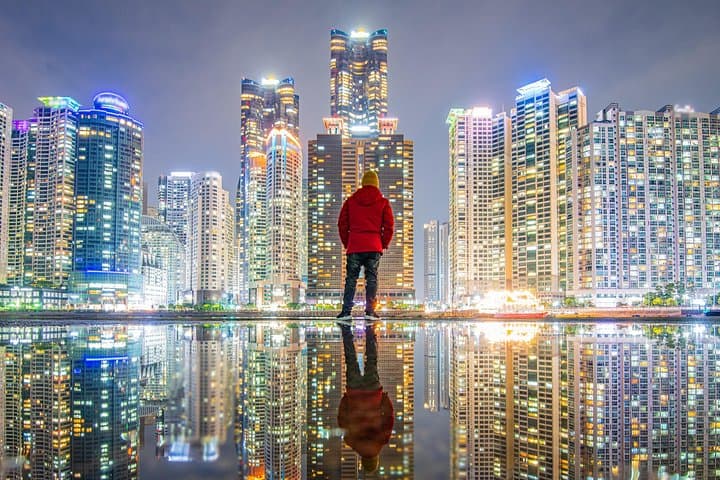
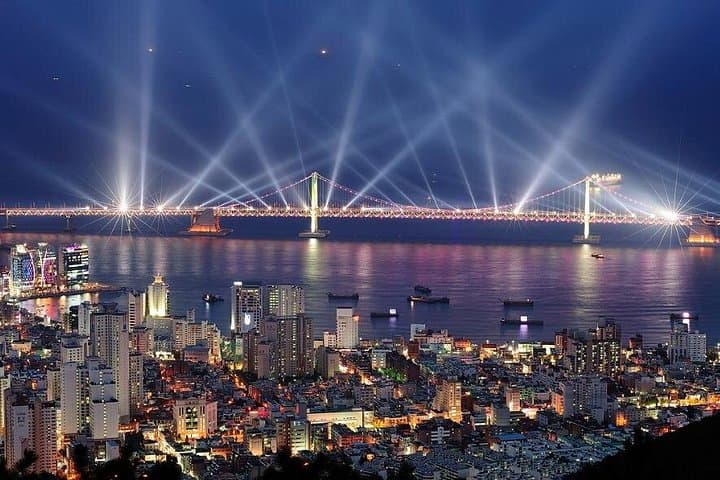
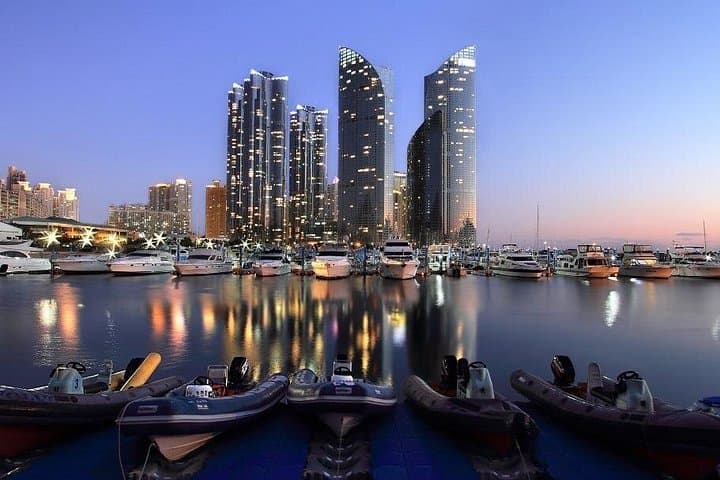
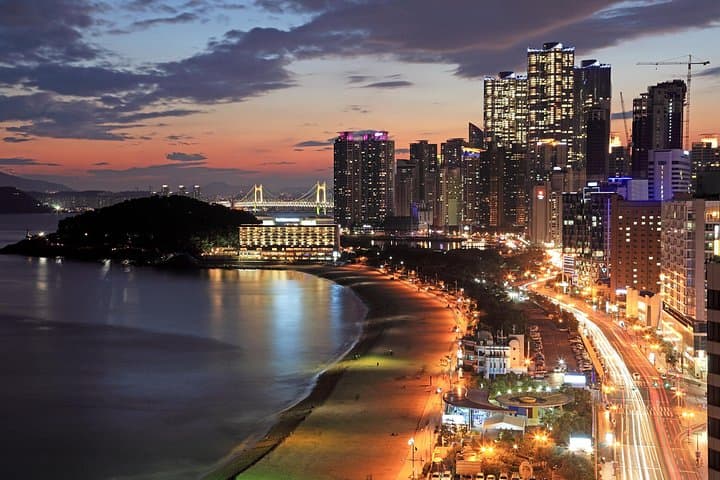
The city lights of Busan unfold like a coastal constellation as the tour van threads through seaside avenues. You step out at Gwangalli Beach with the Gwangan (Diamond) Bridge arcing above, its lights tracing the water; later, from The Bay 101 the mirrored high-rises of Marine City push the skyline forward while the sea air pushes back, a steady, salt-scented companion. Higher up, Hwangnyeongsan’s observatory gives a broad sweep of harbor and hills where shipping channels and neon meet.
The city lights of Busan unfold like a coastal constellation as the tour van threads through seaside avenues. You step out at Gwangalli Beach with the Gwangan (Diamond) Bridge arcing above, its lights tracing the water; later, from The Bay 101 the mirrored high-rises of Marine City push the skyline forward while the sea air pushes back, a steady, salt-scented companion. Higher up, Hwangnyeongsan’s observatory gives a broad sweep of harbor and hills where shipping channels and neon meet.
Busan is a working port with a modern second city feel: BEXCO and the Busan Cinema Center signal the city’s contemporary cultural rise, while reclaimed land at Marine City demonstrates coastal engineering that reshaped the bay over recent decades. Gwangalli has long been a local evening hangout—cafés and pubs spill light onto the sand—while Hwangnyeongsan served historically as a lookout over approaches to the harbor.
Practically, this is a 3–4 hour small-group evening bus tour led by an English-speaking licensed guide with hotel pickup and drop-off. Stops are short photo and stroll windows rather than long hikes; an optional Gwangalli night ferry can add a brief on-water perspective for a small extra fee. Expect paved paths, viewpoints with steps, and crowds at prime photo spots. Bring a light jacket, charged camera, and a local contact number (WhatsApp is recommended for coordination). Tours run nightly; March–October can include scheduled drone or bridge-light events depending on municipal programming. For a compact, low-effort way to see Busan’s nocturnal character, this tour lays out the city’s lights and shoreline with clear logistics and local context.