THE ADVENTURE COLLECTIVE® · Independent discovery and booking for outdoor travel

Short, urban ascent to Hwangnyeongsan and Sajabong Peak rewards hikers with panoramic night views of Busan and a local meal after the hike. This guided 4‑hour tour combines easy uphill steps, professional lighting for photos, and secret overlooks known to locals.
Short, urban ascent to Hwangnyeongsan and Sajabong Peak rewards hikers with panoramic night views of Busan and a local meal after the hike. This guided 4‑hour tour combines easy uphill steps, professional lighting for photos, and secret overlooks known to locals.
A cool sea breeze cuts across the ridge as the city lights of Busan begin to punch through dusk. The group meets at City Hall station, folds trekking poles, and boards a short bus climb to Mahasa Temple; behind the temple the trail narrows and the city slips into a patchwork of neon and dark. In about 30 minutes of steady uphill (rough stone steps and packed dirt) hikers arrive near the 415 m summit platform and the old beacon station — the view opens like a map, harbor lights and Gwangan Bridge glittering below.
Verified experiences and guided adventures in the surrounding area.
Operated by Dorawayo experience activity · Busan, Busan
A cool sea breeze cuts across the ridge as the city lights of Busan begin to punch through dusk. The group meets at City Hall station, folds trekking poles, and boards a short bus climb to Mahasa Temple; behind the temple the trail narrows and the city slips into a patchwork of neon and dark. In about 30 minutes of steady uphill (rough stone steps and packed dirt) hikers arrive near the 415 m summit platform and the old beacon station — the view opens like a map, harbor lights and Gwangan Bridge glittering below.
Hwangnyeongsan’s slopes are volcanic outcrop and older metamorphic bedrock, common to the Busan range, scarred by terraced trails and military beacon sites. The beacon station and local trails carry a modern cultural layer: night hikes are a local ritual, and Sajabong Peak offers a quieter angle favored by residents. Expect chirping passerine birds and the occasional Eurasian magpie in daytime; at night the ridge belongs to the city’s glow.
Practical guidance: plan for roughly 30 minutes of ascent from Mahasa Temple with ~250–350 m of elevation gain, uneven steps and short steeper sections. Bring a headlamp (spare batteries), a reflective strap (provided if needed), firm footwear, and a windproof layer. Timing matters — arrive before nightfall to frame photos; guides provide professional lighting for portraits and will lead the descent on a different trail before finishing at a nearby local restaurant for dinner. Public transit access (City Hall Station, Line 1 Exit 6) makes this a compact, easy urban mountain outing that pairs a short hike with one of Busan’s best night panoramas.
easy.
4 hours.
Suitable for most people who can handle a steady 30‑minute uphill walk; minimal sustained fitness required.
The ascent from Mahasa Temple to the summit takes about 30 minutes over uneven steps and packed dirt—classified as easy for people accustomed to short uphill walks.
Bring a compact tripod or a phone with night mode; guides supply professional lighting and reflective straps to improve visibility and portraits.
Meet at City Hall Station (Line 1) Exit 6; guides transfer participants by local bus to Mahasa Temple before the hike.
A post-hike dinner at a local restaurant is included; tell the guide your dietary preferences ahead of time so they can tailor the menu.
Hwangnyeongsan hosted beacon stations and lookout posts historically used for coastal signaling; today the ridge remains culturally important as a local night‑viewing destination.
Stick to established trails to prevent erosion on steep sections and carry out all trash; the area’s popularity makes Leave No Trace practices important to protect nighttime wildlife and vegetation.
Dorawayo experience activity operates guided outdoor trips and adventures with an emphasis on safety, stewardship, and memorable experiences.
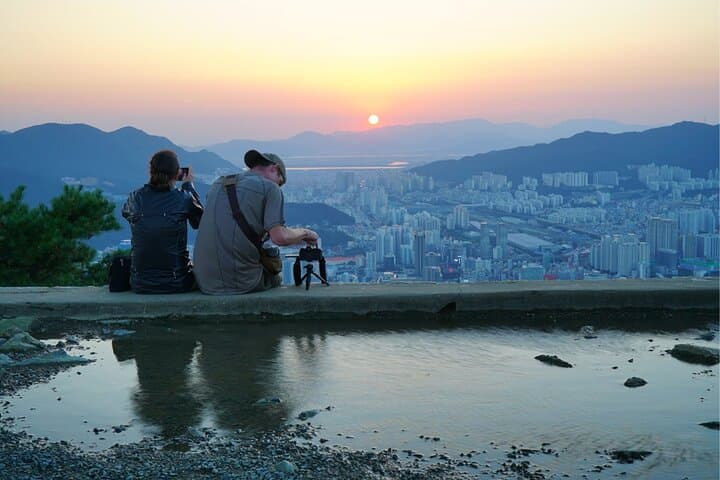
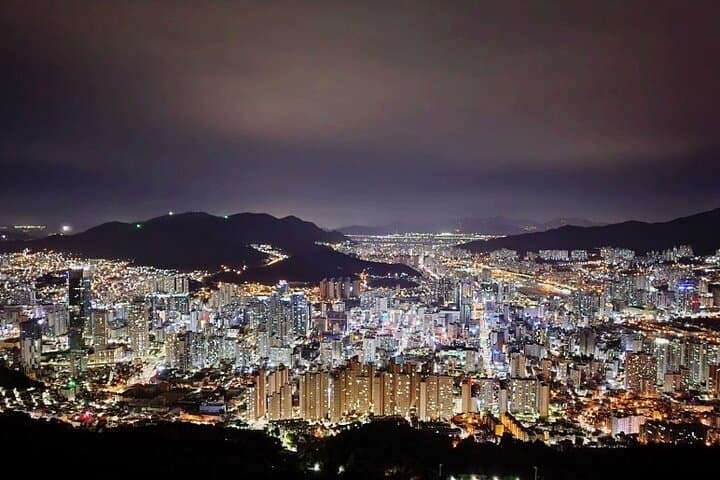
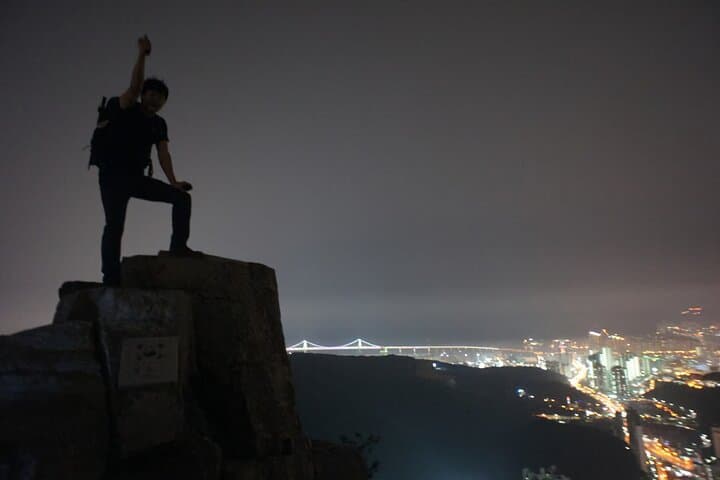
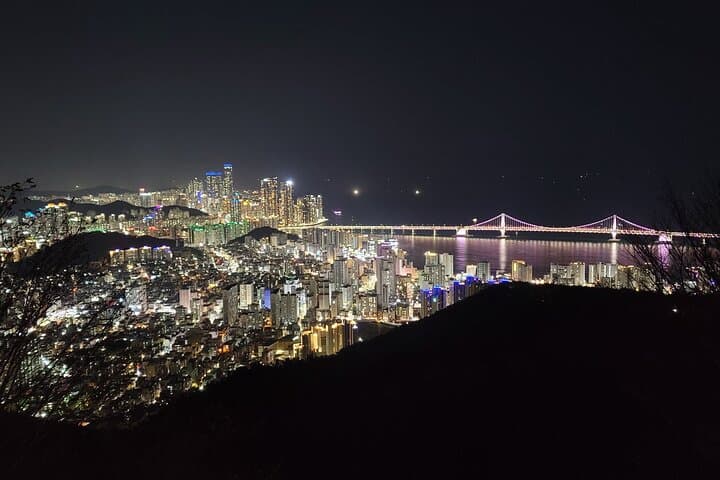
A cool sea breeze cuts across the ridge as the city lights of Busan begin to punch through dusk. The group meets at City Hall station, folds trekking poles, and boards a short bus climb to Mahasa Temple; behind the temple the trail narrows and the city slips into a patchwork of neon and dark. In about 30 minutes of steady uphill (rough stone steps and packed dirt) hikers arrive near the 415 m summit platform and the old beacon station — the view opens like a map, harbor lights and Gwangan Bridge glittering below.
A cool sea breeze cuts across the ridge as the city lights of Busan begin to punch through dusk. The group meets at City Hall station, folds trekking poles, and boards a short bus climb to Mahasa Temple; behind the temple the trail narrows and the city slips into a patchwork of neon and dark. In about 30 minutes of steady uphill (rough stone steps and packed dirt) hikers arrive near the 415 m summit platform and the old beacon station — the view opens like a map, harbor lights and Gwangan Bridge glittering below.
Hwangnyeongsan’s slopes are volcanic outcrop and older metamorphic bedrock, common to the Busan range, scarred by terraced trails and military beacon sites. The beacon station and local trails carry a modern cultural layer: night hikes are a local ritual, and Sajabong Peak offers a quieter angle favored by residents. Expect chirping passerine birds and the occasional Eurasian magpie in daytime; at night the ridge belongs to the city’s glow.
Practical guidance: plan for roughly 30 minutes of ascent from Mahasa Temple with ~250–350 m of elevation gain, uneven steps and short steeper sections. Bring a headlamp (spare batteries), a reflective strap (provided if needed), firm footwear, and a windproof layer. Timing matters — arrive before nightfall to frame photos; guides provide professional lighting for portraits and will lead the descent on a different trail before finishing at a nearby local restaurant for dinner. Public transit access (City Hall Station, Line 1 Exit 6) makes this a compact, easy urban mountain outing that pairs a short hike with one of Busan’s best night panoramas.