THE ADVENTURE COLLECTIVE® · Independent discovery and booking for outdoor travel

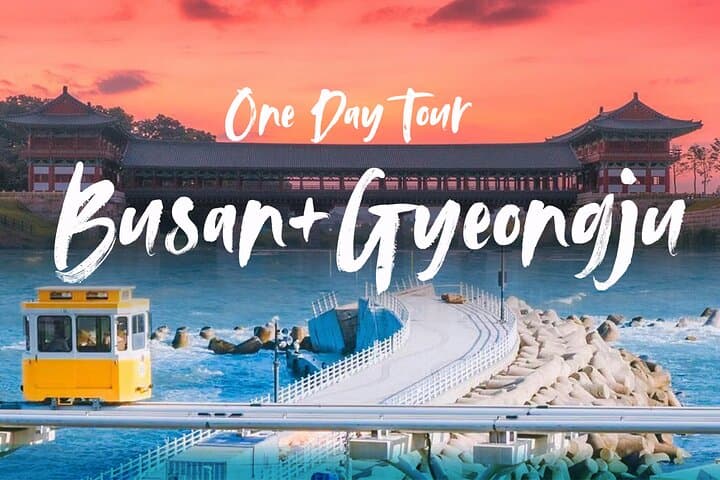
See Busan’s colorful Gamcheon, ride the Cheongsapo coastal train, and walk among Silla royal tumuli in Gyeongju on a single full-day guided tour. Ideal for travelers short on time who want a mix of seaside scenery and UNESCO-era history.
See Busan’s colorful Gamcheon, ride the Cheongsapo coastal train, and walk among Silla royal tumuli in Gyeongju on a single full-day guided tour. Ideal for travelers short on time who want a mix of seaside scenery and UNESCO-era history.
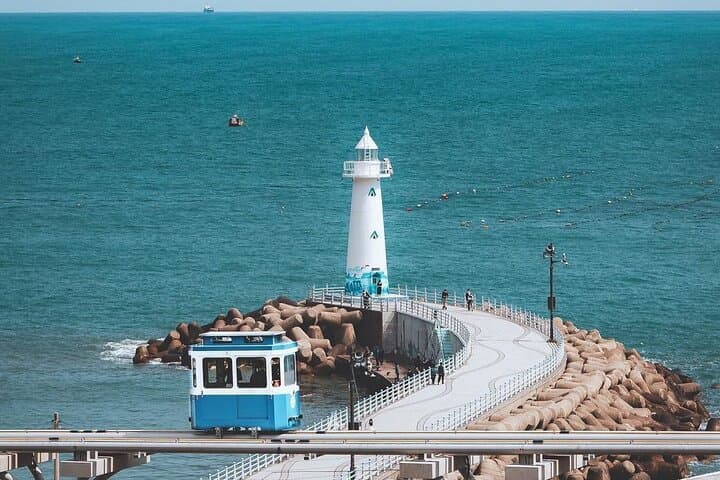
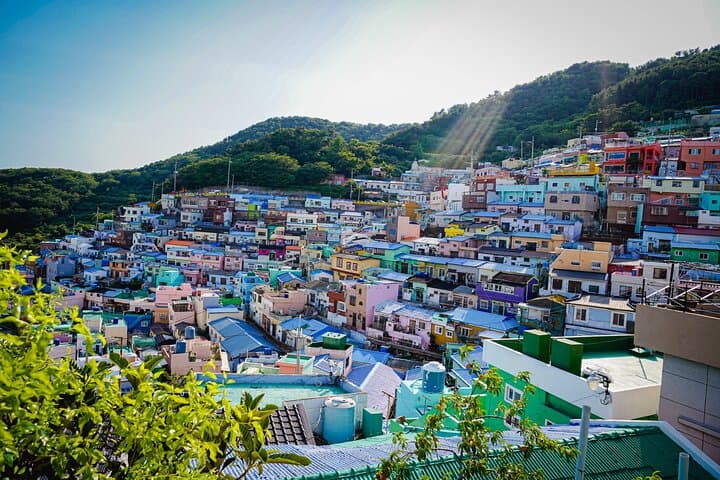
A salt-bright wind off the Korea Strait greets the bus as it peels away from Busan’s urban grid and follows coastal ribbon toward Gyeongju. You step into a day that stitches colorful alleys to ancient burial mounds: the candy-hued houses of Gamcheon, the seaside curve of Cheongsapo’s blue line train, and the low, grassy domes of Silla royalty laid out under an open sky.
Verified experiences and guided adventures in the surrounding area.
Operated by Lecirt · Busan, Busan
A salt-bright wind off the Korea Strait greets the bus as it peels away from Busan’s urban grid and follows coastal ribbon toward Gyeongju. You step into a day that stitches colorful alleys to ancient burial mounds: the candy-hued houses of Gamcheon, the seaside curve of Cheongsapo’s blue line train, and the low, grassy domes of Silla royalty laid out under an open sky.
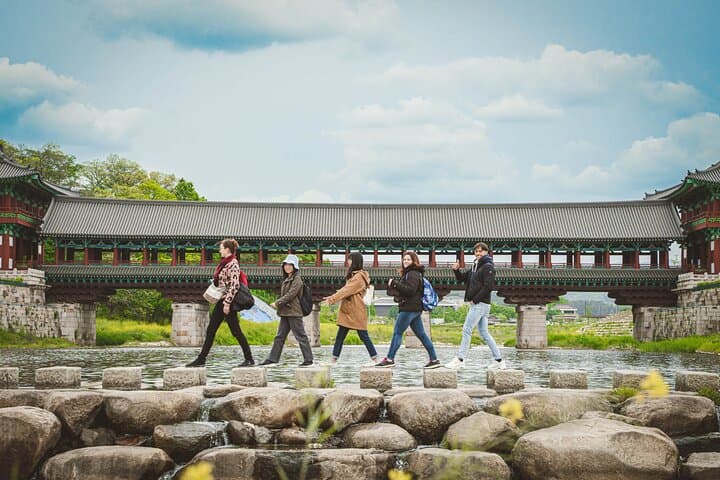
The route pairs modern port city culture with one of Korea’s most continuous historical landscapes. Gyeongju was the Silla capital for nearly a millennium; its Daereungwon tumuli and the 7th-century Cheomseongdae observatory speak to sophisticated astronomy, funerary practice, and stonework that shaped the peninsula. Geologically the coast contrasts volcanic-era rocky headlands with alluvial plains that cradled early cities; cultural threads run through markets, hanok lanes in Gyochon Village, and wooden bridges like Woljeonggyo.
Practical notes: expect a 9–10 hour shared-bus day with multiple short walks, some uneven ground and stairs at heritage sites, and a mix of outdoor time and seated transfers. Arrival windows at each stop are limited—carry water, wear sturdy shoes for cobbled alleys and grassy mounds, and plan for changing weather along the coast. Photography is straightforward at public sites but follow local signage in protected areas.
Timing tip: mornings in Gamcheon cut the crowds, afternoons in Daereungwon offer warmer light on the tumuli. The day balances sensory variety—sea, stone, and street—with the logistics of a guided, full-day itinerary.
moderate.
9–10 hours.
You should be able to stand and walk for multiple 20–90 minute segments, manage short stair sections and get on/off a coach several times.
The tour begins with pickup at Seomyeon Station and Busan Station and returns to Seomyeon Station for final drop-off.
Admission is included for some attractions like Gamcheon and certain Gyeongju sites; check your booking details for specifics on which entries are covered.
The tour lists wheelchair and stroller accessibility for transportation, but several heritage sites have uneven surfaces—contact the operator in advance to discuss mobility needs.
Meals are not specified as included; the itinerary allows time for purchases at local cafés or restaurants, especially in Hwangnidan-gil and Gyochon Village.
Gyeongju served as the Silla Kingdom capital from the 1st–10th centuries; its royal tumuli and Cheomseongdae observatory are direct links to that era.
Many sites are protected UNESCO or national heritage areas—stay on paths, avoid touching artifacts, and follow signage to reduce erosion and cultural wear.
Lecirt operates guided outdoor trips and adventures with an emphasis on safety, stewardship, and memorable experiences.
A salt-bright wind off the Korea Strait greets the bus as it peels away from Busan’s urban grid and follows coastal ribbon toward Gyeongju. You step into a day that stitches colorful alleys to ancient burial mounds: the candy-hued houses of Gamcheon, the seaside curve of Cheongsapo’s blue line train, and the low, grassy domes of Silla royalty laid out under an open sky.
A salt-bright wind off the Korea Strait greets the bus as it peels away from Busan’s urban grid and follows coastal ribbon toward Gyeongju. You step into a day that stitches colorful alleys to ancient burial mounds: the candy-hued houses of Gamcheon, the seaside curve of Cheongsapo’s blue line train, and the low, grassy domes of Silla royalty laid out under an open sky.
The route pairs modern port city culture with one of Korea’s most continuous historical landscapes. Gyeongju was the Silla capital for nearly a millennium; its Daereungwon tumuli and the 7th-century Cheomseongdae observatory speak to sophisticated astronomy, funerary practice, and stonework that shaped the peninsula. Geologically the coast contrasts volcanic-era rocky headlands with alluvial plains that cradled early cities; cultural threads run through markets, hanok lanes in Gyochon Village, and wooden bridges like Woljeonggyo.
Practical notes: expect a 9–10 hour shared-bus day with multiple short walks, some uneven ground and stairs at heritage sites, and a mix of outdoor time and seated transfers. Arrival windows at each stop are limited—carry water, wear sturdy shoes for cobbled alleys and grassy mounds, and plan for changing weather along the coast. Photography is straightforward at public sites but follow local signage in protected areas.
Timing tip: mornings in Gamcheon cut the crowds, afternoons in Daereungwon offer warmer light on the tumuli. The day balances sensory variety—sea, stone, and street—with the logistics of a guided, full-day itinerary.