THE ADVENTURE COLLECTIVE® · Independent discovery and booking for outdoor travel

Practice Busan’s distinctive dialect in a compact classroom, then head into Bujeon Market to try local snacks and test your new phrases. Finish with a reflective stop at Samgwangsa Temple for photos and tea.
Practice Busan’s distinctive dialect in a compact classroom, then head into Bujeon Market to try local snacks and test your new phrases. Finish with a reflective stop at Samgwangsa Temple for photos and tea.
The room hums with soft Korean—students repeating clipped consonants while the instructor demonstrates a hearty Busan intonation that rounds words like pebbles in surf. After sixty productive minutes with markers and printed handouts, the group spills into Bujeon Market: the scent of frying tteokbokki daring you toward a stall, vendors calling prices with quick local phrasing to practice.
Verified experiences and guided adventures in the surrounding area.
Operated by Dorawayo experience activity · Busan, Busan
The room hums with soft Korean—students repeating clipped consonants while the instructor demonstrates a hearty Busan intonation that rounds words like pebbles in surf. After sixty productive minutes with markers and printed handouts, the group spills into Bujeon Market: the scent of frying tteokbokki daring you toward a stall, vendors calling prices with quick local phrasing to practice.
Busan grew as a port city on exposed granite and rocky headlands; its language reflects that blunt, practical cadence. The class teaches Hangul’s consonants and vowels and useful Busan-specific expressions—short, efficient phrases you can use while buying rice cakes or ordering coffee. The itinerary pairs a 90-minute classroom session with a guided review at Bujeon Market and an optional stroll to Samgwangsa Temple, a Cheontae-order site known for distinctive temple architecture and a quiet park where students snack and absorb their new phrases.
Culturally, the experience blends practical language learning with everyday commerce and temple etiquette: bow modestly at Samgwangsa, accept snacks with two hands, and use polite endings when addressing elders.
Practical guidance: the class runs about three hours total. Public transit access is easy—Bujeon is a short bus or metro ride from central Busan. Bring small bills and coins for market purchases and wear comfortable shoes for uneven market alleys and temple steps. If you have dietary restrictions or mobility concerns notify the operator in advance. Carry a light layer for coastal breezes and a compact camera for high-quality temple photos.
easy.
3 hours.
Suitable for most fitness levels; involves standing, short walks on uneven market surfaces and temple steps.
No—this class teaches Hangul basics and simple Busan expressions so absolute beginners can participate.
The class meets near Bujeon Market; multiple metro and bus lines serve Bujeon making public transit the easiest option.
Bujeon Market includes uneven alleys and some steps; if you have limited mobility notify the operator to discuss accessibility options.
Snacks and tea/coffee are included; inform the operator ahead of time about allergies or dietary needs so substitutions can be provided.
Bujeon Market is a long-standing local trade hub that grew with Busan’s port economy; Samgwangsa belongs to the Cheontae Order and shows a different temple architecture than the Jogye Order.
Respect temple grounds by staying on paths and disposing of waste at market bins; supporting small vendors helps sustain traditional foodways.
Dorawayo experience activity operates guided outdoor trips and adventures with an emphasis on safety, stewardship, and memorable experiences.

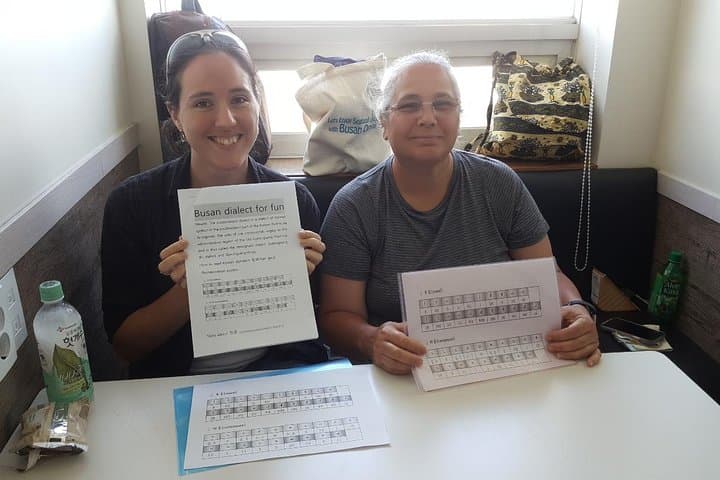


The room hums with soft Korean—students repeating clipped consonants while the instructor demonstrates a hearty Busan intonation that rounds words like pebbles in surf. After sixty productive minutes with markers and printed handouts, the group spills into Bujeon Market: the scent of frying tteokbokki daring you toward a stall, vendors calling prices with quick local phrasing to practice.
The room hums with soft Korean—students repeating clipped consonants while the instructor demonstrates a hearty Busan intonation that rounds words like pebbles in surf. After sixty productive minutes with markers and printed handouts, the group spills into Bujeon Market: the scent of frying tteokbokki daring you toward a stall, vendors calling prices with quick local phrasing to practice.
Busan grew as a port city on exposed granite and rocky headlands; its language reflects that blunt, practical cadence. The class teaches Hangul’s consonants and vowels and useful Busan-specific expressions—short, efficient phrases you can use while buying rice cakes or ordering coffee. The itinerary pairs a 90-minute classroom session with a guided review at Bujeon Market and an optional stroll to Samgwangsa Temple, a Cheontae-order site known for distinctive temple architecture and a quiet park where students snack and absorb their new phrases.
Culturally, the experience blends practical language learning with everyday commerce and temple etiquette: bow modestly at Samgwangsa, accept snacks with two hands, and use polite endings when addressing elders.
Practical guidance: the class runs about three hours total. Public transit access is easy—Bujeon is a short bus or metro ride from central Busan. Bring small bills and coins for market purchases and wear comfortable shoes for uneven market alleys and temple steps. If you have dietary restrictions or mobility concerns notify the operator in advance. Carry a light layer for coastal breezes and a compact camera for high-quality temple photos.