THE ADVENTURE COLLECTIVE® · Independent discovery and booking for outdoor travel

Ride the world's fastest elevator to the 148th floor of Burj Khalifa for sweeping views across Dubai. This guide explains what to expect, the best times to go, and practical tips for a smooth visit.
Ride the world's fastest elevator to the 148th floor of Burj Khalifa for sweeping views across Dubai. This guide explains what to expect, the best times to go, and practical tips for a smooth visit.
The ascent begins the moment the doors close: a press of air, the world collapsing into a blur as the elevator rockets upward at 10 m/s. Within a minute you break the skyline and step into a glassed observatory where Dubai stretches in geometric panels—salt-blue Persian Gulf, the lace of Sheikh Zayed Road, and the needle-thin outlines of man-made islands.
Verified experiences and guided adventures in the surrounding area.
Operated by Sougat Travel & Tourism LLC · Dubai, Dubai
The ascent begins the moment the doors close: a press of air, the world collapsing into a blur as the elevator rockets upward at 10 m/s. Within a minute you break the skyline and step into a glassed observatory where Dubai stretches in geometric panels—salt-blue Persian Gulf, the lace of Sheikh Zayed Road, and the needle-thin outlines of man-made islands.
Opened in 2010 and designed by Adrian Smith of SOM, Burj Khalifa redefined what a modern city could be. The tower sits on a reinforced concrete mat and deep bored piles that anchor artificial ground to withstand both sand and marine influences, a civil-engineering response to the Arabian Peninsula’s geology. Downtown Dubai around the tower is a mix of high-fashion retail, choreographed fountains, and late-night cafés that keep the city pulsing after sundown.
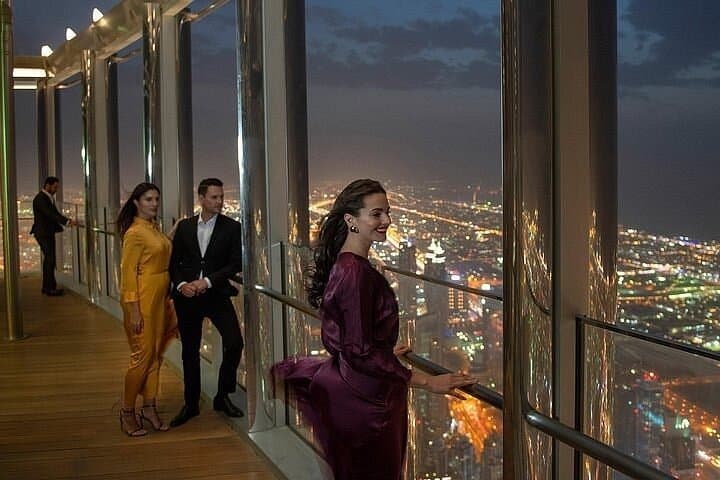
Visits typically include levels 124 and 125 for wide-angle viewing and 148 for the Sky Lounge experience—refreshments, telescopes, and the VR ‘Mission 828’ that recreates the tower’s vertical drama. Time your ticket for sunset if you want the city’s lights to flick on as the air cools; mid-morning offers clearer long-distance visibility.
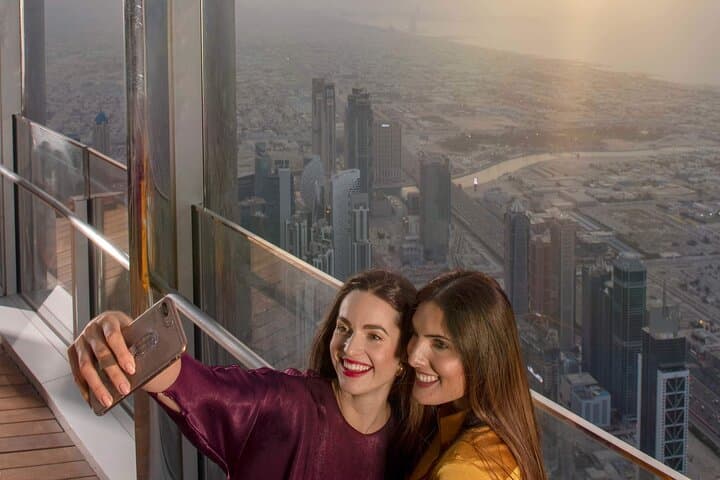
Practical notes: expect airport-style security, short walking between entry points, and climate-controlled interiors (but hot outdoor queues in summer). Bring a charged camera, arrive 15–30 minutes early to exchange tickets if needed, and allow at least 30–45 minutes for the full experience including elevator lines. The trip is accessible to most travelers and delivers a concise, high-adrenaline view into Dubai’s rapid urban story.
easy.
30 minutes.
Suitable for most fitness levels; requires standing and short walks on level surfaces
Yes—Top Sky tickets include access to levels 124, 125 and the 148 Sky Lounge; confirm your ticket type before arrival.
Yes—the public observatories and elevators are accessible; inform staff if you require assistance for smoother entry.
Mid-morning provides the clearest long-range visibility; sunset offers dramatic lighting and city lights but can be busier.
Handheld cameras and phones are fine; tripods are typically restricted in the public observatory for safety and crowd flow.
Completed in 2010, Burj Khalifa was part of an ambitious Downtown Dubai project that accelerated the city’s global tourism and luxury real-estate profile.
The tower uses high-performance glazing and systems to manage heat gain; visitors are encouraged to minimize single-use plastics and follow on-site recycling where provided.
Sougat Travel & Tourism LLC operates guided outdoor trips and adventures with an emphasis on safety, stewardship, and memorable experiences.
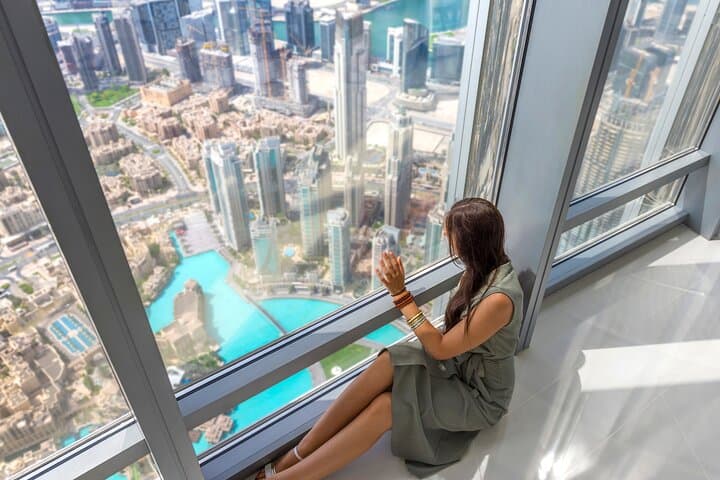
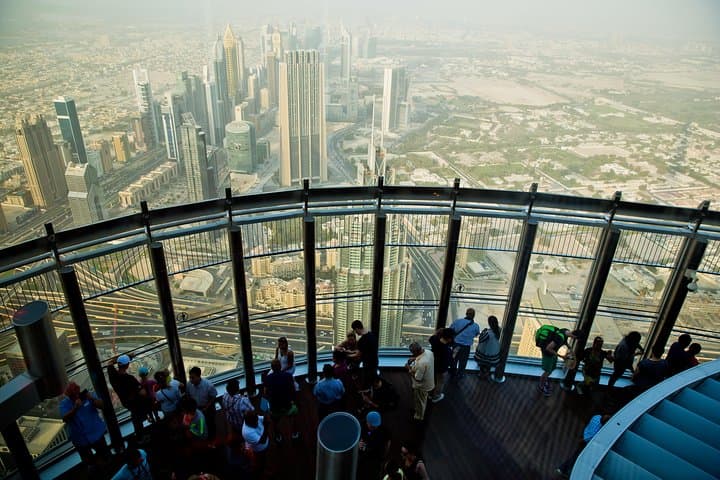
The ascent begins the moment the doors close: a press of air, the world collapsing into a blur as the elevator rockets upward at 10 m/s. Within a minute you break the skyline and step into a glassed observatory where Dubai stretches in geometric panels—salt-blue Persian Gulf, the lace of Sheikh Zayed Road, and the needle-thin outlines of man-made islands.
The ascent begins the moment the doors close: a press of air, the world collapsing into a blur as the elevator rockets upward at 10 m/s. Within a minute you break the skyline and step into a glassed observatory where Dubai stretches in geometric panels—salt-blue Persian Gulf, the lace of Sheikh Zayed Road, and the needle-thin outlines of man-made islands.
Opened in 2010 and designed by Adrian Smith of SOM, Burj Khalifa redefined what a modern city could be. The tower sits on a reinforced concrete mat and deep bored piles that anchor artificial ground to withstand both sand and marine influences, a civil-engineering response to the Arabian Peninsula’s geology. Downtown Dubai around the tower is a mix of high-fashion retail, choreographed fountains, and late-night cafés that keep the city pulsing after sundown.
Visits typically include levels 124 and 125 for wide-angle viewing and 148 for the Sky Lounge experience—refreshments, telescopes, and the VR ‘Mission 828’ that recreates the tower’s vertical drama. Time your ticket for sunset if you want the city’s lights to flick on as the air cools; mid-morning offers clearer long-distance visibility.
Practical notes: expect airport-style security, short walking between entry points, and climate-controlled interiors (but hot outdoor queues in summer). Bring a charged camera, arrive 15–30 minutes early to exchange tickets if needed, and allow at least 30–45 minutes for the full experience including elevator lines. The trip is accessible to most travelers and delivers a concise, high-adrenaline view into Dubai’s rapid urban story.