THE ADVENTURE COLLECTIVE® · Independent discovery and booking for outdoor travel

Ride one of the world’s fastest elevators to the Burj Khalifa observation decks on floors 124 and 125 for sweeping views, cultural exhibits and a unique city perspective. Plan for timed entry, security checks, and prime sunset windows to make the most of the visit.
Ride one of the world’s fastest elevators to the Burj Khalifa observation decks on floors 124 and 125 for sweeping views, cultural exhibits and a unique city perspective. Plan for timed entry, security checks, and prime sunset windows to make the most of the visit.
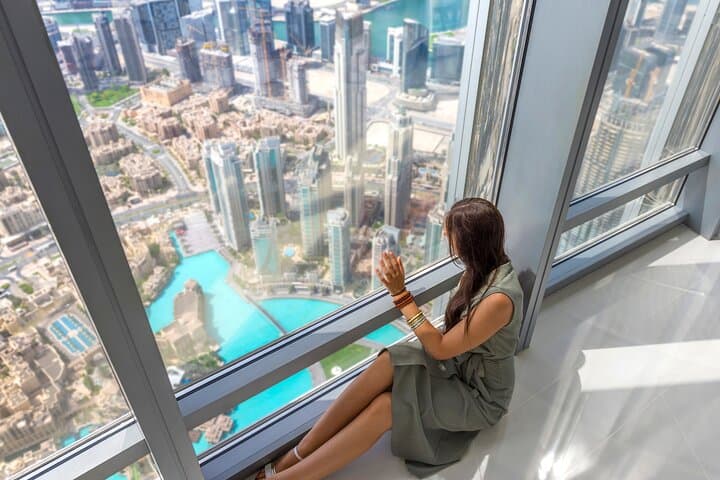
The elevator leaves the ground and Dubai peels away beneath you — a grid of glass, sand and steel shrinking into a neat pattern. Within minutes you’re on the 124th and 125th floors of the Burj Khalifa, where the city’s geometry lays itself out in sweeping 360-degree panoramas and the air feels like a deliberate quiet above the bustle.
Verified experiences and guided adventures in the surrounding area.
Operated by Sougat Travel & Tourism LLC · Dubai, Dubai
The elevator leaves the ground and Dubai peels away beneath you — a grid of glass, sand and steel shrinking into a neat pattern. Within minutes you’re on the 124th and 125th floors of the Burj Khalifa, where the city’s geometry lays itself out in sweeping 360-degree panoramas and the air feels like a deliberate quiet above the bustle.
The Burj Khalifa opened in 2010 as the world’s tallest tower, its stepped profile driven by a reinforced concrete buttressed core and a design that draws on regional architectural motifs. Level 125 focuses on Arab art and culture with curated exhibits that add context to the skyline you’re studying; the observation terraces use interactive elements and a high-powered telescope to translate distance into detail.
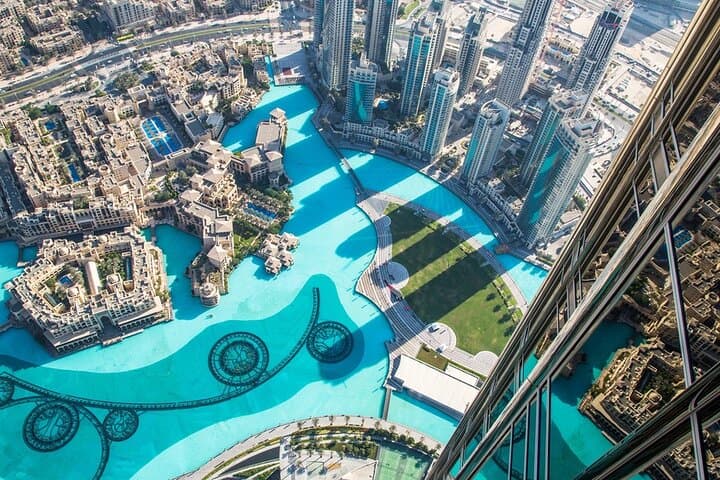
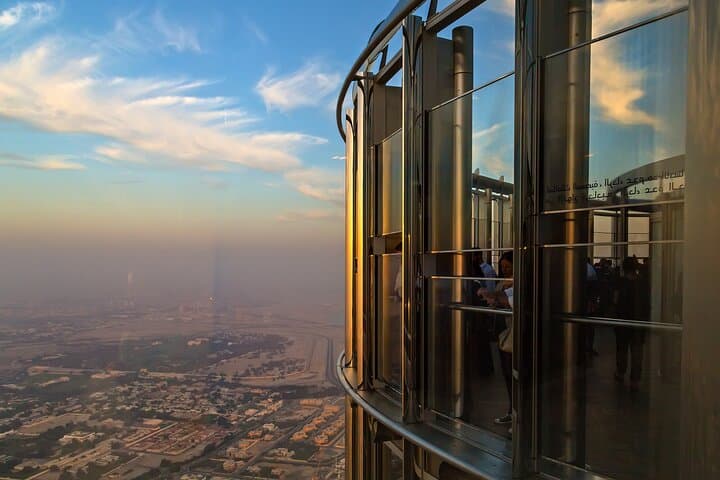
From up here you’ll read the city differently: shipping lanes and inland lagoons demand attention, the Dubai Fountain’s choreography shrinks to geometry, and the desert beyond the urban edge holds a flat, patient presence. The building itself is an engineered landmark — expect crowds during peak times and tight security screenings at entry.
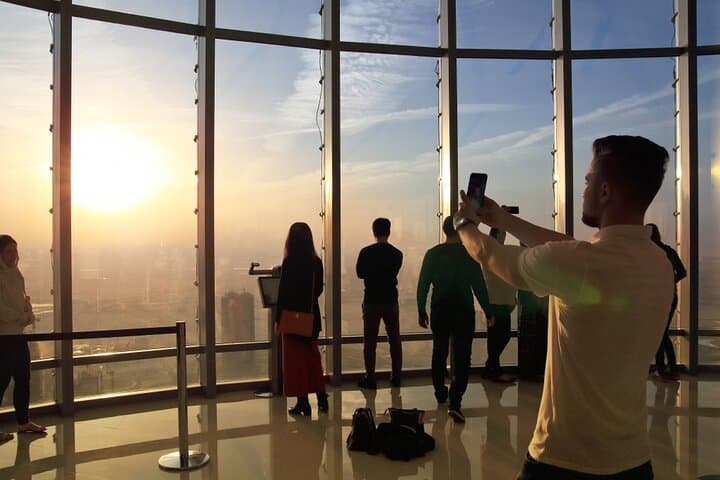
Practical guide: book a timed ticket and arrive 20–30 minutes early to clear security and baggage checks. Sunset slots sell out fast if you want the light to evolve; off-peak afternoon visits feel less crowded. Dress for bright sun and reflective glass — a light jacket in winter evenings is useful. Photography works best handheld with a fast shutter; the glass can produce reflections so press against the pane or use a polarizer.
Transfers are commonly offered from central Dubai; public transit access via Dubai Mall is straightforward. Stay aware of queue times, keep hydrated, and allow at least an hour for the visit to fully soak in the view.
easy.
1 hour.
Suitable for all fitness levels—mostly elevator transport with short, flat walking distances
The scheduled visit is about 60 minutes; allow extra time for security, transfers and photo-taking.
Elevators are among the fastest in the world; queues can form at peak times—arrive early to minimize waiting.
The Burj Khalifa and At The Top observation decks provide wheelchair access and elevators; check with the operator for stroller policies.
Advance booking is recommended, especially for sunset and weekend time slots; some off-peak tickets may be available on site.
Opened in 2010, the Burj Khalifa was designed by Adrian Smith and became an icon of Dubai’s rapid urban expansion and engineering ambition.
Visitor management and strict trash policies keep the tower’s footprint controlled; follow signage and avoid leaving litter or disrupting exhibits.
Sougat Travel & Tourism LLC operates guided outdoor trips and adventures with an emphasis on safety, stewardship, and memorable experiences.
The elevator leaves the ground and Dubai peels away beneath you — a grid of glass, sand and steel shrinking into a neat pattern. Within minutes you’re on the 124th and 125th floors of the Burj Khalifa, where the city’s geometry lays itself out in sweeping 360-degree panoramas and the air feels like a deliberate quiet above the bustle.
The elevator leaves the ground and Dubai peels away beneath you — a grid of glass, sand and steel shrinking into a neat pattern. Within minutes you’re on the 124th and 125th floors of the Burj Khalifa, where the city’s geometry lays itself out in sweeping 360-degree panoramas and the air feels like a deliberate quiet above the bustle.
The Burj Khalifa opened in 2010 as the world’s tallest tower, its stepped profile driven by a reinforced concrete buttressed core and a design that draws on regional architectural motifs. Level 125 focuses on Arab art and culture with curated exhibits that add context to the skyline you’re studying; the observation terraces use interactive elements and a high-powered telescope to translate distance into detail.
From up here you’ll read the city differently: shipping lanes and inland lagoons demand attention, the Dubai Fountain’s choreography shrinks to geometry, and the desert beyond the urban edge holds a flat, patient presence. The building itself is an engineered landmark — expect crowds during peak times and tight security screenings at entry.
Practical guide: book a timed ticket and arrive 20–30 minutes early to clear security and baggage checks. Sunset slots sell out fast if you want the light to evolve; off-peak afternoon visits feel less crowded. Dress for bright sun and reflective glass — a light jacket in winter evenings is useful. Photography works best handheld with a fast shutter; the glass can produce reflections so press against the pane or use a polarizer.
Transfers are commonly offered from central Dubai; public transit access via Dubai Mall is straightforward. Stay aware of queue times, keep hydrated, and allow at least an hour for the visit to fully soak in the view.