THE ADVENTURE COLLECTIVE® · Independent discovery and booking for outdoor travel

Ascend to the Burj Khalifa’s 124th and 125th floors for engineered panoramas of Dubai’s skyline, the Arabian Gulf, and the fountain below. This pickup-and-drop-off experience pairs easy accessibility with telescopes, an outdoor terrace, and a VR preview for a concise, high-altitude perspective.
Ascend to the Burj Khalifa’s 124th and 125th floors for engineered panoramas of Dubai’s skyline, the Arabian Gulf, and the fountain below. This pickup-and-drop-off experience pairs easy accessibility with telescopes, an outdoor terrace, and a VR preview for a concise, high-altitude perspective.
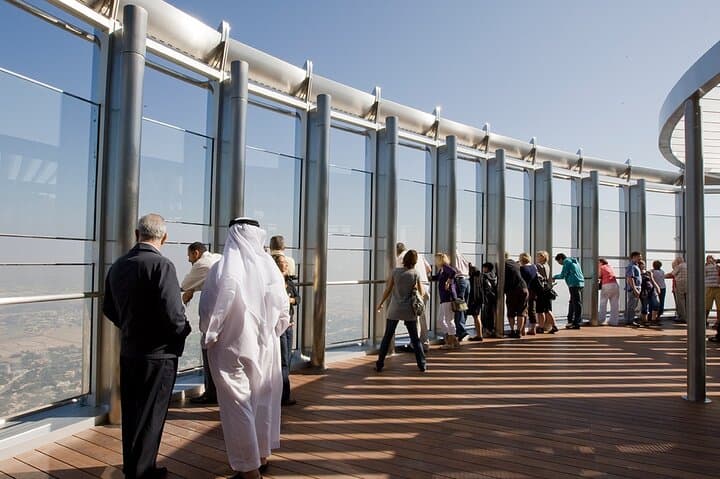
The elevator rises and the city rearranges itself: roads shrink, the Dubai Fountain becomes a jeweled arc, and the Persian Gulf presses a pale line against the horizon. On the 124th and 125th floors of Burj Khalifa, the city feels engineered to be seen—the glass, the terraces, the high-powered telescopes that invite a closer look at a metropolis built fast and bright.
Verified experiences and guided adventures in the surrounding area.
Operated by RUSH TOURISM · Dubai, Dubai
The elevator rises and the city rearranges itself: roads shrink, the Dubai Fountain becomes a jeweled arc, and the Persian Gulf presses a pale line against the horizon. On the 124th and 125th floors of Burj Khalifa, the city feels engineered to be seen—the glass, the terraces, the high-powered telescopes that invite a closer look at a metropolis built fast and bright.
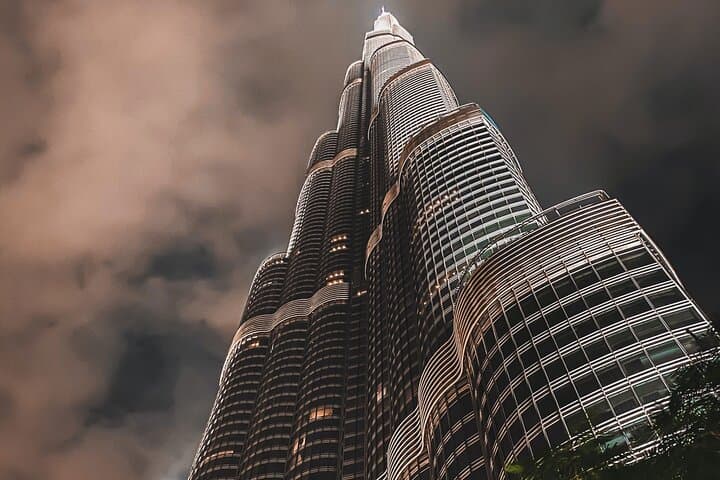
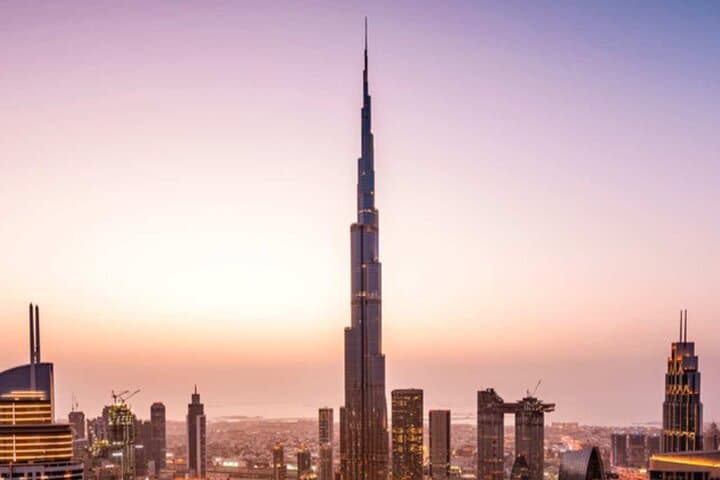
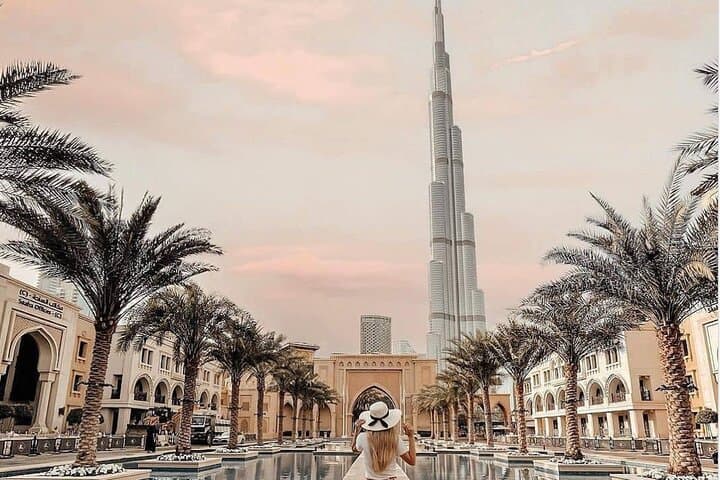
Opened in 2010 and designed by the firm Skidmore, Owings & Merrill, Burj Khalifa reaches 828 meters and redefined what a skyline could be. The tower sits at the heart of Downtown Dubai beside the Dubai Mall and an artificial lake that hosts the festivallike Dubai Fountain. The building’s steel-and-glass spine was driven by modern engineering and Dubai’s rapid urban ambitions; the observation decks pair that history with straightforward spectacle.
Expect a structured visit: transport provided in air-conditioned vehicles, security screening, a curated VR experience, outdoor terrace time, and telescopes for detail work below. The experience suits all physical levels and is wheelchair accessible, but timing changes the mood—sunrise offers quiet light; evening reveals the city’s LED choreography.
Practical guidance: arrive 15–30 minutes early, carry ID for pickup, and keep bags compact for security lines. Sun protection matters—outdoor terrace can be very bright—and morning or late-afternoon slots reduce glare and heat. Photography is unrestricted for personal use; use the viewing platforms and telescopes for distant landmarks. This is an urban vantage point more than a wilderness adventure—a disciplined, high-altitude way to read Dubai’s geography and ambition.
easy.
1–2 hours.
Suitable for all fitness levels; requires only standing and walking short distances
Yes—this tour includes air-conditioned transport for pickup and drop-off; confirm your pickup point and time when booking.
Yes—the transport, routes, and observation areas are wheelchair accessible; indicate any mobility needs when booking pickup.
Plan 60–120 minutes total to allow for transport, security screening, VR experience, and time on the indoor and outdoor viewing areas.
Photography for personal use is allowed and high-powered telescopes are available on the observation deck to examine distant landmarks.
Completed in 2010 and developed by Emaar Properties, Burj Khalifa was designed to break height records and anchor Downtown Dubai as a global commercial and leisure hub.
The building and its visitors create urban light and energy demands; use public transport options where possible and respect deck rules to minimize impact.
RUSH TOURISM operates guided outdoor trips and adventures with an emphasis on safety, stewardship, and memorable experiences.
The elevator rises and the city rearranges itself: roads shrink, the Dubai Fountain becomes a jeweled arc, and the Persian Gulf presses a pale line against the horizon. On the 124th and 125th floors of Burj Khalifa, the city feels engineered to be seen—the glass, the terraces, the high-powered telescopes that invite a closer look at a metropolis built fast and bright.
The elevator rises and the city rearranges itself: roads shrink, the Dubai Fountain becomes a jeweled arc, and the Persian Gulf presses a pale line against the horizon. On the 124th and 125th floors of Burj Khalifa, the city feels engineered to be seen—the glass, the terraces, the high-powered telescopes that invite a closer look at a metropolis built fast and bright.
Opened in 2010 and designed by the firm Skidmore, Owings & Merrill, Burj Khalifa reaches 828 meters and redefined what a skyline could be. The tower sits at the heart of Downtown Dubai beside the Dubai Mall and an artificial lake that hosts the festivallike Dubai Fountain. The building’s steel-and-glass spine was driven by modern engineering and Dubai’s rapid urban ambitions; the observation decks pair that history with straightforward spectacle.
Expect a structured visit: transport provided in air-conditioned vehicles, security screening, a curated VR experience, outdoor terrace time, and telescopes for detail work below. The experience suits all physical levels and is wheelchair accessible, but timing changes the mood—sunrise offers quiet light; evening reveals the city’s LED choreography.
Practical guidance: arrive 15–30 minutes early, carry ID for pickup, and keep bags compact for security lines. Sun protection matters—outdoor terrace can be very bright—and morning or late-afternoon slots reduce glare and heat. Photography is unrestricted for personal use; use the viewing platforms and telescopes for distant landmarks. This is an urban vantage point more than a wilderness adventure—a disciplined, high-altitude way to read Dubai’s geography and ambition.