THE ADVENTURE COLLECTIVE® · Independent discovery and booking for outdoor travel

Ascend the Burj Khalifa to Level 124 for sweeping city and sea views, then enjoy a three-course rooftop dinner beneath Dubai’s lights. This combined sightseeing and dining experience pairs a fast-elevator panorama with a relaxed meal — ideal for visitors who want an efficient, memorable evening.
Ascend the Burj Khalifa to Level 124 for sweeping city and sea views, then enjoy a three-course rooftop dinner beneath Dubai’s lights. This combined sightseeing and dining experience pairs a fast-elevator panorama with a relaxed meal — ideal for visitors who want an efficient, memorable evening.
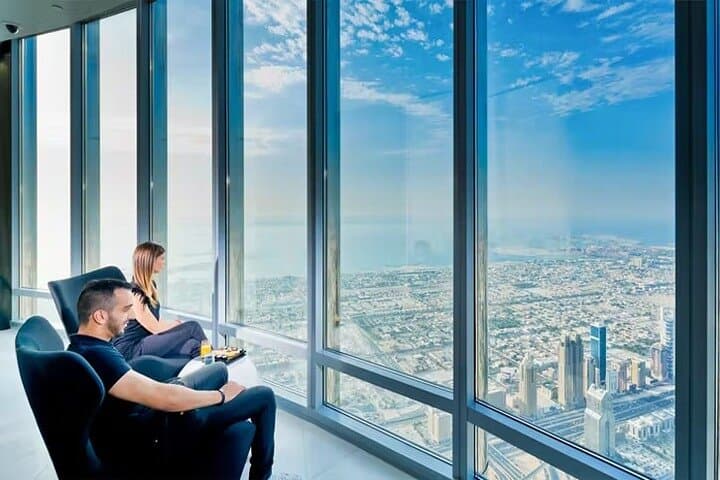
You step from a cool marble foyer into an elevator that rockets upward so quickly the city below rearranges itself into a grid of light and glass. Within a minute the Burj Khalifa’s glass shaft has pushed you past clouds and traffic; at Level 124 the city unfurls in 360 degrees — towers like cut crystal, the desert’s ochre rim, and the Arabian Gulf glittering on the horizon.
Verified experiences and guided adventures in the surrounding area.
Operated by Dream Fly Tourism LLC · Dubai, Dubai
You step from a cool marble foyer into an elevator that rockets upward so quickly the city below rearranges itself into a grid of light and glass. Within a minute the Burj Khalifa’s glass shaft has pushed you past clouds and traffic; at Level 124 the city unfurls in 360 degrees — towers like cut crystal, the desert’s ochre rim, and the Arabian Gulf glittering on the horizon.
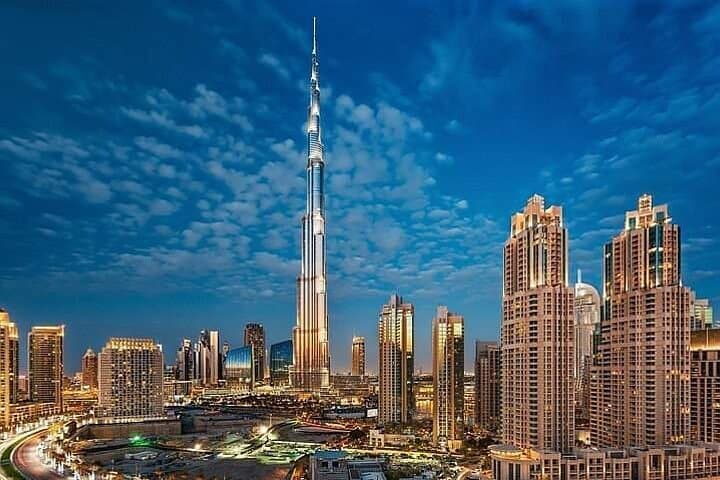
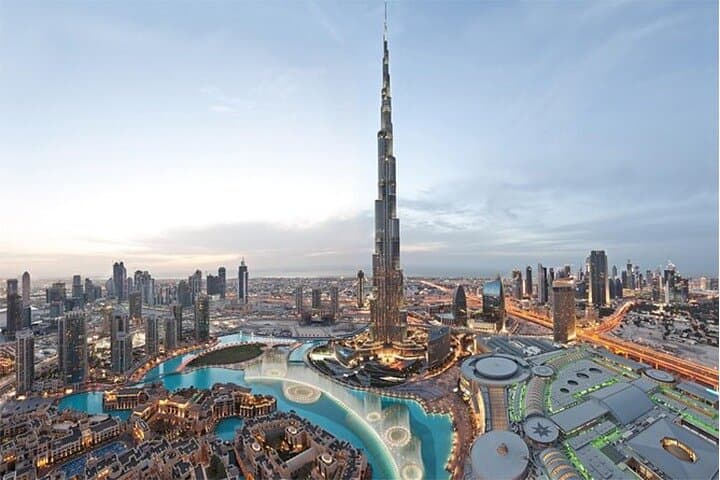
The Burj Khalifa opened in 2010 as the world’s tallest building at 828 meters, part of Sheikh Mohammed’s plan to reposition Dubai as a global hub. Geologically the tower stands on reclaimed coastal plain and engineered piles; culturally it became an icon of rapid urban ambition, visible in Dubai’s skyline and marketing. The observation deck offers telescopes and interpretive panels that orient you to landmarks like the Dubai Fountain, Palm Jumeirah, and the old creek districts.
Practical guidance: book a sunset or early-evening slot to catch daylight-to-night transitions but allow for security screening time. The visit is low-impact physically — expect stairs only for short segments — yet lines form quickly, so arrive with mobile tickets ready. Dress comfortably but respectfully for a public indoor venue; light layers handle cool interior air. The Rooftop three-course menu follows your viewing window; factor dining time into your schedule if you’ve booked transport or other evening plans.
For photographers, the changing light is the real show; for planners, the combined ticket simplifies an iconic skyline stop plus a relaxed meal without hunting for reservations downtown.
easy.
1–5 hours.
Minimal fitness required; able-bodied visitors including families and older travelers can participate.
Visits usually include a scheduled viewing window (around 30 minutes is common) but total time can be extended depending on ticket type and crowding.
Smart casual attire is appropriate; Dubai public places expect modest, neat clothing — avoid swimwear and excessively revealing outfits.
Yes; infants may sit on laps during the elevator and viewing, but check the booking rules for any age-specific requirements.
Viewing telescopes are provided on the observation deck to help identify distant landmarks and coastal features.
Completed in 2010, Burj Khalifa was built during a period of rapid development, designed by Skidmore, Owings & Merrill to be both an engineering milestone and a global icon.
High visitor numbers require efficient queuing and waste management; opt for public transit or consolidated bookings to reduce demand on local traffic and resources.
Dream Fly Tourism LLC operates guided outdoor trips and adventures with an emphasis on safety, stewardship, and memorable experiences.

You step from a cool marble foyer into an elevator that rockets upward so quickly the city below rearranges itself into a grid of light and glass. Within a minute the Burj Khalifa’s glass shaft has pushed you past clouds and traffic; at Level 124 the city unfurls in 360 degrees — towers like cut crystal, the desert’s ochre rim, and the Arabian Gulf glittering on the horizon.
You step from a cool marble foyer into an elevator that rockets upward so quickly the city below rearranges itself into a grid of light and glass. Within a minute the Burj Khalifa’s glass shaft has pushed you past clouds and traffic; at Level 124 the city unfurls in 360 degrees — towers like cut crystal, the desert’s ochre rim, and the Arabian Gulf glittering on the horizon.
The Burj Khalifa opened in 2010 as the world’s tallest building at 828 meters, part of Sheikh Mohammed’s plan to reposition Dubai as a global hub. Geologically the tower stands on reclaimed coastal plain and engineered piles; culturally it became an icon of rapid urban ambition, visible in Dubai’s skyline and marketing. The observation deck offers telescopes and interpretive panels that orient you to landmarks like the Dubai Fountain, Palm Jumeirah, and the old creek districts.
Practical guidance: book a sunset or early-evening slot to catch daylight-to-night transitions but allow for security screening time. The visit is low-impact physically — expect stairs only for short segments — yet lines form quickly, so arrive with mobile tickets ready. Dress comfortably but respectfully for a public indoor venue; light layers handle cool interior air. The Rooftop three-course menu follows your viewing window; factor dining time into your schedule if you’ve booked transport or other evening plans.
For photographers, the changing light is the real show; for planners, the combined ticket simplifies an iconic skyline stop plus a relaxed meal without hunting for reservations downtown.