THE ADVENTURE COLLECTIVE® · Independent discovery and booking for outdoor travel

Stand on glass above a city that built itself skyward. This practical guide covers which observation levels to choose, when to go, and how to move efficiently through the world’s tallest tower.
Stand on glass above a city that built itself skyward. This practical guide covers which observation levels to choose, when to go, and how to move efficiently through the world’s tallest tower.
You step from the cool shade of Dubai Mall into a plaza of glass and steel; a vertical column of light rises ahead and the city folds away beneath it. The elevator—one of the fastest in the world—carries you through a blink, then the glass opens and the city spreads: salt-flat coastline, the glittering Persian Gulf, rivers of highway, and the Dubai Fountain sweeping like a conductor daring you to look down.
Verified experiences and guided adventures in the surrounding area.
Operated by Booketto DMC · Dubai, Dubai
You step from the cool shade of Dubai Mall into a plaza of glass and steel; a vertical column of light rises ahead and the city folds away beneath it. The elevator—one of the fastest in the world—carries you through a blink, then the glass opens and the city spreads: salt-flat coastline, the glittering Persian Gulf, rivers of highway, and the Dubai Fountain sweeping like a conductor daring you to look down.
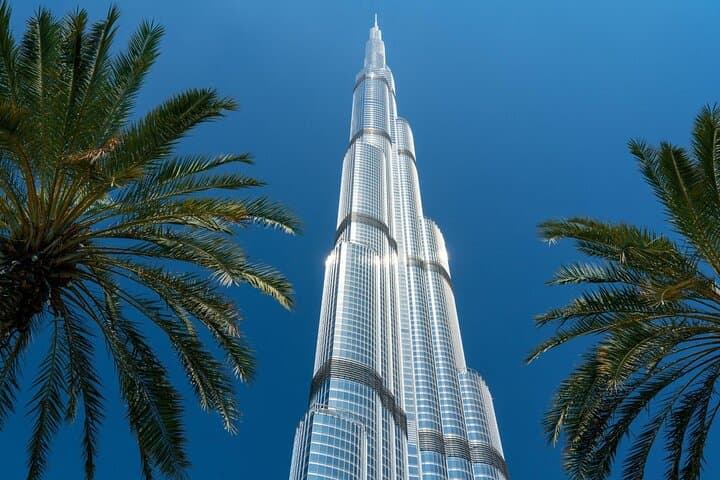
Completed in 2010 and designed by Adrian Smith for developer Emaar, the Burj Khalifa reaches 828 meters and holds several world records: tallest freestanding structure, highest occupied floor, and longest-traveling elevator among them. Its buttressed-core design was adapted to local sandy geology and coastal conditions, with deep piled foundations anchoring the spire into compacted fill.
Culturally, the tower is Dubai’s statement of accelerated urban growth—part observation deck, part luxury address—and it sits adjacent to the Dubai Fountain, Burj Park, and the world-class Dubai Mall.
Practical guidance: tickets cover different levels (At The Top 124th, SKY 148th, and 152nd-floor lounge options); sunset sells out fast and morning visits offer clearer air. Allow 2–3 hours for queues, security screening, exhibits, and floor-to-floor time. Metro access and pedestrian bridges link the site to the city, reducing the need for cars. Expect strong sun and reflective glare on terraces; use sunscreen, hydration, and calm footing on glass floors. Accessibility is good—wheelchair access and elevators are available—but security checks are strict and bags are screened. With planning, a visit becomes a compact, high-altitude view of Dubai’s rapid geography of sand, sea, and steel.
easy.
2–3 hours.
Suitable for all fitness levels; requires ability to stand and walk short distances
Tickets typically cover the 124th-floor observation deck (At The Top), the 148th-floor SKY level for a higher view and smaller crowds, and occasional lounge access on the 152nd—higher levels cost more and have restricted capacity.
Yes—there are elevators, ramps, and accessible facilities; staff can assist, but you should note accessibility needs when booking to ensure a smooth entry.
Early mornings usually offer the clearest air and fewer crowds; sunset provides dramatic light but reduced visibility on hazy days and heavier foot traffic.
Personal cameras and phones are allowed for photography; drones are prohibited without special permits and professional photography often requires prior authorization.
Completed in 2010 by Emaar, the tower capped decades of rapid development in Dubai and showcased advanced high-rise engineering adapted to coastal sands.
The site emphasizes energy and water management inside the tower; visitors are encouraged to use public transport and conserve water while in the city to reduce local environmental impact.
Booketto DMC operates guided outdoor trips and adventures with an emphasis on safety, stewardship, and memorable experiences.
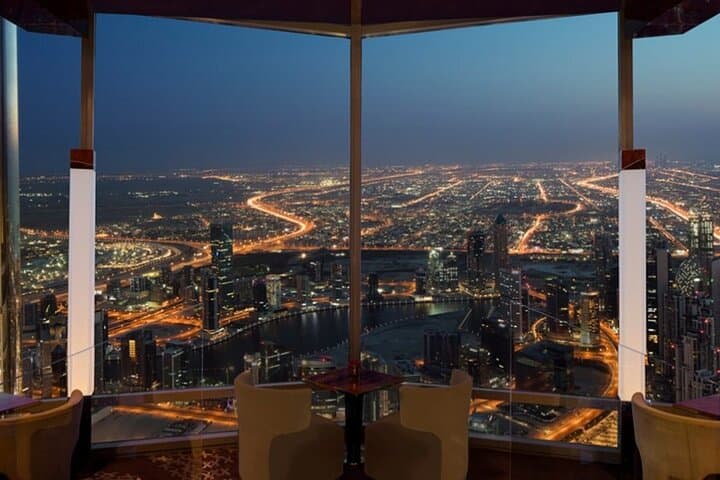

You step from the cool shade of Dubai Mall into a plaza of glass and steel; a vertical column of light rises ahead and the city folds away beneath it. The elevator—one of the fastest in the world—carries you through a blink, then the glass opens and the city spreads: salt-flat coastline, the glittering Persian Gulf, rivers of highway, and the Dubai Fountain sweeping like a conductor daring you to look down.
You step from the cool shade of Dubai Mall into a plaza of glass and steel; a vertical column of light rises ahead and the city folds away beneath it. The elevator—one of the fastest in the world—carries you through a blink, then the glass opens and the city spreads: salt-flat coastline, the glittering Persian Gulf, rivers of highway, and the Dubai Fountain sweeping like a conductor daring you to look down.
Completed in 2010 and designed by Adrian Smith for developer Emaar, the Burj Khalifa reaches 828 meters and holds several world records: tallest freestanding structure, highest occupied floor, and longest-traveling elevator among them. Its buttressed-core design was adapted to local sandy geology and coastal conditions, with deep piled foundations anchoring the spire into compacted fill.
Culturally, the tower is Dubai’s statement of accelerated urban growth—part observation deck, part luxury address—and it sits adjacent to the Dubai Fountain, Burj Park, and the world-class Dubai Mall.
Practical guidance: tickets cover different levels (At The Top 124th, SKY 148th, and 152nd-floor lounge options); sunset sells out fast and morning visits offer clearer air. Allow 2–3 hours for queues, security screening, exhibits, and floor-to-floor time. Metro access and pedestrian bridges link the site to the city, reducing the need for cars. Expect strong sun and reflective glare on terraces; use sunscreen, hydration, and calm footing on glass floors. Accessibility is good—wheelchair access and elevators are available—but security checks are strict and bags are screened. With planning, a visit becomes a compact, high-altitude view of Dubai’s rapid geography of sand, sea, and steel.