THE ADVENTURE COLLECTIVE® · Independent discovery and booking for outdoor travel

Step into the world’s tallest skyscraper and watch Dubai unfold from the 124th, 125th and 148th floors. This guide covers history, what to expect, and practical tips for timing, accessibility and getting the most from your visit.
Step into the world’s tallest skyscraper and watch Dubai unfold from the 124th, 125th and 148th floors. This guide covers history, what to expect, and practical tips for timing, accessibility and getting the most from your visit.
A ride in a high-speed elevator compresses the city into a single blur of glass and light, then unspools as the doors open onto an observation deck where Dubai spreads like a modern map below. On the 124th and 125th floors you stand amid polished viewing platforms and interactive displays; a reserved ascent to the 148th floor pushes the perspective even farther—skyline, desert, and Persian Gulf arranged by distance and scale.
Verified experiences and guided adventures in the surrounding area.
Operated by T V G TRAVEL AND TOURISM L.L.C · Dubai, Dubai
A ride in a high-speed elevator compresses the city into a single blur of glass and light, then unspools as the doors open onto an observation deck where Dubai spreads like a modern map below. On the 124th and 125th floors you stand amid polished viewing platforms and interactive displays; a reserved ascent to the 148th floor pushes the perspective even farther—skyline, desert, and Persian Gulf arranged by distance and scale.
Dubai’s leap from pearling village to global hub happened in decades, and the Burj Khalifa is its architectural punctuation mark. Built on reclaimed ground above coastal plain and ancient sabkha, its stepped, Y-shaped plan responds to wind and foundation constraints; the tower itself is a study in engineering that controlled settlement and vortex shedding to reach record heights. Culturally, the tower functions as both tourist magnet and civic stage—light shows, fountains, and events shape the plaza life at its base.
Practical guidance: book a timed ticket and arrive 20–30 minutes early for security and the VR experience; mobile tickets are accepted. Expect climate-controlled interiors but strong sun at exterior viewing terraces—sunglasses and a light layer are useful. Accessibility is excellent—wheelchair access and elevators are available—but the site recommends caution for travelers with spinal or serious cardiovascular conditions. Timing matters: early morning or sunset slots give the clearest views; summer afternoons can be hazy.
This visit is short on physical effort but big on perspective: minimal exertion, maximum visual payoff. Plan around peak hours, allow two hours total for the visit, and pair the trip with a walk around The Dubai Fountain or an exploration of Downtown Dubai’s cafés and galleries.
easy.
2 hours.
Suitable for all fitness levels; mostly standing and short walks on flat surfaces
The official duration is about 2 hours; plan for 1–2 hours including security, VR experience, and viewing time.
Mobile or paper tickets are accepted; your booking confirms the type—bring the confirmation and ID for entry.
Yes—elevators, accessible routes, and specialized seating for infants are provided; inform staff of any special requirements.
Specific tickets include access to the floors listed—ensure your booking states 124/125 and 148 if you want the highest-level viewpoint.
The Burj Khalifa opened in 2010 and was designed as part of Downtown Dubai’s redevelopment to position the city as a global center for commerce and tourism.
The building uses high-performance glazing and condensate-recovery systems to reduce water and energy use; visitors are encouraged to minimize waste while on-site.
T V G TRAVEL AND TOURISM L.L.C operates guided outdoor trips and adventures with an emphasis on safety, stewardship, and memorable experiences.
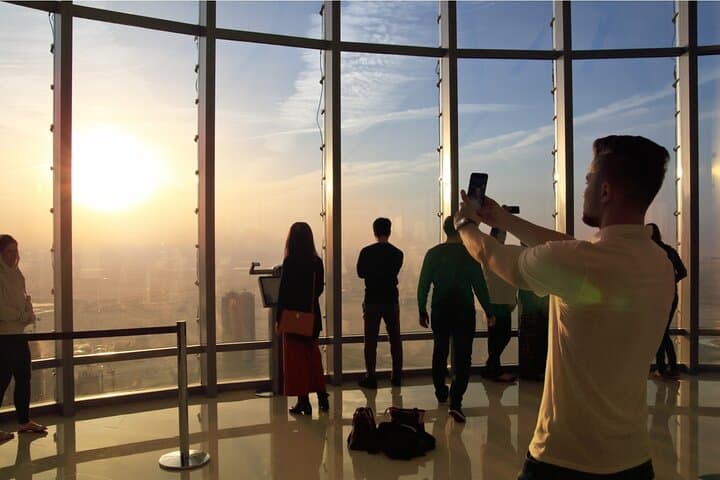
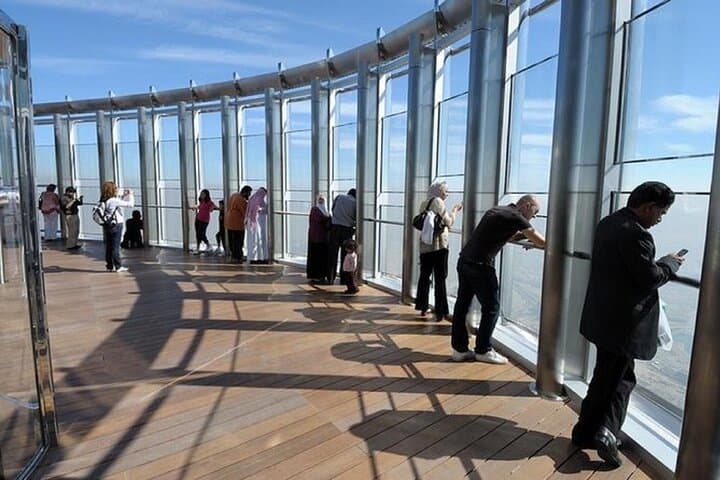
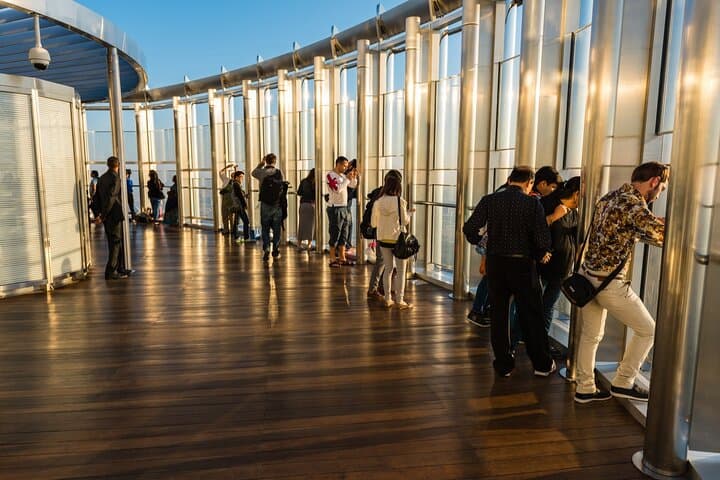
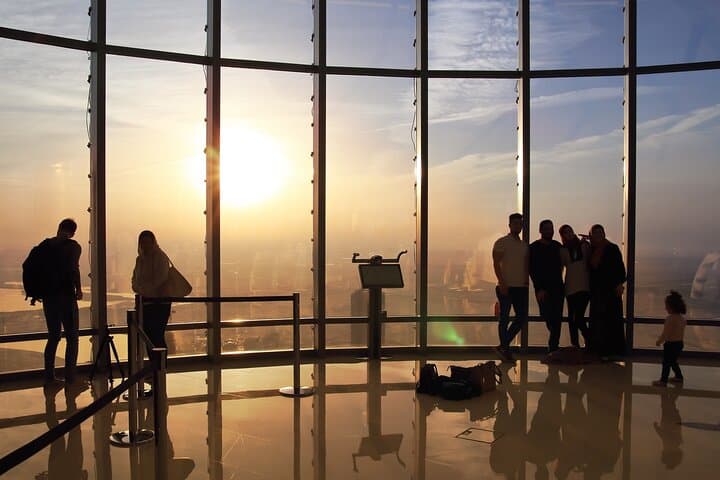
A ride in a high-speed elevator compresses the city into a single blur of glass and light, then unspools as the doors open onto an observation deck where Dubai spreads like a modern map below. On the 124th and 125th floors you stand amid polished viewing platforms and interactive displays; a reserved ascent to the 148th floor pushes the perspective even farther—skyline, desert, and Persian Gulf arranged by distance and scale.
A ride in a high-speed elevator compresses the city into a single blur of glass and light, then unspools as the doors open onto an observation deck where Dubai spreads like a modern map below. On the 124th and 125th floors you stand amid polished viewing platforms and interactive displays; a reserved ascent to the 148th floor pushes the perspective even farther—skyline, desert, and Persian Gulf arranged by distance and scale.
Dubai’s leap from pearling village to global hub happened in decades, and the Burj Khalifa is its architectural punctuation mark. Built on reclaimed ground above coastal plain and ancient sabkha, its stepped, Y-shaped plan responds to wind and foundation constraints; the tower itself is a study in engineering that controlled settlement and vortex shedding to reach record heights. Culturally, the tower functions as both tourist magnet and civic stage—light shows, fountains, and events shape the plaza life at its base.
Practical guidance: book a timed ticket and arrive 20–30 minutes early for security and the VR experience; mobile tickets are accepted. Expect climate-controlled interiors but strong sun at exterior viewing terraces—sunglasses and a light layer are useful. Accessibility is excellent—wheelchair access and elevators are available—but the site recommends caution for travelers with spinal or serious cardiovascular conditions. Timing matters: early morning or sunset slots give the clearest views; summer afternoons can be hazy.
This visit is short on physical effort but big on perspective: minimal exertion, maximum visual payoff. Plan around peak hours, allow two hours total for the visit, and pair the trip with a walk around The Dubai Fountain or an exploration of Downtown Dubai’s cafés and galleries.