THE ADVENTURE COLLECTIVE® · Independent discovery and booking for outdoor travel

Ride one of the world’s fastest elevators to levels 124–125 of the Burj Khalifa, then settle into rooftop dining with sweeping views of Dubai’s skyline and the Arabian Gulf. Plan for sunset for peak light and book a timed entry to avoid lines.
Ride one of the world’s fastest elevators to levels 124–125 of the Burj Khalifa, then settle into rooftop dining with sweeping views of Dubai’s skyline and the Arabian Gulf. Plan for sunset for peak light and book a timed entry to avoid lines.
The elevator hums, the floor vibrates, and in less than a minute the city falls away beneath you. Stepping onto levels 124 and 125 of the Burj Khalifa places you at roughly 452 meters (about 1,483 feet) above ground—an urban precipice where glass and desert meet.
Verified experiences and guided adventures in the surrounding area.
Operated by Royal Falcon Limo · Dubai, Dubai
The elevator hums, the floor vibrates, and in less than a minute the city falls away beneath you. Stepping onto levels 124 and 125 of the Burj Khalifa places you at roughly 452 meters (about 1,483 feet) above ground—an urban precipice where glass and desert meet.
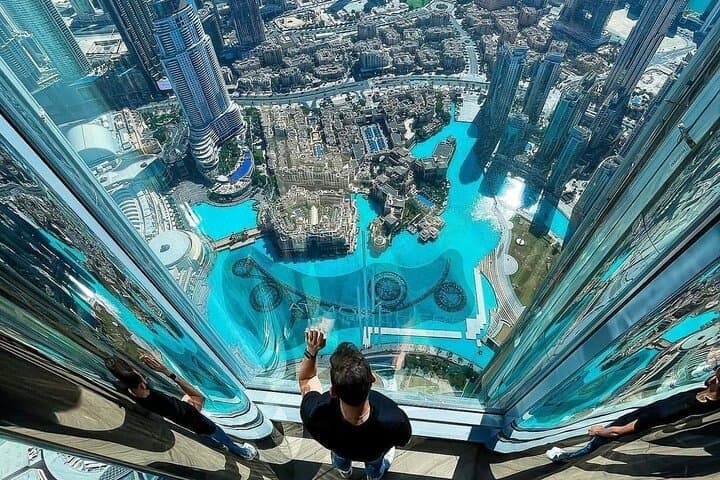
Dubai’s skyline is recent history written in steel and concrete. Opened in 2010, the Burj Khalifa redefined vertical architecture and sits on compacted desert alluvium reinforced with a deep concrete raft and bored piles. From the observation deck you’ll see the man-made islands, the patterned grid of older neighborhoods, and the desert that still presses at the city’s edge—each element telling part of Dubai’s rapid transformation from pearling port to global hub.
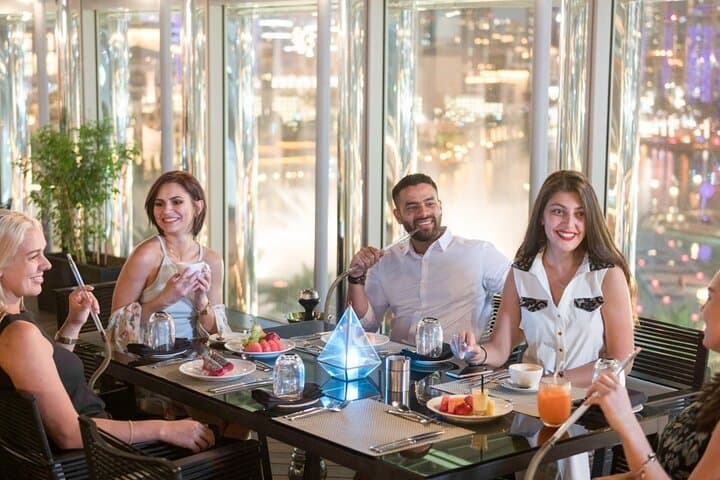
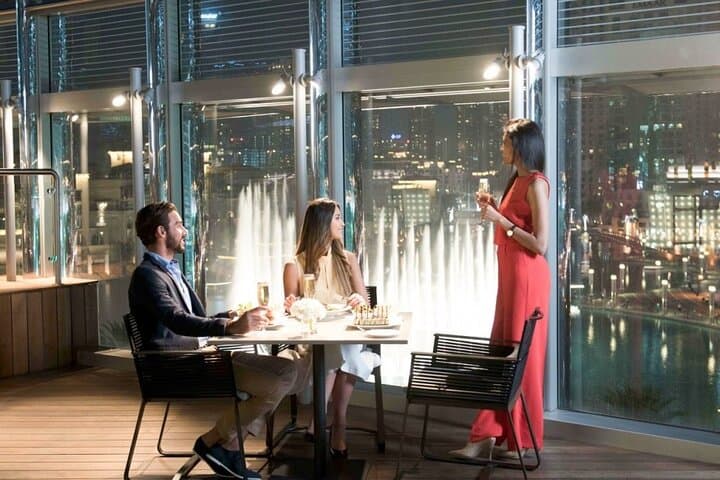
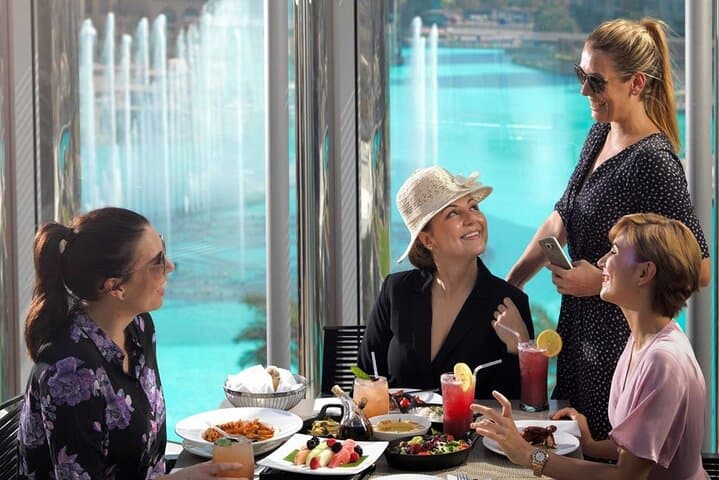
Culturally, the tower is both a symbol of ambition and a gathering place: families, photographers, and business travelers converge here. On the rooftop terrace, the city’s light becomes part of the meal—windows oriented toward the Arabian Gulf offer unforgettable vantage points as evening takes hold.
Practical guidance: book timed entry and rooftop dining together to avoid waits; choose sunset or early evening for the most dramatic light but arrive earlier to visit both indoor and outdoor viewing platforms. Security checks are standard; large bags may be restricted. Dress comfortably but respectfully—Dubai’s public spaces expect modesty. Hydrate if you’ve been walking outdoors; elevators are fast, and the deck is accessible to most mobility levels. Bring a camera with a zoom and expect modern-city noise below—above, the skyline challenges you to look further and longer.
easy.
2–3 hours.
Suitable for most fitness levels; mostly standing and short walks between elevators and viewing platforms.
Yes—this ticket includes access to levels 124 and 125, which offer indoor and outdoor viewing areas and panoramic windows.
Yes—elevators and viewing areas are accessible; notify staff if you need assistance when booking.
Outside food and drink are typically not permitted; the rooftop dining component covers meal service separately.
Arrive 20–30 minutes early to clear security and reach the elevator queue without rushing.
Completed in 2010, the Burj Khalifa became the world’s tallest building and anchors Dubai’s rapid 21st-century urban expansion.
High visitor volumes and energy use are ongoing sustainability concerns; choose non-peak times and minimize single-use plastics during your visit.
Royal Falcon Limo operates guided outdoor trips and adventures with an emphasis on safety, stewardship, and memorable experiences.
The elevator hums, the floor vibrates, and in less than a minute the city falls away beneath you. Stepping onto levels 124 and 125 of the Burj Khalifa places you at roughly 452 meters (about 1,483 feet) above ground—an urban precipice where glass and desert meet.
The elevator hums, the floor vibrates, and in less than a minute the city falls away beneath you. Stepping onto levels 124 and 125 of the Burj Khalifa places you at roughly 452 meters (about 1,483 feet) above ground—an urban precipice where glass and desert meet.
Dubai’s skyline is recent history written in steel and concrete. Opened in 2010, the Burj Khalifa redefined vertical architecture and sits on compacted desert alluvium reinforced with a deep concrete raft and bored piles. From the observation deck you’ll see the man-made islands, the patterned grid of older neighborhoods, and the desert that still presses at the city’s edge—each element telling part of Dubai’s rapid transformation from pearling port to global hub.
Culturally, the tower is both a symbol of ambition and a gathering place: families, photographers, and business travelers converge here. On the rooftop terrace, the city’s light becomes part of the meal—windows oriented toward the Arabian Gulf offer unforgettable vantage points as evening takes hold.
Practical guidance: book timed entry and rooftop dining together to avoid waits; choose sunset or early evening for the most dramatic light but arrive earlier to visit both indoor and outdoor viewing platforms. Security checks are standard; large bags may be restricted. Dress comfortably but respectfully—Dubai’s public spaces expect modesty. Hydrate if you’ve been walking outdoors; elevators are fast, and the deck is accessible to most mobility levels. Bring a camera with a zoom and expect modern-city noise below—above, the skyline challenges you to look further and longer.