THE ADVENTURE COLLECTIVE® · Independent discovery and booking for outdoor travel

Ascend to Levels 124 and 125 of the Burj Khalifa for panoramic views of Dubai’s skyline, coastline, and desert. This guide covers history, what you’ll see, and practical tips for timing, tickets, and accessibility.
Ascend to Levels 124 and 125 of the Burj Khalifa for panoramic views of Dubai’s skyline, coastline, and desert. This guide covers history, what you’ll see, and practical tips for timing, tickets, and accessibility.
Step into the elevator and feel the city fold beneath you as it shoots skyward — 456 meters above the desert, glass and stone give way to air and horizon. From Levels 124 and 125, Dubai stretches in ordered geometry: the needle of the Dubai Fountain, the ribbon of the coastline, and the sand pressing quietly beyond the city limits.
Verified experiences and guided adventures in the surrounding area.
Operated by Eldora Travels · Dubai, Dubai
Step into the elevator and feel the city fold beneath you as it shoots skyward — 456 meters above the desert, glass and stone give way to air and horizon. From Levels 124 and 125, Dubai stretches in ordered geometry: the needle of the Dubai Fountain, the ribbon of the coastline, and the sand pressing quietly beyond the city limits.
The Burj Khalifa opened in 2010 after a decade of rapid construction led by Skidmore, Owings & Merrill and architect Adrian Smith. Sited on reclaimed coastal plain and engineered with a bundled-core concrete system, the tower is as much an exercise in urban ambition as in structural geology. The observation decks pair high-tech displays and digital telescopes with roomy indoor platforms — a modern civic lookout inserted into a fast-moving metropolis.
Culturally, the tower anchors Downtown Dubai’s mix of shopping, business, and public spectacle; the fountain shows and promenades below create a theater of urban life you can watch like a play from above. For visitors, timing matters: sunrise reveals soft desert light, golden hour sculpts the skyline, and evenings bring illuminated architecture and fountain choreography.
Practicalities: book a timed ticket to avoid long lines, aim for early morning or late afternoon for cooler temperatures and clearer air, and allow 60–120 minutes for the visit. The experience is wheelchair-accessible and family-friendly; bring a camera, a light layer for cool nights, and modest attire in keeping with local customs. Stay on designated walkways, follow staff directions during peak times, and use the interactive displays to learn the engineering stories that built this vertical city landmark.
easy.
1–2 hours.
Minimal fitness required; accessible to most visitors who can stand and walk short distances.
Plan for 60–120 minutes to ride the elevator, view Levels 124 and 125, use the interactive displays, and take photos.
Yes — the facility and elevators are wheelchair-accessible; accessibility services are noted in the ticket information.
Yes — the tower overlooks the fountain and Burj Lake; evening fountain shows are visible and especially dramatic after sunset.
Early morning for clear light and fewer crowds, or around golden hour for warm tones; evenings provide illuminated cityscapes but can be busier.
Completed in 2010, the Burj Khalifa was designed by Adrian Smith and built as the centerpiece of Downtown Dubai’s redevelopment, becoming the world’s tallest building at 828 meters.
The site manages heavy visitor flow with timed tickets and designated paths; visitors are encouraged to minimize waste and respect lighting rules that can affect migrating birds.
Eldora Travels operates guided outdoor trips and adventures with an emphasis on safety, stewardship, and memorable experiences.

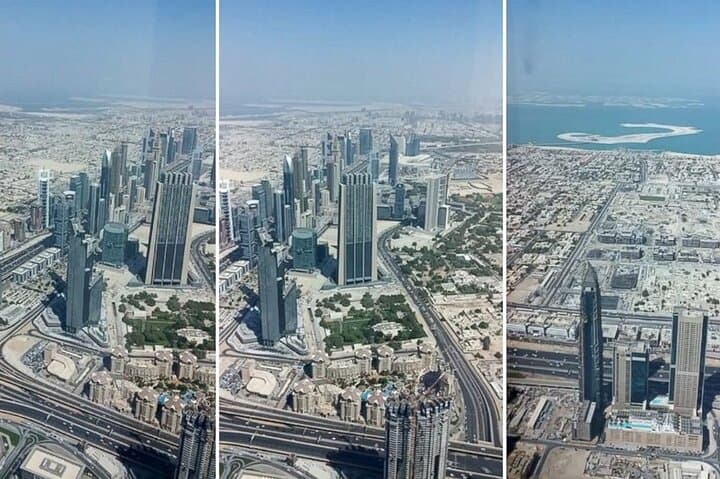
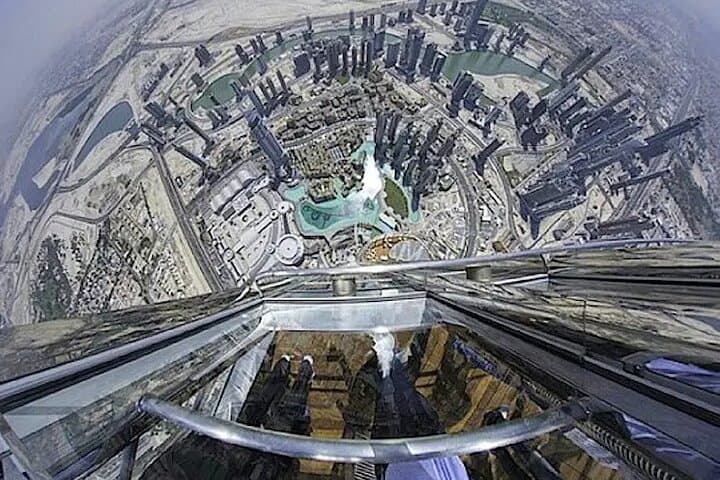

Step into the elevator and feel the city fold beneath you as it shoots skyward — 456 meters above the desert, glass and stone give way to air and horizon. From Levels 124 and 125, Dubai stretches in ordered geometry: the needle of the Dubai Fountain, the ribbon of the coastline, and the sand pressing quietly beyond the city limits.
Step into the elevator and feel the city fold beneath you as it shoots skyward — 456 meters above the desert, glass and stone give way to air and horizon. From Levels 124 and 125, Dubai stretches in ordered geometry: the needle of the Dubai Fountain, the ribbon of the coastline, and the sand pressing quietly beyond the city limits.
The Burj Khalifa opened in 2010 after a decade of rapid construction led by Skidmore, Owings & Merrill and architect Adrian Smith. Sited on reclaimed coastal plain and engineered with a bundled-core concrete system, the tower is as much an exercise in urban ambition as in structural geology. The observation decks pair high-tech displays and digital telescopes with roomy indoor platforms — a modern civic lookout inserted into a fast-moving metropolis.
Culturally, the tower anchors Downtown Dubai’s mix of shopping, business, and public spectacle; the fountain shows and promenades below create a theater of urban life you can watch like a play from above. For visitors, timing matters: sunrise reveals soft desert light, golden hour sculpts the skyline, and evenings bring illuminated architecture and fountain choreography.
Practicalities: book a timed ticket to avoid long lines, aim for early morning or late afternoon for cooler temperatures and clearer air, and allow 60–120 minutes for the visit. The experience is wheelchair-accessible and family-friendly; bring a camera, a light layer for cool nights, and modest attire in keeping with local customs. Stay on designated walkways, follow staff directions during peak times, and use the interactive displays to learn the engineering stories that built this vertical city landmark.