THE ADVENTURE COLLECTIVE® · Independent discovery and booking for outdoor travel

Ascend 452 meters for panoramic views of Dubai from levels 124 and 125 of the Burj Khalifa. This 60-minute visit pairs a high-speed elevator rush with sweeping city and desert vistas—best timed for morning clarity or dramatic sunsets.
Ascend 452 meters for panoramic views of Dubai from levels 124 and 125 of the Burj Khalifa. This 60-minute visit pairs a high-speed elevator rush with sweeping city and desert vistas—best timed for morning clarity or dramatic sunsets.
Glass and steel rush past as the elevator hurtles skyward, the city shrinking into a grid of lights and sand. At 452 meters above street level, levels 124 and 125 of the Burj Khalifa deliver a sweeping stage: the creek, the Palm, and the desert horizon laid out like a living map.
Verified experiences and guided adventures in the surrounding area.
Operated by Al Khan Tours · Dubai, Dubai
Glass and steel rush past as the elevator hurtles skyward, the city shrinking into a grid of lights and sand. At 452 meters above street level, levels 124 and 125 of the Burj Khalifa deliver a sweeping stage: the creek, the Palm, and the desert horizon laid out like a living map.
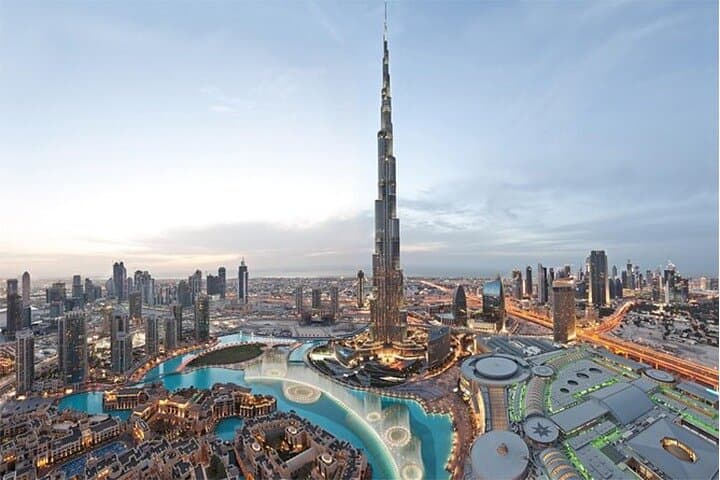
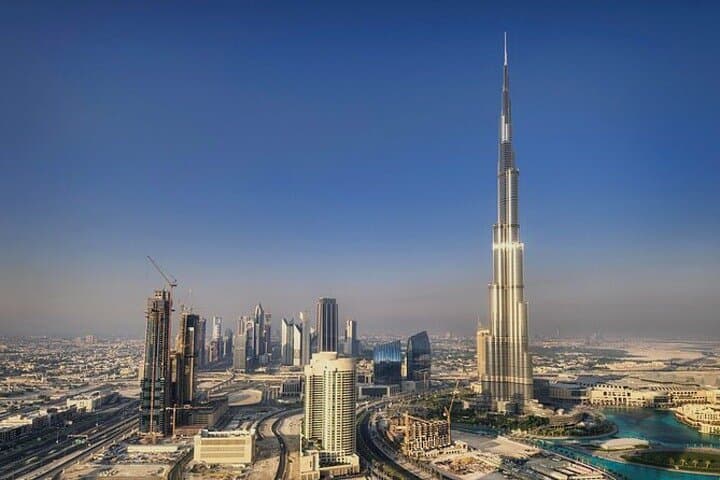
The tower opened in 2010 and remains the world's tallest building, designed by Adrian Smith of SOM and built from reinforced concrete and aluminium that catch the low sun. Geologically, Dubai rises from reclaimed coastal flats and desert plain; the Burj Khalifa’s placement reframes that flatness into dramatic verticality. Culturally, the observation decks are a modern urban ritual — a place where residents and visitors measure Dubai’s rapid growth against an ancient desert backdrop.
Practical details matter: expect a 60-minute visit window, a high-speed elevator that reaches the decks in under a minute, and both indoor and outdoor viewing terraces. Mobile tickets are accepted; plan for security screening and possible queues during sunset. Photography is excellent in morning light for clearer visibility; sunset gives color but draws crowds. Bring sun protection, a light layer for air-conditioned interiors, and a refillable bottle — water fountains are nearby at lower levels. Accessibility is good: the decks are elevator-accessible and suitable for all fitness levels.
The visit is equal parts spectacle and logistics: savor the panorama, but budget time for lines and, if weather is hazy, slightly reduced visibility. Treat the experience like a short urban hike to a high, fast summit — the reward is a new orientation to Dubai from the top.
easy.
45–90 minutes.
Suitable for all fitness levels; mostly standing and short walking
The standard visit is about 60 minutes, but allow extra time for entry, security and queues outside peak hours.
Tickets are typically final-sale for these timed entries—check the vendor policy before booking.
Yes, levels 124 and 125 are accessible by elevator and accommodate wheelchairs; notify staff if you need assistance.
Morning light offers the clearest views; sunset provides dramatic skies but larger crowds and potential glare.
Opened in 2010 and designed by Adrian Smith of Skidmore, Owings & Merrill, the Burj Khalifa redefined modern skyscraper engineering and Dubai’s skyline.
Visitor numbers are managed via timed tickets to reduce overcrowding; follow signage and dispose of waste properly to limit impact on the plaza and lake areas.
Al Khan Tours operates guided outdoor trips and adventures with an emphasis on safety, stewardship, and memorable experiences.


Glass and steel rush past as the elevator hurtles skyward, the city shrinking into a grid of lights and sand. At 452 meters above street level, levels 124 and 125 of the Burj Khalifa deliver a sweeping stage: the creek, the Palm, and the desert horizon laid out like a living map.
Glass and steel rush past as the elevator hurtles skyward, the city shrinking into a grid of lights and sand. At 452 meters above street level, levels 124 and 125 of the Burj Khalifa deliver a sweeping stage: the creek, the Palm, and the desert horizon laid out like a living map.
The tower opened in 2010 and remains the world's tallest building, designed by Adrian Smith of SOM and built from reinforced concrete and aluminium that catch the low sun. Geologically, Dubai rises from reclaimed coastal flats and desert plain; the Burj Khalifa’s placement reframes that flatness into dramatic verticality. Culturally, the observation decks are a modern urban ritual — a place where residents and visitors measure Dubai’s rapid growth against an ancient desert backdrop.
Practical details matter: expect a 60-minute visit window, a high-speed elevator that reaches the decks in under a minute, and both indoor and outdoor viewing terraces. Mobile tickets are accepted; plan for security screening and possible queues during sunset. Photography is excellent in morning light for clearer visibility; sunset gives color but draws crowds. Bring sun protection, a light layer for air-conditioned interiors, and a refillable bottle — water fountains are nearby at lower levels. Accessibility is good: the decks are elevator-accessible and suitable for all fitness levels.
The visit is equal parts spectacle and logistics: savor the panorama, but budget time for lines and, if weather is hazy, slightly reduced visibility. Treat the experience like a short urban hike to a high, fast summit — the reward is a new orientation to Dubai from the top.