THE ADVENTURE COLLECTIVE® · Independent discovery and booking for outdoor travel

Step into one of the world’s fastest elevators and emerge nearly half a kilometer up for sweeping views of Dubai, the desert and the Gulf. The 124th and 125th floors offer telescopes, panoramic platforms and timed-entry access to the Burj Khalifa’s iconic viewpoints.
Step into one of the world’s fastest elevators and emerge nearly half a kilometer up for sweeping views of Dubai, the desert and the Gulf. The 124th and 125th floors offer telescopes, panoramic platforms and timed-entry access to the Burj Khalifa’s iconic viewpoints.
The elevator hisses and the cabin surges upward so fast the city below compresses into a geometric carpet of glass and light. Ninety seconds later you step onto floors 124 and 125, nearly 452 meters above Downtown Dubai, with floor-to-ceiling windows and open-air viewing points that frame the desert, the city grid and the Persian Gulf like a living map.
Verified experiences and guided adventures in the surrounding area.
Operated by KZL TRAVEL ENTERPRISES · Dubai, Dubai
The elevator hisses and the cabin surges upward so fast the city below compresses into a geometric carpet of glass and light. Ninety seconds later you step onto floors 124 and 125, nearly 452 meters above Downtown Dubai, with floor-to-ceiling windows and open-air viewing points that frame the desert, the city grid and the Persian Gulf like a living map.
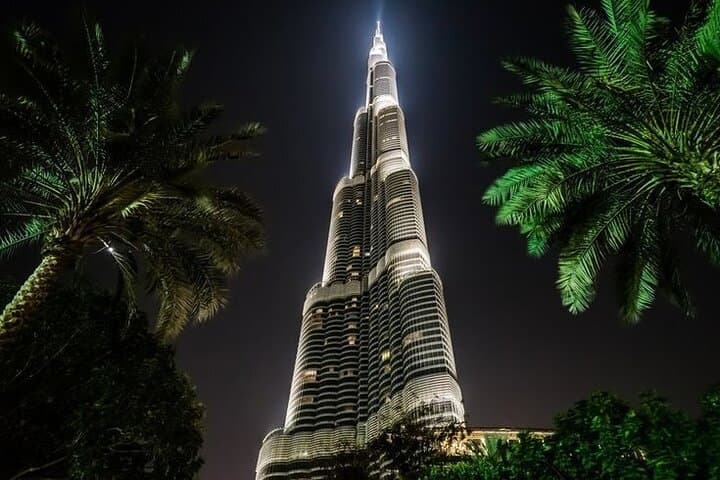
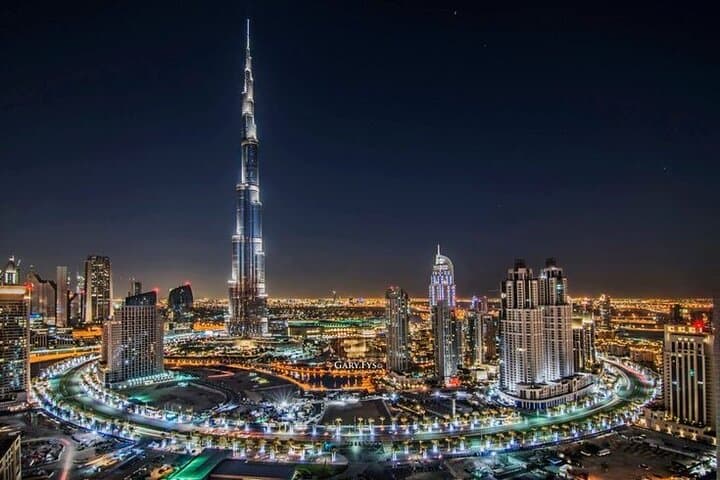
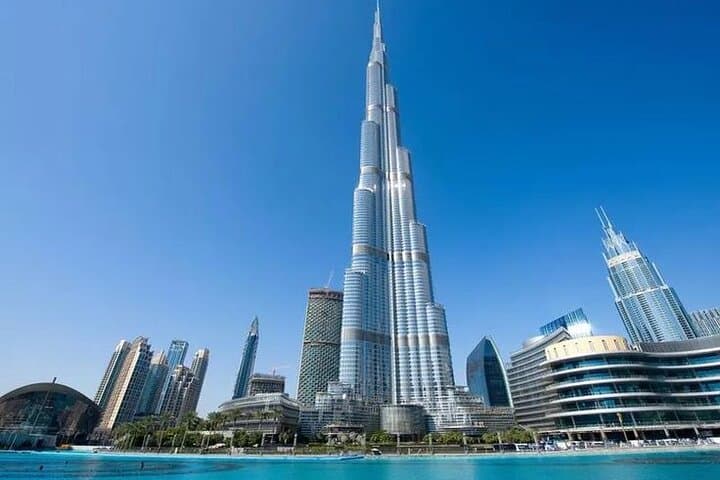
The Burj Khalifa opened in 2010 and remains the world’s tallest building at 828 meters, designed by Skidmore, Owings & Merrill. The tower sits at the heart of Dubai’s modern expansion; its stepped, Y-shaped form responds to wind loads and gives the façades their tapering silhouette. Culturally, the tower is both civic landmark and seasonal stage — New Year’s displays, sunset prayers visible across the city — and the observation decks offer telescopes and interpretive panels that explain what you’re seeing below.
Practical details matter here: elevators are among the fastest in the world, access is timed, and the site is wheelchair accessible. Visitors should budget around 90 minutes for entry, photos and the viewing platforms. Expect security screening and moderate crowds during peak hours; visibility depends on air clarity, so early morning or late afternoon often gives the sharpest vistas. Bring a camera with a mid-range zoom, a light layer for breezy terraces, and plan transit — the tower is walkable from Dubai Mall and well served by taxis and public transport. For anyone who wants a clear, high-altitude view of Dubai’s urban geology and human ambition, the 124th and 125th floors are efficient, dramatic and unmistakably modern.
easy.
1–1.5 hours.
Suitable for most fitness levels; requires standing and walking on level surfaces and some stairs to terrace areas.
The attraction lists a 90-minute duration; most visitors spend 60–90 minutes including entry lines, viewing and photos.
Yes — the site and viewing areas are wheelchair accessible, with step-free routes and accessible restrooms.
Timed-entry tickets sell quickly; purchasing in advance is recommended to secure preferred time slots.
This ticket grants access to the 124th and 125th floors, which include indoor viewing decks, telescopes and panoramic platforms.
Completed in 2010 and designed by Skidmore, Owings & Merrill, the Burj Khalifa was built as the centerpiece of Downtown Dubai’s redevelopment and set the record for the world’s tallest structure at 828 meters.
The tower and surrounding developments use condensate collection and modern systems to reduce water waste, and visitors are encouraged to minimize single-use plastics while in the complex.
KZL TRAVEL ENTERPRISES operates guided outdoor trips and adventures with an emphasis on safety, stewardship, and memorable experiences.
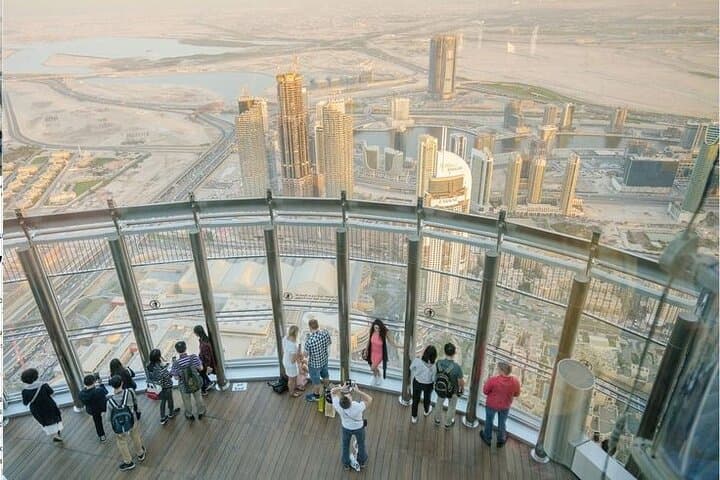
The elevator hisses and the cabin surges upward so fast the city below compresses into a geometric carpet of glass and light. Ninety seconds later you step onto floors 124 and 125, nearly 452 meters above Downtown Dubai, with floor-to-ceiling windows and open-air viewing points that frame the desert, the city grid and the Persian Gulf like a living map.
The elevator hisses and the cabin surges upward so fast the city below compresses into a geometric carpet of glass and light. Ninety seconds later you step onto floors 124 and 125, nearly 452 meters above Downtown Dubai, with floor-to-ceiling windows and open-air viewing points that frame the desert, the city grid and the Persian Gulf like a living map.
The Burj Khalifa opened in 2010 and remains the world’s tallest building at 828 meters, designed by Skidmore, Owings & Merrill. The tower sits at the heart of Dubai’s modern expansion; its stepped, Y-shaped form responds to wind loads and gives the façades their tapering silhouette. Culturally, the tower is both civic landmark and seasonal stage — New Year’s displays, sunset prayers visible across the city — and the observation decks offer telescopes and interpretive panels that explain what you’re seeing below.
Practical details matter here: elevators are among the fastest in the world, access is timed, and the site is wheelchair accessible. Visitors should budget around 90 minutes for entry, photos and the viewing platforms. Expect security screening and moderate crowds during peak hours; visibility depends on air clarity, so early morning or late afternoon often gives the sharpest vistas. Bring a camera with a mid-range zoom, a light layer for breezy terraces, and plan transit — the tower is walkable from Dubai Mall and well served by taxis and public transport. For anyone who wants a clear, high-altitude view of Dubai’s urban geology and human ambition, the 124th and 125th floors are efficient, dramatic and unmistakably modern.