THE ADVENTURE COLLECTIVE® · Independent discovery and booking for outdoor travel

Ride one of the fastest elevators to the world’s tallest tower and take in 360-degree views from levels 124 and 125. This concise guide explains what to expect, when to go, and how to make the most of the Burj Khalifa observation experience.
Ride one of the fastest elevators to the world’s tallest tower and take in 360-degree views from levels 124 and 125. This concise guide explains what to expect, when to go, and how to make the most of the Burj Khalifa observation experience.
You step out of the elevator and the city unfolds beneath you — a tight grid of roads, gleaming towers, and the Persian Gulf's glittering edge. From levels 124 and 125 of the Burj Khalifa the scale of Dubai becomes legible: reclaimed islands, desert flats pushing toward the horizon, and the fountain patterns near Dubai Mall shrinking to elegant geometry.
Verified experiences and guided adventures in the surrounding area.
Operated by Peace Land Travel And Tourism · Dubai, Dubai
You step out of the elevator and the city unfolds beneath you — a tight grid of roads, gleaming towers, and the Persian Gulf's glittering edge. From levels 124 and 125 of the Burj Khalifa the scale of Dubai becomes legible: reclaimed islands, desert flats pushing toward the horizon, and the fountain patterns near Dubai Mall shrinking to elegant geometry.
The Burj Khalifa opened in 2010 after a global design and engineering push led by architect Adrian Smith and engineer Bill Baker. At 828 meters it redefined what a skyscraper could be, sitting on alluvial sand and engineered piles that anchor the tower deep into the ground. The observation decks combine modern glass-and-steel spectacle with displays about the building’s construction and Dubai’s rapid urban growth.
Culturally the tower is a symbol of ambition in the UAE — a place where traditional markets and modern luxury sit within minutes of each other. From the deck you can spot Jumeirah’s shoreline, the old creek, and, on clear days, the Hajar Mountains to the east.
Practical guidance: plan 45–60 minutes for the visit, less if you skip exhibits. Prime hours around sunset offer dramatic light but higher crowds; early morning or late evening are quieter. Security checks are strict — avoid large bags. Outdoor terrace access is weather-dependent; bring sun protection in summer and a light layer in cooler months. Use the telescopes and interactive exhibits to orient yourself before photographing the skyline; the elevated viewpoints reward simple compositions and wide lenses.
Accessibility is good: elevators and decks are wheelchair accessible. Tickets are time-slot specific and non-refundable, so arrive early for a stress-free visit and to make the most of the view.
easy.
45–60 minutes.
Suitable for all fitness levels; minimal walking and elevator access to decks.
Allow 45–60 minutes to experience both levels, use the exhibits, and take photos; longer if you linger at the terrace.
Tickets are sold for a specific time slot and are non-refundable, so arrive on time for your booking.
Yes — elevators, decks and surface areas are wheelchair accessible and the attraction offers step-free access.
Outdoor terrace access is included but subject to weather conditions; staff will close the terrace in high winds or poor visibility.
Completed in 2010 and designed by Adrian Smith, the Burj Khalifa reached 828 meters and became a global symbol of Dubai’s rapid urban and economic expansion.
The tower’s operations focus on energy management and water recovery systems, but high visitor volumes and lighting contribute to local energy use — follow onsite guidance to minimize impact.
Peace Land Travel And Tourism operates guided outdoor trips and adventures with an emphasis on safety, stewardship, and memorable experiences.
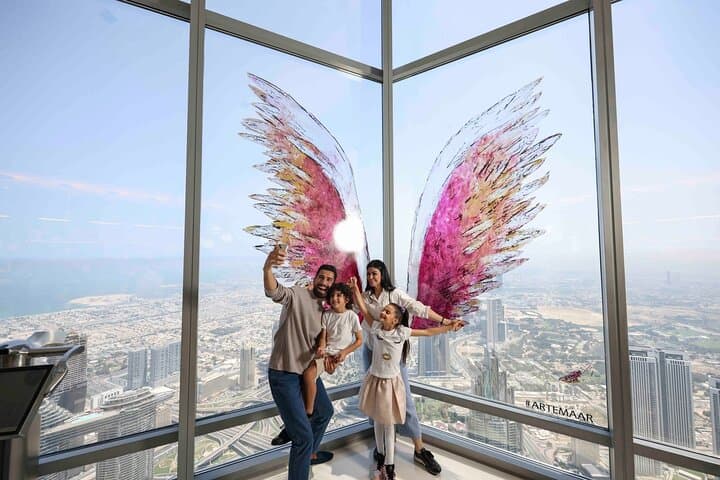
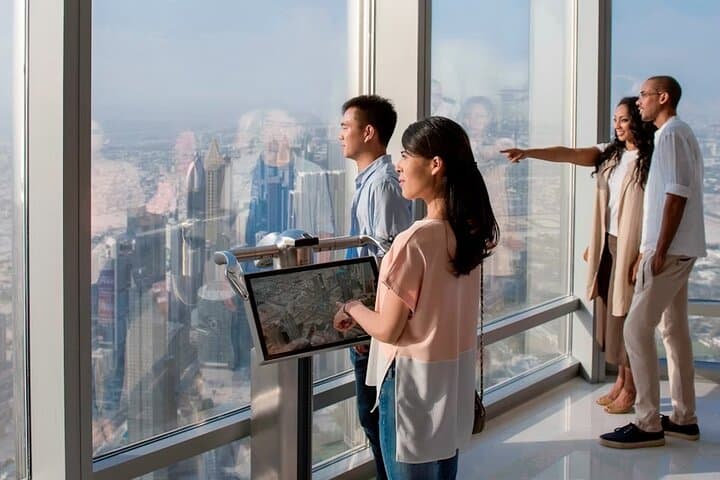
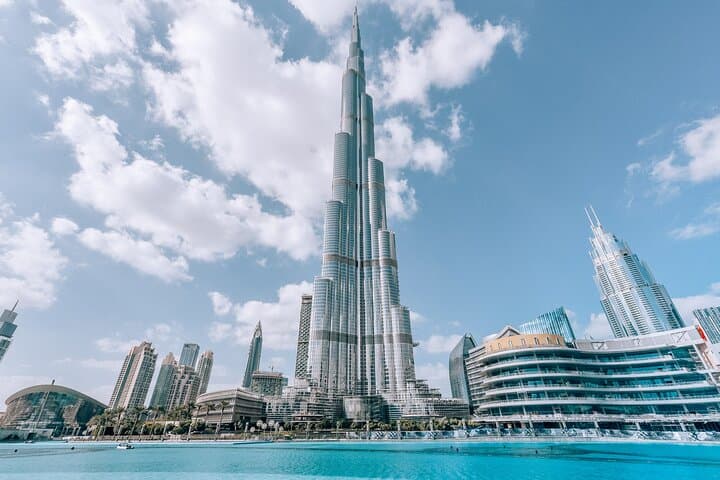
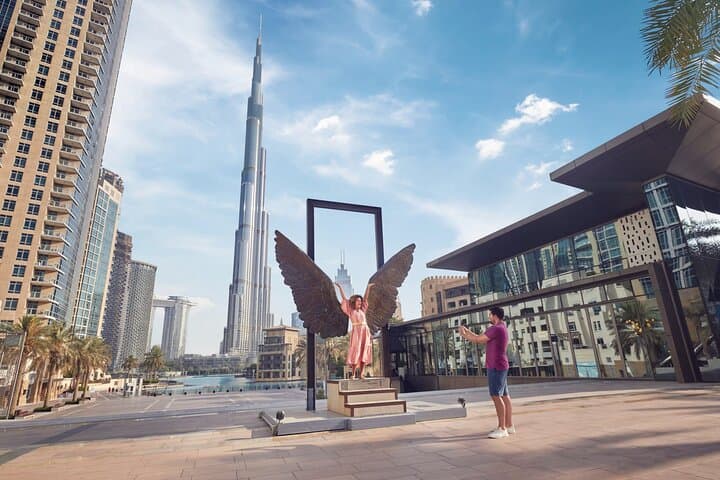
You step out of the elevator and the city unfolds beneath you — a tight grid of roads, gleaming towers, and the Persian Gulf's glittering edge. From levels 124 and 125 of the Burj Khalifa the scale of Dubai becomes legible: reclaimed islands, desert flats pushing toward the horizon, and the fountain patterns near Dubai Mall shrinking to elegant geometry.
You step out of the elevator and the city unfolds beneath you — a tight grid of roads, gleaming towers, and the Persian Gulf's glittering edge. From levels 124 and 125 of the Burj Khalifa the scale of Dubai becomes legible: reclaimed islands, desert flats pushing toward the horizon, and the fountain patterns near Dubai Mall shrinking to elegant geometry.
The Burj Khalifa opened in 2010 after a global design and engineering push led by architect Adrian Smith and engineer Bill Baker. At 828 meters it redefined what a skyscraper could be, sitting on alluvial sand and engineered piles that anchor the tower deep into the ground. The observation decks combine modern glass-and-steel spectacle with displays about the building’s construction and Dubai’s rapid urban growth.
Culturally the tower is a symbol of ambition in the UAE — a place where traditional markets and modern luxury sit within minutes of each other. From the deck you can spot Jumeirah’s shoreline, the old creek, and, on clear days, the Hajar Mountains to the east.
Practical guidance: plan 45–60 minutes for the visit, less if you skip exhibits. Prime hours around sunset offer dramatic light but higher crowds; early morning or late evening are quieter. Security checks are strict — avoid large bags. Outdoor terrace access is weather-dependent; bring sun protection in summer and a light layer in cooler months. Use the telescopes and interactive exhibits to orient yourself before photographing the skyline; the elevated viewpoints reward simple compositions and wide lenses.
Accessibility is good: elevators and decks are wheelchair accessible. Tickets are time-slot specific and non-refundable, so arrive early for a stress-free visit and to make the most of the view.