THE ADVENTURE COLLECTIVE® · Independent discovery and booking for outdoor travel

Ride a high‑speed elevator to 452–456 meters and take in Dubai from the world’s highest outdoor observation level. This guide covers what you’ll see, how to plan your visit, and practical tips to make the most of 30–60 minutes at At The Top.
Ride a high‑speed elevator to 452–456 meters and take in Dubai from the world’s highest outdoor observation level. This guide covers what you’ll see, how to plan your visit, and practical tips to make the most of 30–60 minutes at At The Top.
The moment the elevator doors close, the city contracts beneath you and a controlled, humming ascent begins — ten meters per second straight up through the spine of the Burj Khalifa. Within a minute you arrive at 124 and 125, at 452m and 456m, where glass walls and high-quality telescopes give a new scale to Dubai: compacting skyscrapers, the pale sweep of desert, and the glittering arc of the Persian Gulf.
Verified experiences and guided adventures in the surrounding area.
Operated by Zaad E Rah Travel & Tours (Pvt.) LTD · Dubai, Dubai
The moment the elevator doors close, the city contracts beneath you and a controlled, humming ascent begins — ten meters per second straight up through the spine of the Burj Khalifa. Within a minute you arrive at 124 and 125, at 452m and 456m, where glass walls and high-quality telescopes give a new scale to Dubai: compacting skyscrapers, the pale sweep of desert, and the glittering arc of the Persian Gulf.
Finished in 2010, the Burj Khalifa redefined modern engineering and Dubai’s skyline. The At The Top decks combine high‑speed vertical transport, exhibits that touch on Emirati culture, and an outdoor open space on 125 that frames the city like a living map. Geologically the view transitions quickly from reclaimed coastline to sand and salt flats on the horizon; culturally you’ll notice design cues and displays that reference Arab art and the city’s rapid growth.
Plan on 30–60 minutes for a standard visit; pre-booked tickets let you bypass long queues and go directly to the elevators. Peak windows are around sunset — spectacular but crowded. Security screening is standard; infants must sit on laps and visitors with cardiovascular issues should avoid the ascent. Photography is unrestricted, but watch for glare on the glass and for sudden gusts on the open terrace.
Practical choices matter: arrive early or late afternoon for softer light, use public transit to avoid mall traffic, and carry a light layer for breezy conditions on the open deck. The experience pairs engineering spectacle with straightforward logistics — bring a charged camera, your ID, and time to stand still and take the city in.
easy.
30–60 minutes.
Suitable for most fitness levels; requires ability to stand and navigate elevators and short stairs.
Typical visits last 30–60 minutes; allow more time for lines if you haven’t pre-booked.
Mobile tickets are accepted, but note that this ticketing is sold as all sales final — no refunds for cancellations.
Yes, the facility provides step-free access to the observation deck and is suitable for most mobility needs; check operator details for assistance.
Infants are permitted but must sit on an adult’s lap; strollers are allowed through public areas per site policy.
Completed in 2010, the Burj Khalifa became the tallest man-made structure, a milestone in Dubai’s rapid urban expansion and engineering ambition.
High visitor numbers and energy use are managed through timed tickets and building systems; reduce impact by using public transit and minimizing single‑use plastics.
Zaad E Rah Travel & Tours (Pvt.) LTD operates guided outdoor trips and adventures with an emphasis on safety, stewardship, and memorable experiences.
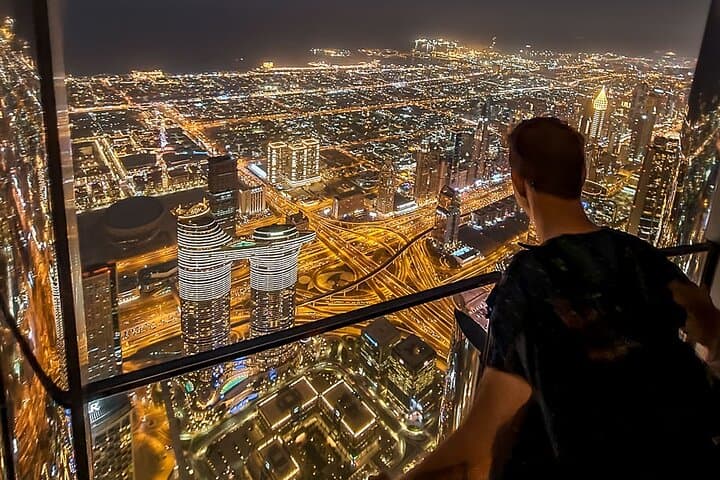
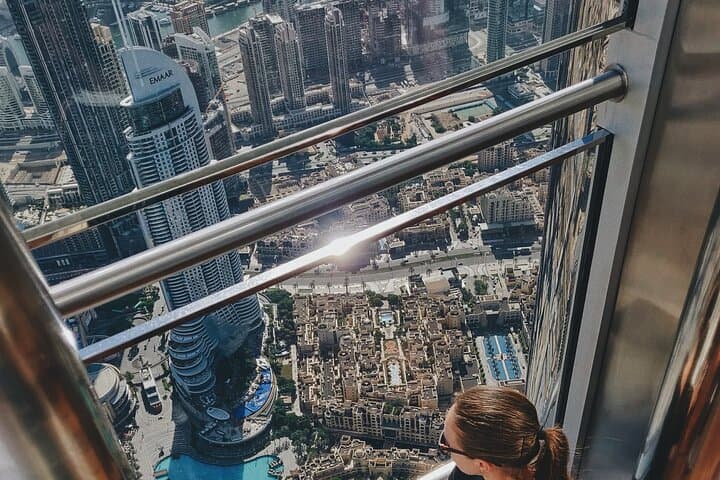
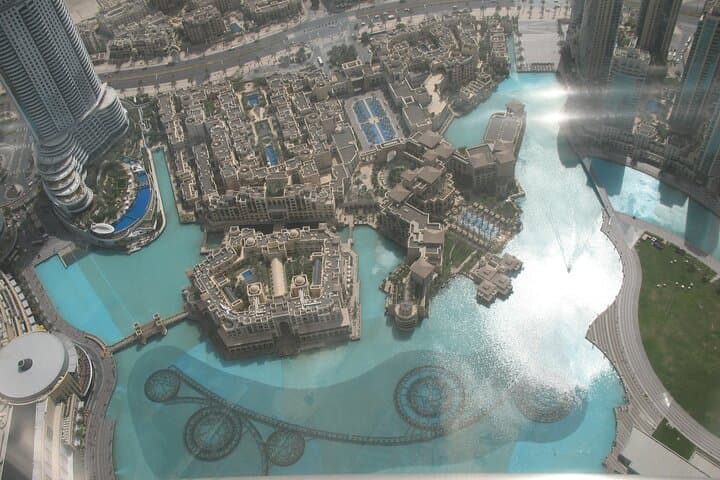
The moment the elevator doors close, the city contracts beneath you and a controlled, humming ascent begins — ten meters per second straight up through the spine of the Burj Khalifa. Within a minute you arrive at 124 and 125, at 452m and 456m, where glass walls and high-quality telescopes give a new scale to Dubai: compacting skyscrapers, the pale sweep of desert, and the glittering arc of the Persian Gulf.
The moment the elevator doors close, the city contracts beneath you and a controlled, humming ascent begins — ten meters per second straight up through the spine of the Burj Khalifa. Within a minute you arrive at 124 and 125, at 452m and 456m, where glass walls and high-quality telescopes give a new scale to Dubai: compacting skyscrapers, the pale sweep of desert, and the glittering arc of the Persian Gulf.
Finished in 2010, the Burj Khalifa redefined modern engineering and Dubai’s skyline. The At The Top decks combine high‑speed vertical transport, exhibits that touch on Emirati culture, and an outdoor open space on 125 that frames the city like a living map. Geologically the view transitions quickly from reclaimed coastline to sand and salt flats on the horizon; culturally you’ll notice design cues and displays that reference Arab art and the city’s rapid growth.
Plan on 30–60 minutes for a standard visit; pre-booked tickets let you bypass long queues and go directly to the elevators. Peak windows are around sunset — spectacular but crowded. Security screening is standard; infants must sit on laps and visitors with cardiovascular issues should avoid the ascent. Photography is unrestricted, but watch for glare on the glass and for sudden gusts on the open terrace.
Practical choices matter: arrive early or late afternoon for softer light, use public transit to avoid mall traffic, and carry a light layer for breezy conditions on the open deck. The experience pairs engineering spectacle with straightforward logistics — bring a charged camera, your ID, and time to stand still and take the city in.