THE ADVENTURE COLLECTIVE® · Independent discovery and booking for outdoor travel

Hop the Shinkansen for a speedy cultural loop: Nara’s free-roaming deer and the Great Buddha, then Kyoto’s iconic Fushimi Inari torii. This guided, private day trip packs centuries of history into a well-paced 11-hour itinerary.
Hop the Shinkansen for a speedy cultural loop: Nara’s free-roaming deer and the Great Buddha, then Kyoto’s iconic Fushimi Inari torii. This guided, private day trip packs centuries of history into a well-paced 11-hour itinerary.
The day begins before sunrise at Tokyo Station: fluorescent lights fading as a copper-bodied Shinkansen slips into the platform and the city shrinks in your window. The train dutifully eats distance—2 hours and change—and if the sky is clear Mt. Fuji appears like a quiet, distant judge, watching the journey west.
Verified experiences and guided adventures in the surrounding area.
Operated by Japan Gray Line · Tokyo, Tokyo
The day begins before sunrise at Tokyo Station: fluorescent lights fading as a copper-bodied Shinkansen slips into the platform and the city shrinks in your window. The train dutifully eats distance—2 hours and change—and if the sky is clear Mt. Fuji appears like a quiet, distant judge, watching the journey west.
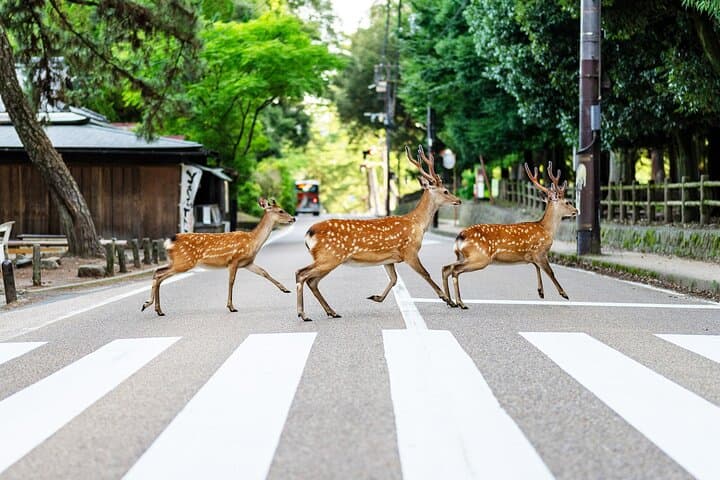
First stop: Nara, once Japan’s capital in the 8th century. You’ll walk through open parkland where over 1,000 free-roaming deer brazenly approach for rice crackers and attention; in Shinto belief they are messengers of the gods, part of the living culture that still shapes this place. At Tōdai-ji the Great Buddha sits within one of the largest wooden buildings on earth, a hulking bronze presence that anchors the centuries of religious practice around it.
After an optional lunch and a quick local train back to Kyoto, the tour threads through Fushimi Inari Taisha’s bright vermilion torii—thousands of gates carving a path up a forested hillside that feels both human and primeval.
Practical edge: this is a fast, full day—about 10–11 hours with substantial walking on paved paths, steps and temple grounds. A licensed English-speaking guide coordinates trains and admissions; the itinerary uses non-reserved Shinkansen seats and local limited-express services, so flexibility helps. Pack a lightweight rain jacket (June is wet), comfortable shoes, water, and a portable charger. For JR Pass holders, note Nozomi trains may not be covered and tickets could be needed separately. Return to Tokyo in the early evening, often by 6:30–7:00 PM, carrying a compact but rich cross-section of Japan’s history and landscape.
moderate.
10–11 hours.
Comfortable with sustained walking and short quick transfers; able to manage staircases and uneven ground for multiple hours.
The tour runs about 10–11 hours; typical return to Tokyo and hotel drop-off is between 6:30 and 7:00 PM.
Round-trip non-reserved Shinkansen tickets are included for this tour; if you hold a JR Pass, verify whether Nozomi services are covered—some passes exclude them and separate tickets may be needed.
Children are welcome but the day involves extended walking and stairs; it’s not recommended for travelers with significant mobility constraints, back or heart issues.
The tour runs in light rain; prepare a compact umbrella or raincoat. In severe weather the operator may alter the itinerary or cancel with full refund per policy.
Nara served as Japan’s capital from AD 710–794, shaping early Buddhist and Shinto institutions; Kyoto later became the imperial seat and cultural heart for over a millennium.
Nara’s deer are managed by local authorities and feeding is regulated; visitors should follow signage to avoid disrupting wildlife and help preserve temple grounds.
Japan Gray Line operates guided outdoor trips and adventures with an emphasis on safety, stewardship, and memorable experiences.


The day begins before sunrise at Tokyo Station: fluorescent lights fading as a copper-bodied Shinkansen slips into the platform and the city shrinks in your window. The train dutifully eats distance—2 hours and change—and if the sky is clear Mt. Fuji appears like a quiet, distant judge, watching the journey west.
The day begins before sunrise at Tokyo Station: fluorescent lights fading as a copper-bodied Shinkansen slips into the platform and the city shrinks in your window. The train dutifully eats distance—2 hours and change—and if the sky is clear Mt. Fuji appears like a quiet, distant judge, watching the journey west.
First stop: Nara, once Japan’s capital in the 8th century. You’ll walk through open parkland where over 1,000 free-roaming deer brazenly approach for rice crackers and attention; in Shinto belief they are messengers of the gods, part of the living culture that still shapes this place. At Tōdai-ji the Great Buddha sits within one of the largest wooden buildings on earth, a hulking bronze presence that anchors the centuries of religious practice around it.
After an optional lunch and a quick local train back to Kyoto, the tour threads through Fushimi Inari Taisha’s bright vermilion torii—thousands of gates carving a path up a forested hillside that feels both human and primeval.
Practical edge: this is a fast, full day—about 10–11 hours with substantial walking on paved paths, steps and temple grounds. A licensed English-speaking guide coordinates trains and admissions; the itinerary uses non-reserved Shinkansen seats and local limited-express services, so flexibility helps. Pack a lightweight rain jacket (June is wet), comfortable shoes, water, and a portable charger. For JR Pass holders, note Nozomi trains may not be covered and tickets could be needed separately. Return to Tokyo in the early evening, often by 6:30–7:00 PM, carrying a compact but rich cross-section of Japan’s history and landscape.