THE ADVENTURE COLLECTIVE® · Independent discovery and booking for outdoor travel

Ride the Shinkansen from Kyoto to a day of contrasts: Miyajima’s tidal shrine and deer, then Hiroshima’s Peace Memorial Park. This full-day tour blends fast rail travel, a ferry crossing and guided historical visits—perfect for travelers who want maximum experience in a single day.
Ride the Shinkansen from Kyoto to a day of contrasts: Miyajima’s tidal shrine and deer, then Hiroshima’s Peace Memorial Park. This full-day tour blends fast rail travel, a ferry crossing and guided historical visits—perfect for travelers who want maximum experience in a single day.
You step off the Shinkansen and the island waits like a stage: torii silhouetted against the Seto Inland Sea, gulls quarrelling, deer circling curious and unhurried. The ride from Kyoto is fast and quiet, the countryside unfolding in measured frames before you swap speed for the gentle sway of a ferry to Miyajima.
Verified experiences and guided adventures in the surrounding area.
Operated by Amigo Tours Japan · Hiroshima, Hiroshima Prefecture
You step off the Shinkansen and the island waits like a stage: torii silhouetted against the Seto Inland Sea, gulls quarrelling, deer circling curious and unhurried. The ride from Kyoto is fast and quiet, the countryside unfolding in measured frames before you swap speed for the gentle sway of a ferry to Miyajima.
Miyajima’s Itsukushima Shrine occupies low tidal flats; its vermilion gate rises and falls with the water, an architectural trick that has drawn pilgrims for centuries. The island’s cedar slopes are volcanic in origin, part of the inland sea’s tectonic story, and Mount Misen’s braided trails offer panoramic reminders of the archipelago’s geology. In Hiroshima, the Peace Memorial Park and the preserved Atomic Bomb Dome confront modern history directly—sites of remembrance that shaped Japan’s postwar identity and its global advocacy for nuclear disarmament.
Practical guidance: this is a long day—expect 10–12 hours. The tour combines self-guided rail travel (confirm your bullet train departure beforehand) with guided segments in Hiroshima and on Miyajima; bring cash for street food and small shrine offerings. Footwear should handle boardwalks, stone steps and short natural trails; check tide times if you want low-water photos of the torii. Respect the deer—do not feed them processed foods—and move quietly through memorial sites.
Timing matters: aim for early departures to avoid midday crowds on the island. Bring a compact rain layer and a charged phone for digital tickets—the logistics are smooth, but the day is full. This loop delivers natural drama and solemn history in a single, memorable sweep.
moderate.
10–12 hours.
Moderate fitness recommended—expect walking on uneven surfaces, stairs and up to a few miles of combined on-foot exploration.
Some booking options include the Shinkansen ticket from Kyoto; check your selected option—if excluded you’ll need to board independently and follow provided instructions.
Expect several kilometers of walking across island boardwalks, shrine approaches and through Hiroshima Peace Park; comfortable shoes and moderate fitness are advised.
Yes—when the tide is low you can walk out toward the torii on the exposed sand; at high tide it appears to float and is best viewed from the ferry or shoreline.
Meals are generally not included; the itinerary allows time to sample local specialties like grilled oysters and momiji manju at Miyajima’s shops.
Itsukushima Shrine is a UNESCO World Heritage Site with centuries-old Shinto significance; Hiroshima’s Peace Memorial Park preserves the Atomic Bomb Dome as a reminder of the 1945 bombing and the city’s postwar peace movement.
Miyajima manages visitor impact through restricted paths and signage—avoid feeding deer and stick to marked trails; practice leave-no-trace principles in both natural and memorial areas.
Amigo Tours Japan operates guided outdoor trips and adventures with an emphasis on safety, stewardship, and memorable experiences.

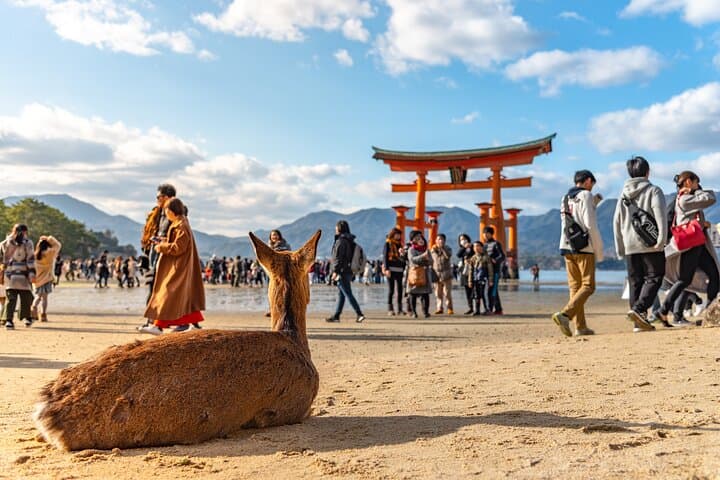


You step off the Shinkansen and the island waits like a stage: torii silhouetted against the Seto Inland Sea, gulls quarrelling, deer circling curious and unhurried. The ride from Kyoto is fast and quiet, the countryside unfolding in measured frames before you swap speed for the gentle sway of a ferry to Miyajima.
You step off the Shinkansen and the island waits like a stage: torii silhouetted against the Seto Inland Sea, gulls quarrelling, deer circling curious and unhurried. The ride from Kyoto is fast and quiet, the countryside unfolding in measured frames before you swap speed for the gentle sway of a ferry to Miyajima.
Miyajima’s Itsukushima Shrine occupies low tidal flats; its vermilion gate rises and falls with the water, an architectural trick that has drawn pilgrims for centuries. The island’s cedar slopes are volcanic in origin, part of the inland sea’s tectonic story, and Mount Misen’s braided trails offer panoramic reminders of the archipelago’s geology. In Hiroshima, the Peace Memorial Park and the preserved Atomic Bomb Dome confront modern history directly—sites of remembrance that shaped Japan’s postwar identity and its global advocacy for nuclear disarmament.
Practical guidance: this is a long day—expect 10–12 hours. The tour combines self-guided rail travel (confirm your bullet train departure beforehand) with guided segments in Hiroshima and on Miyajima; bring cash for street food and small shrine offerings. Footwear should handle boardwalks, stone steps and short natural trails; check tide times if you want low-water photos of the torii. Respect the deer—do not feed them processed foods—and move quietly through memorial sites.
Timing matters: aim for early departures to avoid midday crowds on the island. Bring a compact rain layer and a charged phone for digital tickets—the logistics are smooth, but the day is full. This loop delivers natural drama and solemn history in a single, memorable sweep.