THE ADVENTURE COLLECTIVE® · Independent discovery and booking for outdoor travel

Board the Shinkansen for a rapid move from Tokyo into Nagano’s mountain air, then follow a short woodland path to watch wild macaques bathing in a steaming pool. This private two-day itinerary pairs wildlife viewing with a ryokan stay and cultural stops in Nagano.
Board the Shinkansen for a rapid move from Tokyo into Nagano’s mountain air, then follow a short woodland path to watch wild macaques bathing in a steaming pool. This private two-day itinerary pairs wildlife viewing with a ryokan stay and cultural stops in Nagano.
You step onto the Shinkansen with a thermos of coffee and the city dissolves into rice paddies and rising foothills. Ninety minutes later the train pulls into Nagano; a local carriage rocks you toward Yudanaka, and a 30-minute woodland walk delivers you to a clearing where macaques steam and bubble in a rocky pool, their breath fogging the air like small, impatient clouds.
Verified experiences and guided adventures in the surrounding area.
Operated by Venture · Yudanaka, Nagano Prefecture
You step onto the Shinkansen with a thermos of coffee and the city dissolves into rice paddies and rising foothills. Ninety minutes later the train pulls into Nagano; a local carriage rocks you toward Yudanaka, and a 30-minute woodland walk delivers you to a clearing where macaques steam and bubble in a rocky pool, their breath fogging the air like small, impatient clouds.
This compact two-day route threads modern transport, Edo-period art and mountain religion: Tokyo galleries hold ukiyo-e by Katsushika Hokusai while Zenkoji Temple in Nagano (founded in the seventh century) recalls the area's Buddhist roots. Geologically, the valley is fed by volcanic hot springs—Jigokudani’s geothermal vents create the onsen pools that attract the monkeys in winter. Culturally, a night in a ryokan gives hands-on experience of Japanese hospitality: tatami rooms, set kaiseki meals, and the simple etiquette of communal baths.
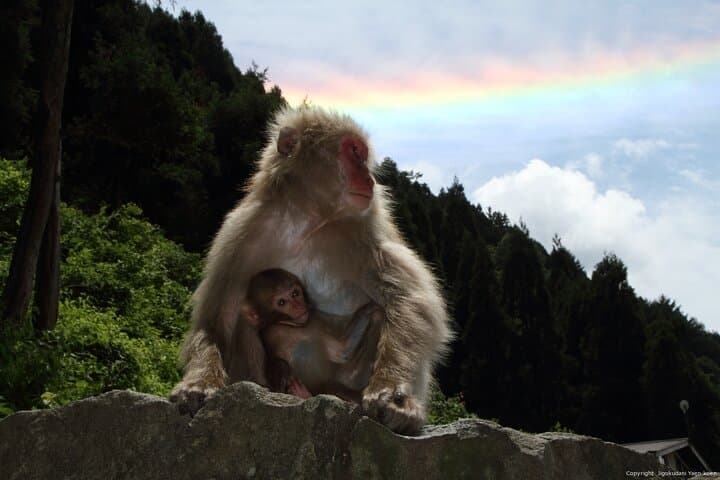
Practicality matters: the snow monkeys descend in cold months, so winter offers the highest chance of hot-spring scenes but never a guarantee. Expect a moderate walk on an unpaved, sometimes icy path; bring traction on boots in winter. Cash is useful in mountain towns; English is limited outside stations. Timed well, the itinerary balances a sunrise or late-afternoon visit to avoid crowds and maximize behavior sightings.
This itinerary is ideal for travelers who want wildlife up close without backcountry logistics—pair it with Nagano’s temple visit and local food like oyaki for a short, deeply local two-day loop.
moderate.
2 days (approx. 8–10 hours travel and touring combined).
Moderate fitness; able to walk 30–45 minutes on uneven trail and handle stairs at stations.
No — macaque behavior is seasonal and weather-dependent; winter increases likelihood but sightings are never guaranteed.
The tour uses the Shinkansen to Nagano, a local train toward Yudanaka, then a roughly 30-minute walk along a mountain path to Jigokudani Yaen-koen.
Yes — ryokan onsen are separate from the park; observe onsen etiquette and confirm mixed-gender rules or private-bath availability with the ryokan.
Pickup is offered only within Tokyo’s 23 wards; check the tour’s pickup options before booking.
The region has been shaped by volcanic hot springs for centuries; Zenkoji Temple in Nagano dates to the 7th century and remains a major pilgrimage site.
The park manages visitor numbers to limit disturbance; keep to paths and avoid feeding wildlife to reduce human-wildlife conflicts.
Venture operates guided outdoor trips and adventures with an emphasis on safety, stewardship, and memorable experiences.
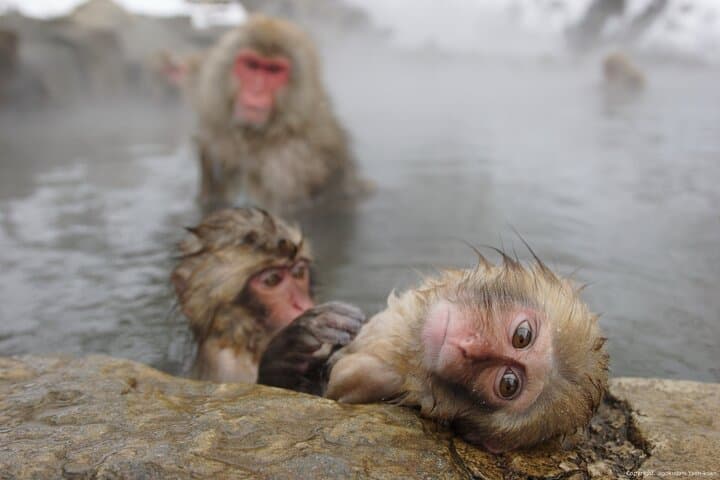
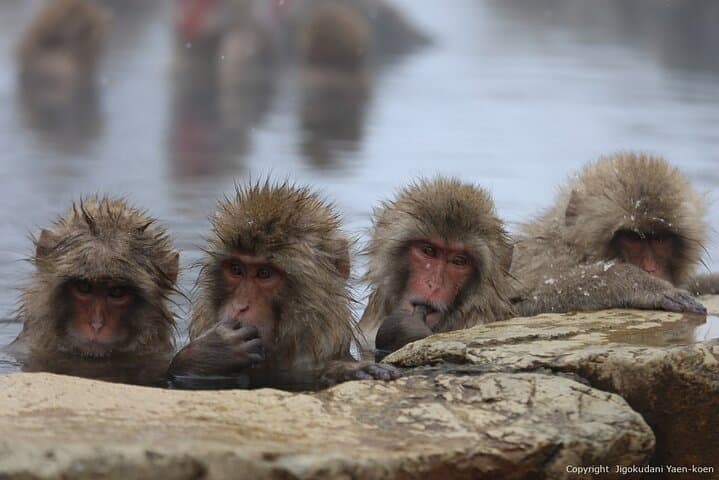
You step onto the Shinkansen with a thermos of coffee and the city dissolves into rice paddies and rising foothills. Ninety minutes later the train pulls into Nagano; a local carriage rocks you toward Yudanaka, and a 30-minute woodland walk delivers you to a clearing where macaques steam and bubble in a rocky pool, their breath fogging the air like small, impatient clouds.
You step onto the Shinkansen with a thermos of coffee and the city dissolves into rice paddies and rising foothills. Ninety minutes later the train pulls into Nagano; a local carriage rocks you toward Yudanaka, and a 30-minute woodland walk delivers you to a clearing where macaques steam and bubble in a rocky pool, their breath fogging the air like small, impatient clouds.
This compact two-day route threads modern transport, Edo-period art and mountain religion: Tokyo galleries hold ukiyo-e by Katsushika Hokusai while Zenkoji Temple in Nagano (founded in the seventh century) recalls the area's Buddhist roots. Geologically, the valley is fed by volcanic hot springs—Jigokudani’s geothermal vents create the onsen pools that attract the monkeys in winter. Culturally, a night in a ryokan gives hands-on experience of Japanese hospitality: tatami rooms, set kaiseki meals, and the simple etiquette of communal baths.
Practicality matters: the snow monkeys descend in cold months, so winter offers the highest chance of hot-spring scenes but never a guarantee. Expect a moderate walk on an unpaved, sometimes icy path; bring traction on boots in winter. Cash is useful in mountain towns; English is limited outside stations. Timed well, the itinerary balances a sunrise or late-afternoon visit to avoid crowds and maximize behavior sightings.
This itinerary is ideal for travelers who want wildlife up close without backcountry logistics—pair it with Nagano’s temple visit and local food like oyaki for a short, deeply local two-day loop.