THE ADVENTURE COLLECTIVE® · Independent discovery and booking for outdoor travel

Ride China’s high-speed rail for a day that pairs sleek modern motion with 1,500 years of carved stone at the Yungang Grottoes. This full-day trip from Beijing offers guided interpretation, entrance, and a hands-on taste of northern Shanxi culture.
Ride China’s high-speed rail for a day that pairs sleek modern motion with 1,500 years of carved stone at the Yungang Grottoes. This full-day trip from Beijing offers guided interpretation, entrance, and a hands-on taste of northern Shanxi culture.
You step from the gleaming carriage of a 300+ kph bullet train into a different kind of time; the steel hush of modern China gives way to a cliff face cut with human hands.
Verified experiences and guided adventures in the surrounding area.
Operated by Mark's Guide & Driver Service Beijing · Datong, Shanxi
You step from the gleaming carriage of a 300+ kph bullet train into a different kind of time; the steel hush of modern China gives way to a cliff face cut with human hands.
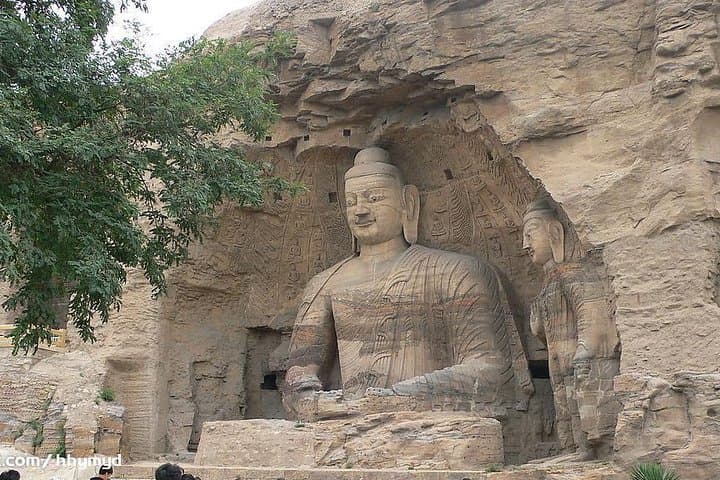
The Yungang Grottoes puncture Wuzhou Mountain for nearly a kilometer, where 252 caves cradle more than 50,000 carved Buddhas ranging from delicate miniatures to towering figures over 17 meters high. Excavated under the Northern Wei dynasty (5th–6th centuries) and later revered, the site earned UNESCO World Heritage status in 2001 for its scale and fusion of Central Asian and Chinese sculptural traditions. The sandstone cliffs wear centuries of wind and rain like a slow script—the grooves and flaking tell as much geological story as cultural one.
Local life in Datong leans practical: hand-sliced noodle lunches nearby, modest visitor facilities, and a regional focus on preservation and controlled visitation. Guides translate inscriptions and iconography and point out carving techniques that mirror early Buddhist exchanges along inland routes.
Practical guidance: this is a full-day outing when combined with high-speed rail from Beijing—expect roughly nine hours door-to-door. Bring your passport (required for train booking), comfortable walking shoes, sun protection, and a lightweight jacket—sandstone cliffs can be breezy. Photography is permitted in many areas, but do not touch carvings and stay on marked paths to protect fragile stone. If you prefer fewer crowds, request early train seats and aim to visit just after opening. The contrast of modern rail and ancient stone makes the day compact but culturally expansive—efficient, vivid, and easily managed as a one-day cultural adventure from Beijing.
easy.
9 hours (approx.).
Minimal fitness required: ability to walk and climb stairs for 1–2 hours around the site.
Round-trip high-speed train tickets are included as part of this day trip from Beijing; seat class options (second, business, first) may be requested at booking.
Yes—passenger passport details are required for train ticketing and must be carried for verification.
The guided visit typically lasts around 2–3 hours, sufficient to cover major caves and key sculptures at a steady pace.
Yes—there is an option to finish the tour in Datong for travelers who wish to extend their stay; confirm at booking.
The grottoes were carved during the Northern Wei dynasty (5th–6th centuries) and reflect Buddhist artistic exchange along inland routes, earning UNESCO status in 2001.
Yungang limits access to fragile zones and encourages staying on paths; avoid touching carvings and follow guide instructions to minimize erosion and wear.
Mark's Guide & Driver Service Beijing operates guided outdoor trips and adventures with an emphasis on safety, stewardship, and memorable experiences.


You step from the gleaming carriage of a 300+ kph bullet train into a different kind of time; the steel hush of modern China gives way to a cliff face cut with human hands.
You step from the gleaming carriage of a 300+ kph bullet train into a different kind of time; the steel hush of modern China gives way to a cliff face cut with human hands.
The Yungang Grottoes puncture Wuzhou Mountain for nearly a kilometer, where 252 caves cradle more than 50,000 carved Buddhas ranging from delicate miniatures to towering figures over 17 meters high. Excavated under the Northern Wei dynasty (5th–6th centuries) and later revered, the site earned UNESCO World Heritage status in 2001 for its scale and fusion of Central Asian and Chinese sculptural traditions. The sandstone cliffs wear centuries of wind and rain like a slow script—the grooves and flaking tell as much geological story as cultural one.
Local life in Datong leans practical: hand-sliced noodle lunches nearby, modest visitor facilities, and a regional focus on preservation and controlled visitation. Guides translate inscriptions and iconography and point out carving techniques that mirror early Buddhist exchanges along inland routes.
Practical guidance: this is a full-day outing when combined with high-speed rail from Beijing—expect roughly nine hours door-to-door. Bring your passport (required for train booking), comfortable walking shoes, sun protection, and a lightweight jacket—sandstone cliffs can be breezy. Photography is permitted in many areas, but do not touch carvings and stay on marked paths to protect fragile stone. If you prefer fewer crowds, request early train seats and aim to visit just after opening. The contrast of modern rail and ancient stone makes the day compact but culturally expansive—efficient, vivid, and easily managed as a one-day cultural adventure from Beijing.