THE ADVENTURE COLLECTIVE® · Independent discovery and booking for outdoor travel

Step outside Madrid for a half-day visit to a Toro Bravo ranch, where wide oak pastures and seasoned ranch hands reveal how Spain breeds its most powerful cattle. This guided tour blends natural landscape, livestock care, and rural history into an accessible outdoor experience.
Step outside Madrid for a half-day visit to a Toro Bravo ranch, where wide oak pastures and seasoned ranch hands reveal how Spain breeds its most powerful cattle. This guided tour blends natural landscape, livestock care, and rural history into an accessible outdoor experience.
You meet the guide at a small tourism office in the outskirts of Madrid, then drive out through olive groves and low oak pastures until the asphalt gives way to tracks. The air opens; the plain spreads in wide bands of grass and dwarf oaks, and a group of powerful Toro Bravo lift their heads from the pasture as you approach.
Verified experiences and guided adventures in the surrounding area.
Operated by Naturanda Turismo Ambiental · Madrid, Community of Madrid
You meet the guide at a small tourism office in the outskirts of Madrid, then drive out through olive groves and low oak pastures until the asphalt gives way to tracks. The air opens; the plain spreads in wide bands of grass and dwarf oaks, and a group of powerful Toro Bravo lift their heads from the pasture as you approach.
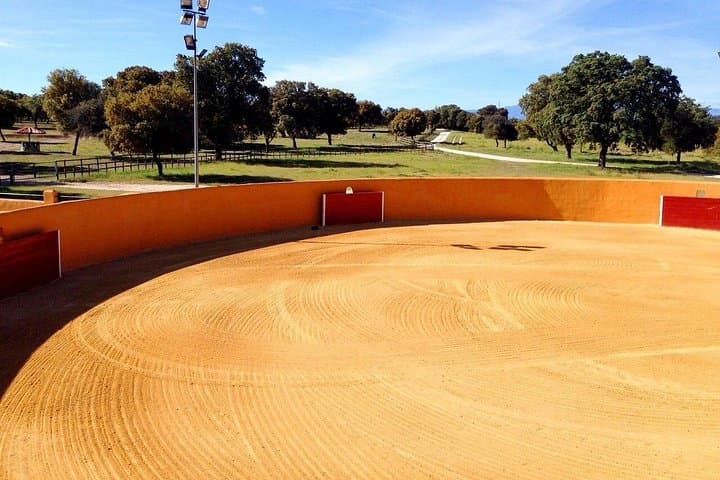
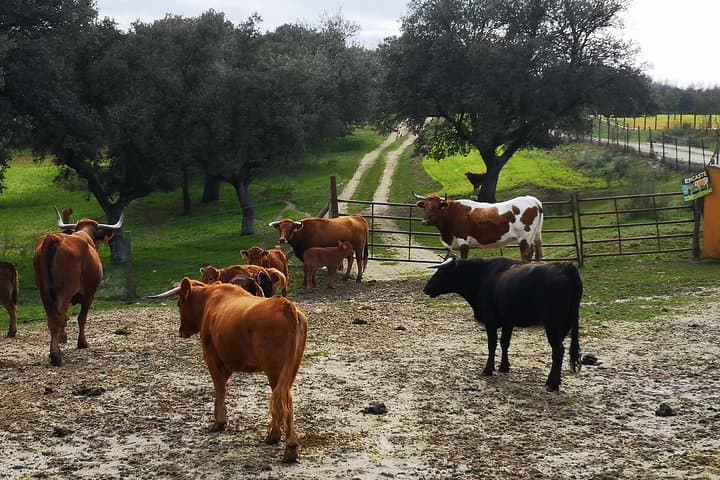
This half-day visit places you in one of Spain’s traditional dehesa landscapes — centuries of selective breeding and grazing that produced the fighting bull, an animal central to rural culture and Spanish livestock husbandry. The ranch is practical terrain: flat to gently rolling, with dirt lanes, fenced pastures, and an on-site bullring used for handling rather than spectacle.
Geology here is simple: Cenozoic sediments and weathered granites that make well-draining soils for grasses and oak. Culturally, the visit is as much about the ranching craft — animal selection, veterinary care, and pasture management — as it is about history; many of these farms maintain records going back generations.
Expect a guided walk through handling facilities, viewing areas for bulls at a respectful distance, and a commentary on breeding selection and daily ranch operations. The walk is typically easy but uneven; boots are useful. Photography is allowed in public areas, but follow staff directions around animals.
Practical tips: allow 3–4 hours including transport, bring sun protection and water, and wear sturdy shoes. The experience is best in morning light when animals are more active and the temperature is comfortable. Because this is working farmland, follow biosecurity instructions and respect fencing — the animals are powerful and should be observed from secure vantage points.
moderate.
3–4 hours.
Moderate fitness required: able to walk 1–3 km on uneven ground and stand for short periods.
The experience is about 3–4 hours total and includes guide-led transport from the meeting point, a walking tour of the ranch facilities, and commentary on breeding and daily operations.
Children can attend but must be supervised; the tour is wheelchair accessible in many areas but includes some uneven ground—check with the operator for specific accessibility needs.
Photography is generally allowed in public areas; always follow staff directions and never cross barriers or enter pens for photos.
Yes—Toro Bravo are powerful animals. Guests observe from secure vantage points and must adhere to guide instructions and fenced boundaries to stay safe.
Many central Spain ranches practice dehesa-style grazing and selective bull breeding that evolved over centuries to produce the Toro Bravo lineage used in traditional events and livestock management.
Dehesa ranching supports open-wood pasture ecosystems that are biodiverse; visitors should avoid littering, follow biosecurity rules, and respect grazing rotations to minimize disturbance.
Naturanda Turismo Ambiental operates guided outdoor trips and adventures with an emphasis on safety, stewardship, and memorable experiences.
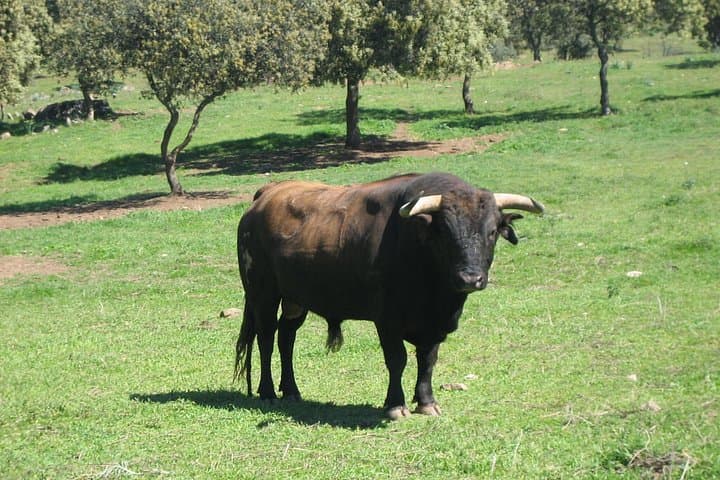
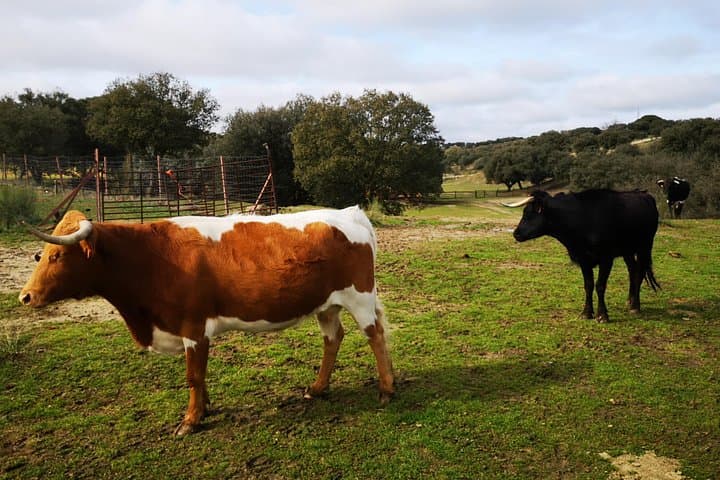
You meet the guide at a small tourism office in the outskirts of Madrid, then drive out through olive groves and low oak pastures until the asphalt gives way to tracks. The air opens; the plain spreads in wide bands of grass and dwarf oaks, and a group of powerful Toro Bravo lift their heads from the pasture as you approach.
You meet the guide at a small tourism office in the outskirts of Madrid, then drive out through olive groves and low oak pastures until the asphalt gives way to tracks. The air opens; the plain spreads in wide bands of grass and dwarf oaks, and a group of powerful Toro Bravo lift their heads from the pasture as you approach.
This half-day visit places you in one of Spain’s traditional dehesa landscapes — centuries of selective breeding and grazing that produced the fighting bull, an animal central to rural culture and Spanish livestock husbandry. The ranch is practical terrain: flat to gently rolling, with dirt lanes, fenced pastures, and an on-site bullring used for handling rather than spectacle.
Geology here is simple: Cenozoic sediments and weathered granites that make well-draining soils for grasses and oak. Culturally, the visit is as much about the ranching craft — animal selection, veterinary care, and pasture management — as it is about history; many of these farms maintain records going back generations.
Expect a guided walk through handling facilities, viewing areas for bulls at a respectful distance, and a commentary on breeding selection and daily ranch operations. The walk is typically easy but uneven; boots are useful. Photography is allowed in public areas, but follow staff directions around animals.
Practical tips: allow 3–4 hours including transport, bring sun protection and water, and wear sturdy shoes. The experience is best in morning light when animals are more active and the temperature is comfortable. Because this is working farmland, follow biosecurity instructions and respect fencing — the animals are powerful and should be observed from secure vantage points.