THE ADVENTURE COLLECTIVE® · Independent discovery and booking for outdoor travel

Walk from Bukit Lawang into Gunung Leuser National Park to seek wild orangutans in the canopy. This full-day trek blends river paths, rubber plantations and steep jungle singletrack with river swims and valley viewpoints.
Walk from Bukit Lawang into Gunung Leuser National Park to seek wild orangutans in the canopy. This full-day trek blends river paths, rubber plantations and steep jungle singletrack with river swims and valley viewpoints.
A narrow trail follows the Bohorok River as morning light filters through a high canopy; the river seems to press you onward, carving a path into the rainforest. Within an hour of leaving Bukit Lawang village you'll be beneath giant dipterocarps, eyes scanning the crowns where wild orangutans move like slow actors across a stage. The air is warm and humid, punctuated by insect calls and the wet slap of river stones.
Verified experiences and guided adventures in the surrounding area.
Operated by Magunatip Holidays Sdn Bhd · Bukit Lawang, North Sumatra
A narrow trail follows the Bohorok River as morning light filters through a high canopy; the river seems to press you onward, carving a path into the rainforest. Within an hour of leaving Bukit Lawang village you'll be beneath giant dipterocarps, eyes scanning the crowns where wild orangutans move like slow actors across a stage. The air is warm and humid, punctuated by insect calls and the wet slap of river stones.
The area began as an orangutan rehabilitation site in the early 1970s and sits at the edge of Gunung Leuser National Park, declared a UNESCO Biosphere Reserve in 1980. Geology here is older tropical highland—steep ridges dropping to the Bohorok valley, with soils that support rubber plantations along the approach. Culturally, Bukit Lawang is a small riverside village where guides are often local and bilingual; a jungle lunch will commonly include rice, vegetables and fresh tropical fruit.
Expect mixed terrain: packed riverbank paths, muddy jungle singletrack, short uphill scrambles and steps through rubber plantations. Full-day treks typically cover roughly 6–10 km with several hundred meters of cumulative ascent and take about 6–7 hours; half-day options shorten that to 2–3 hours.
Practical guidance: wear closed, grippy shoes and long trousers to deter leeches and ticks, bring 1–2 liters of water, lightweight rain protection and insect repellent. Keep camera zoom ready—orangutans are most visible at canopy level and sightings can be fleeting. Follow your guide’s instructions for ethical viewing: no feeding, keep distance, and stay on established trails to minimize impact.
moderate.
3–7 hours.
Suitable for people with basic walking fitness; able to handle uneven trails, short steep sections and several hours on feet.
Most operators include round-trip transfer from Medan guesthouses; it’s about a 3–4 hour drive depending on traffic and road conditions.
No—sightings are common but not guaranteed; guides know habitual groups and increase your odds, but wildlife is free-ranging.
Shorter half-day options are family-friendly for older children used to walking; full-day treks require stamina and attention to safety around rivers.
Guides will recommend safe spots for short swims; river currents and rocks can be hazardous—always follow instructions and avoid swimming after heavy rain.
Bukit Lawang began as an orangutan rehabilitation center in 1972 and later became an access point to Gunung Leuser National Park, designated a UNESCO Biosphere in 1980.
Stick to guided routes, avoid feeding animals and carry out trash—deforestation and illegal wildlife trade remain threats; responsible tourism supports local conservation and communities.
Magunatip Holidays Sdn Bhd operates guided outdoor trips and adventures with an emphasis on safety, stewardship, and memorable experiences.
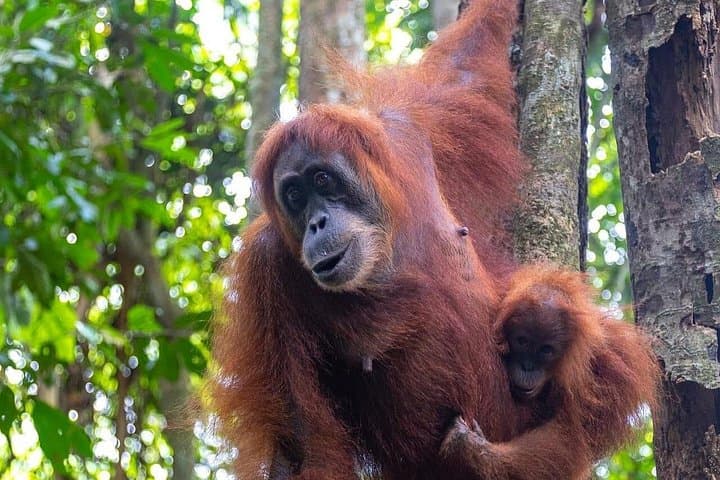

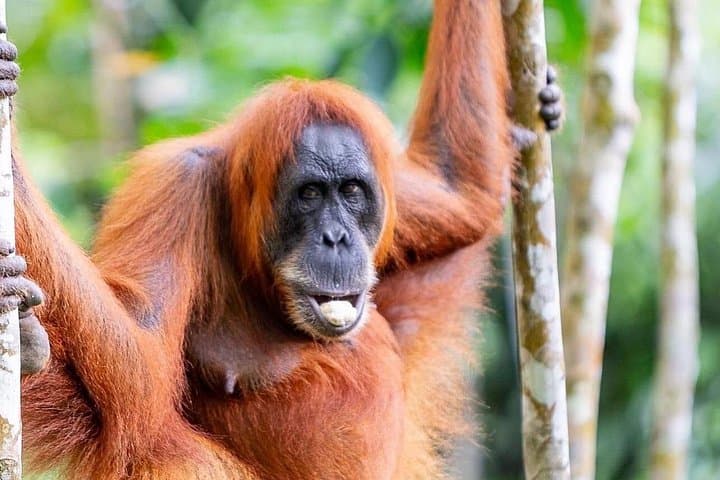
A narrow trail follows the Bohorok River as morning light filters through a high canopy; the river seems to press you onward, carving a path into the rainforest. Within an hour of leaving Bukit Lawang village you'll be beneath giant dipterocarps, eyes scanning the crowns where wild orangutans move like slow actors across a stage. The air is warm and humid, punctuated by insect calls and the wet slap of river stones.
A narrow trail follows the Bohorok River as morning light filters through a high canopy; the river seems to press you onward, carving a path into the rainforest. Within an hour of leaving Bukit Lawang village you'll be beneath giant dipterocarps, eyes scanning the crowns where wild orangutans move like slow actors across a stage. The air is warm and humid, punctuated by insect calls and the wet slap of river stones.
The area began as an orangutan rehabilitation site in the early 1970s and sits at the edge of Gunung Leuser National Park, declared a UNESCO Biosphere Reserve in 1980. Geology here is older tropical highland—steep ridges dropping to the Bohorok valley, with soils that support rubber plantations along the approach. Culturally, Bukit Lawang is a small riverside village where guides are often local and bilingual; a jungle lunch will commonly include rice, vegetables and fresh tropical fruit.
Expect mixed terrain: packed riverbank paths, muddy jungle singletrack, short uphill scrambles and steps through rubber plantations. Full-day treks typically cover roughly 6–10 km with several hundred meters of cumulative ascent and take about 6–7 hours; half-day options shorten that to 2–3 hours.
Practical guidance: wear closed, grippy shoes and long trousers to deter leeches and ticks, bring 1–2 liters of water, lightweight rain protection and insect repellent. Keep camera zoom ready—orangutans are most visible at canopy level and sightings can be fleeting. Follow your guide’s instructions for ethical viewing: no feeding, keep distance, and stay on established trails to minimize impact.