THE ADVENTURE COLLECTIVE® · Independent discovery and booking for outdoor travel

Step into Bukhara’s Old Town on a 3–4 hour guided walk through mosques, madrassahs, and the Ark. This small-group tour pairs architectural history with practical tips for navigating cobbled streets and summer heat.
Step into Bukhara’s Old Town on a 3–4 hour guided walk through mosques, madrassahs, and the Ark. This small-group tour pairs architectural history with practical tips for navigating cobbled streets and summer heat.
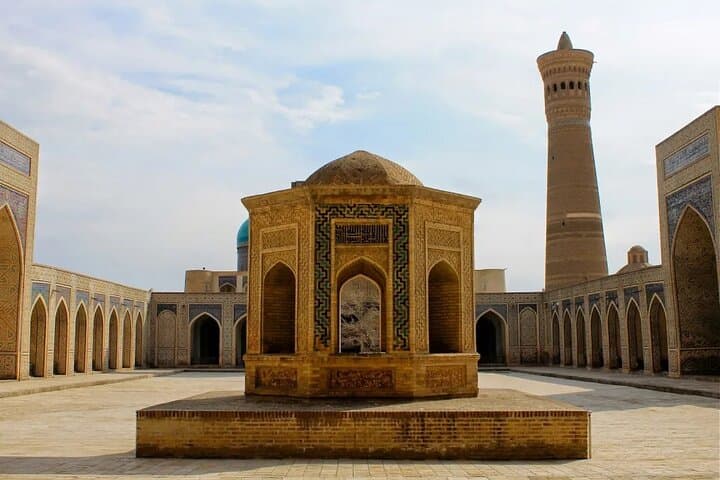
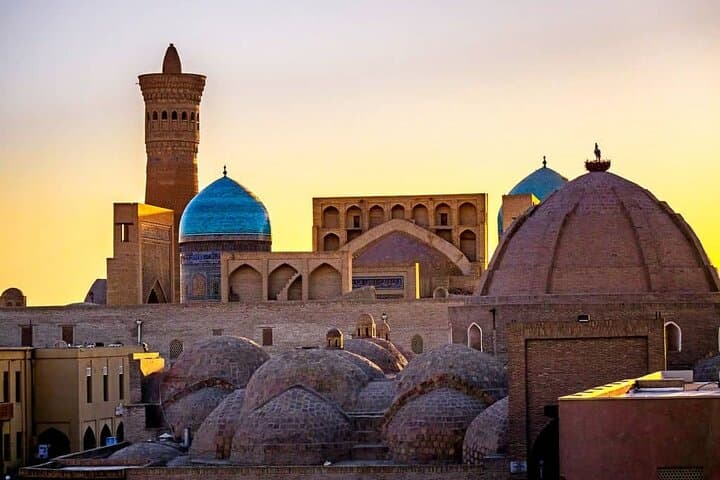
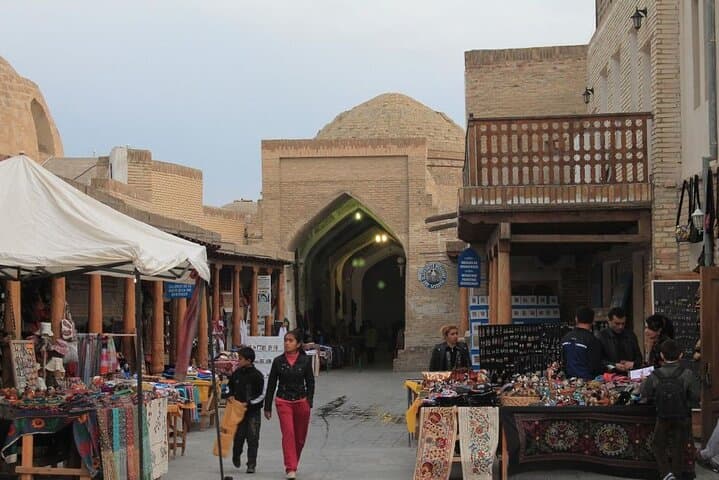
Walk through a gate of time and the city opens: sun on turquoise tiles, vendors arranging dried pomegranates, and the low sound of prayer punctuating wide courtyards.
Verified experiences and guided adventures in the surrounding area.
Operated by Guide Hamza · Bukhara, Bukhara Region
Walk through a gate of time and the city opens: sun on turquoise tiles, vendors arranging dried pomegranates, and the low sound of prayer punctuating wide courtyards.
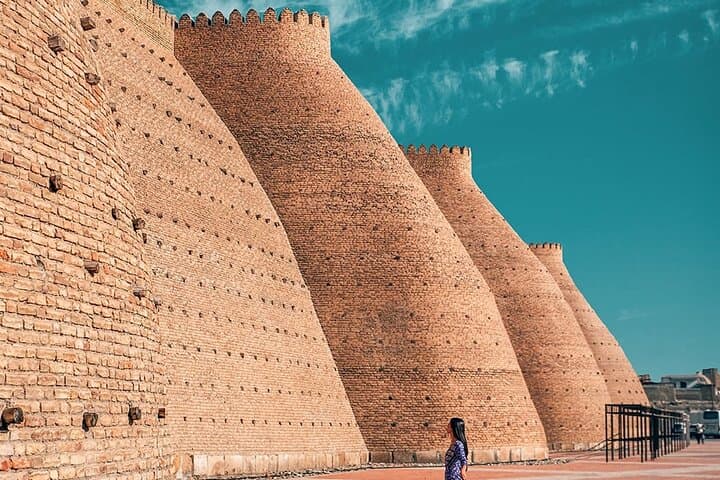
This three- to four-hour group walking tour threads the compact core of Bukhara’s Old Town—starting close to the Ark fortress, moving past minarets, and pausing at madrassahs and mosque museums. The architecture here is living proof of the Silk Road’s importance; mud-brick walls sit beside glazed-tile facades from the Timurid and later periods. The site’s geology—an arid plain with clay-rich soils—helped shape the city’s compact, adobe-built streets and shaded iwans.
Culturally the route traces centuries of Islamic scholarship and trade: caravanserai routes once funneled merchants into these squares, and many madrassahs doubled as centers of learning. Local craftsmen still work with silk and ceramics in nearby bazaars, offering a direct link from past economies to present-day life.
Practical guidance: expect mostly paved and cobbled surfaces with short flights of stone steps. The tour is suitable for most fitness levels but involves up to four hours on foot, often in direct sun—carry water, sun protection, and modest clothing for mosque entrances. Morning and late-afternoon departures are cooler and better for photography; mid-day can be hot in summer.
Group size is small (up to 15), so you’ll get focused commentary on landmarks like the Ark, Po-i-Kalyan complex, and local mosque museums. Confirm meeting point details and any included admissions when you book, and bring local currency for smaller purchases.
easy.
3–4 hours.
Suitable for most fitness levels; mostly flat walking on paved and cobbled streets with occasional steps—be prepared to be on your feet for several hours.
The tour runs approximately 3–4 hours, depending on group pace and time spent at individual sites.
Some stops may include admissions but not all; confirm which sites are covered at booking and carry small cash for optional entrances.
The operator notes stroller accessibility, but streets can be narrow and cobbled—a sturdy stroller is recommended and some sections may require folding or carrying.
Guides often provide commentary in English; confirm language availability at the time of booking if you need another language.
Bukhara was a major Silk Road hub and an intellectual center during the Samanid and later Timurid periods; many madrassahs served as both schools and social centers.
The city’s mud-brick and tiled monuments require ongoing restoration—visit responsibly by sticking to paths, avoiding touching fragile tiles, and supporting local guides and craftspeople.
Guide Hamza operates guided outdoor trips and adventures with an emphasis on safety, stewardship, and memorable experiences.
Walk through a gate of time and the city opens: sun on turquoise tiles, vendors arranging dried pomegranates, and the low sound of prayer punctuating wide courtyards.
Walk through a gate of time and the city opens: sun on turquoise tiles, vendors arranging dried pomegranates, and the low sound of prayer punctuating wide courtyards.
This three- to four-hour group walking tour threads the compact core of Bukhara’s Old Town—starting close to the Ark fortress, moving past minarets, and pausing at madrassahs and mosque museums. The architecture here is living proof of the Silk Road’s importance; mud-brick walls sit beside glazed-tile facades from the Timurid and later periods. The site’s geology—an arid plain with clay-rich soils—helped shape the city’s compact, adobe-built streets and shaded iwans.
Culturally the route traces centuries of Islamic scholarship and trade: caravanserai routes once funneled merchants into these squares, and many madrassahs doubled as centers of learning. Local craftsmen still work with silk and ceramics in nearby bazaars, offering a direct link from past economies to present-day life.
Practical guidance: expect mostly paved and cobbled surfaces with short flights of stone steps. The tour is suitable for most fitness levels but involves up to four hours on foot, often in direct sun—carry water, sun protection, and modest clothing for mosque entrances. Morning and late-afternoon departures are cooler and better for photography; mid-day can be hot in summer.
Group size is small (up to 15), so you’ll get focused commentary on landmarks like the Ark, Po-i-Kalyan complex, and local mosque museums. Confirm meeting point details and any included admissions when you book, and bring local currency for smaller purchases.