THE ADVENTURE COLLECTIVE® · Independent discovery and booking for outdoor travel

Glide through Bukchon’s quiet alleys by pedicab, then learn traditional dancheong painting at Doraeheon. This compact cultural tour mixes living history with a hands-on craft session and a traditional tea break.
Glide through Bukchon’s quiet alleys by pedicab, then learn traditional dancheong painting at Doraeheon. This compact cultural tour mixes living history with a hands-on craft session and a traditional tea break.
A pedicab hums forward between a long, low stone wall and a line of hanok roofs; the guide points to a faded tile pattern while the city beyond stays politely out of sight. For 60 minutes you move at a pace that lets stories settle—the narrow alleys of Bukchon Hanok Village open like pages revealing everyday life, courtyard doors, and hidden shrines.
Verified experiences and guided adventures in the surrounding area.
Operated by Arteepedicab · Seoul, Seoul
A pedicab hums forward between a long, low stone wall and a line of hanok roofs; the guide points to a faded tile pattern while the city beyond stays politely out of sight. For 60 minutes you move at a pace that lets stories settle—the narrow alleys of Bukchon Hanok Village open like pages revealing everyday life, courtyard doors, and hidden shrines.
Bukchon grew around royal palaces during the Joseon dynasty, its wooden hanok built with timber framing, ondol heated floors, and curved ceramic roof tiles. Changdeokgung’s stonewall road—laid from local stone—marks the edge of palace grounds and channels a quieter Seoul. Dancheong, the polychrome painting practiced at the Doraeheon workshop, is both decorative and preservative: pigments and patterns signify rank, protection, and cosmology on temples and pavilions.
The hands-on 90-minute workshop teaches basic brush strokes, traditional pigments, and pattern meanings, then guides you to make a small keepsake—keychain, sticker, or panel—while a pot of traditional tea offers a pause for reflection.
Practical tips: plan this in the morning to avoid crowds and midday heat; the pedicab route uses narrow lanes and some short steps, so wear supportive shoes. The experience is family-friendly and wheelchair-accessible in parts, but confirm mobility needs when booking. Bring a small bag for purchases and a compact camera for courtyard details. Respect private residences—do not enter private courtyards without permission—and leave larger tripods behind. When you step out of the workshop, the laneways and small galleries nearby reward slow exploration.
easy.
2–3 hours.
Suitable for all fitness levels; requires short amounts of walking and standing during the workshop.
Some pedicabs and route sections are accessible, but accessibility can vary—inform the operator of mobility needs when booking to confirm arrangements.
No—workshop instructors teach basic strokes and pattern meanings so beginners can complete a small souvenir piece.
The tour is private per booking; confirm the maximum capacity with the operator at time of reservation.
Yes—families are welcome; infants may sit in laps during the pedicab ride and children can participate in the workshop under supervision.
Bukchon and the surrounding Jongno area developed during the Joseon dynasty as a residential district for officials and scholars; dancheong has been used on Korean palaces and temples for centuries.
Local preservation efforts limit exterior modifications to hanok and manage visitor flow; stick to designated paths and support small craftspeople to help maintain the neighborhood.
Arteepedicab operates guided outdoor trips and adventures with an emphasis on safety, stewardship, and memorable experiences.
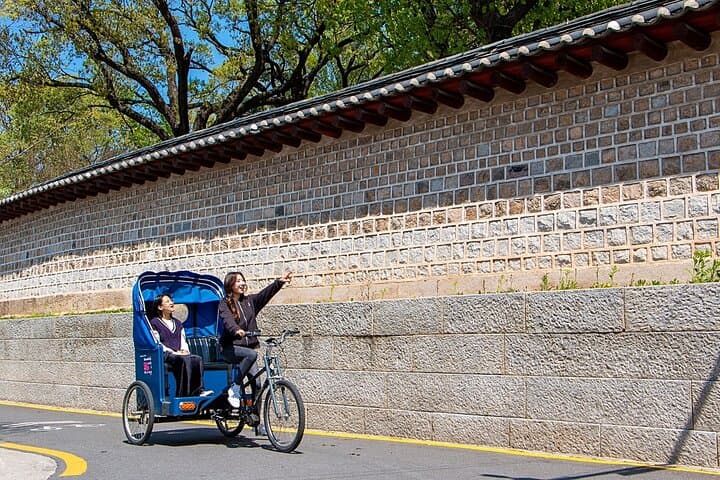
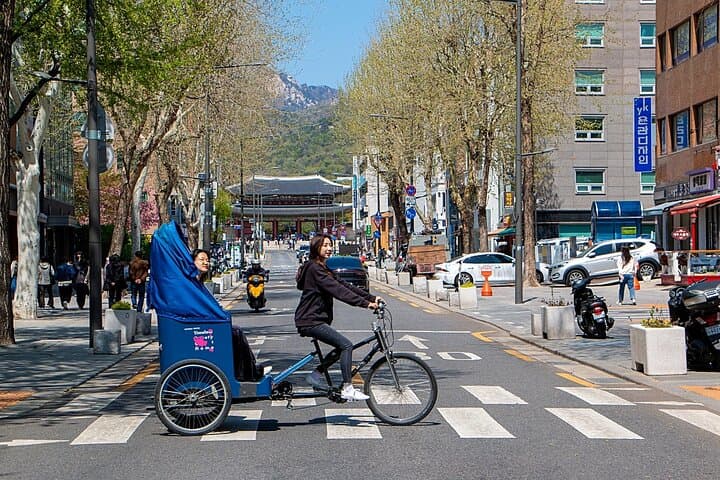
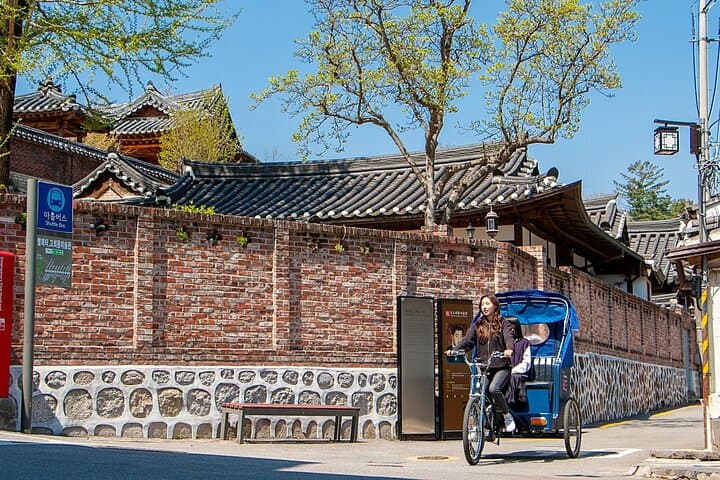
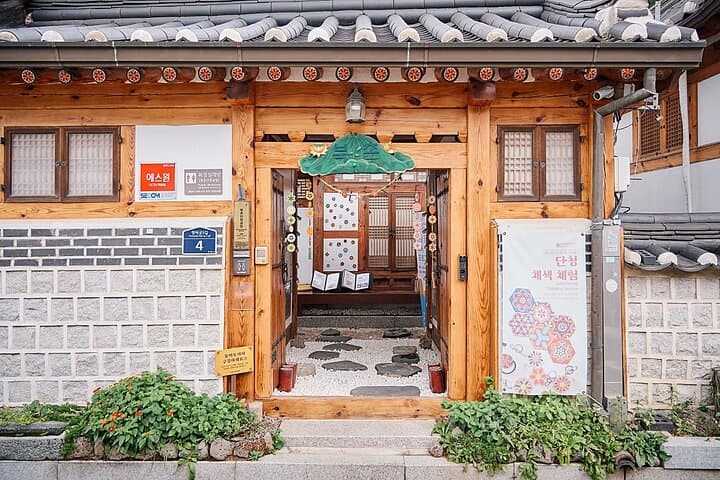
A pedicab hums forward between a long, low stone wall and a line of hanok roofs; the guide points to a faded tile pattern while the city beyond stays politely out of sight. For 60 minutes you move at a pace that lets stories settle—the narrow alleys of Bukchon Hanok Village open like pages revealing everyday life, courtyard doors, and hidden shrines.
A pedicab hums forward between a long, low stone wall and a line of hanok roofs; the guide points to a faded tile pattern while the city beyond stays politely out of sight. For 60 minutes you move at a pace that lets stories settle—the narrow alleys of Bukchon Hanok Village open like pages revealing everyday life, courtyard doors, and hidden shrines.
Bukchon grew around royal palaces during the Joseon dynasty, its wooden hanok built with timber framing, ondol heated floors, and curved ceramic roof tiles. Changdeokgung’s stonewall road—laid from local stone—marks the edge of palace grounds and channels a quieter Seoul. Dancheong, the polychrome painting practiced at the Doraeheon workshop, is both decorative and preservative: pigments and patterns signify rank, protection, and cosmology on temples and pavilions.
The hands-on 90-minute workshop teaches basic brush strokes, traditional pigments, and pattern meanings, then guides you to make a small keepsake—keychain, sticker, or panel—while a pot of traditional tea offers a pause for reflection.
Practical tips: plan this in the morning to avoid crowds and midday heat; the pedicab route uses narrow lanes and some short steps, so wear supportive shoes. The experience is family-friendly and wheelchair-accessible in parts, but confirm mobility needs when booking. Bring a small bag for purchases and a compact camera for courtyard details. Respect private residences—do not enter private courtyards without permission—and leave larger tripods behind. When you step out of the workshop, the laneways and small galleries nearby reward slow exploration.