THE ADVENTURE COLLECTIVE® · Independent discovery and booking for outdoor travel

Shape snow into a real igloo on a guided day trip from Kemi — learn traditional techniques, cut blocks, and finish a liveable dome while enjoying a tepee barbecue and hotel transfers. Family-friendly, educational, and hands-on.
Shape snow into a real igloo on a guided day trip from Kemi — learn traditional techniques, cut blocks, and finish a liveable dome while enjoying a tepee barbecue and hotel transfers. Family-friendly, educational, and hands-on.
Under a pale Arctic sky, a field of powder waits like raw canvas. Participants gather shovels and sleds as steam curls from breath; the guide points to a drift of wind-packed snow and explains how a pile becomes shelter. Over the next hours you cut and shape blocks, stack a 30–40 cm-thick wall and carve a doorway and sleeping ledge — the work is physical, surprising and communal.
Verified experiences and guided adventures in the surrounding area.
Operated by Lapland Welcome Oy · Kemi, Lapland
Under a pale Arctic sky, a field of powder waits like raw canvas. Participants gather shovels and sleds as steam curls from breath; the guide points to a drift of wind-packed snow and explains how a pile becomes shelter. Over the next hours you cut and shape blocks, stack a 30–40 cm-thick wall and carve a doorway and sleeping ledge — the work is physical, surprising and communal.
The technique has deep Arctic roots: igloos as quick shelters were perfected by Inuit hunters who used the insulating air in snow to survive temperatures far below freezing. In Finnish Lapland, the practice is now part cultural demonstration, part outdoor education, and part family play. The geology of the region — fine, wind-compacted snow and flat coastal plains near the Bothnian Bay — makes block-building straightforward when temperatures are steady below freezing.
Expect clear practical instruction from guides, hotel transfers from Kemi, hot drinks and a barbecue lunch in a tepee beside an open fire. The session moves at a steady pace: snow selection, block cutting, dome formation, and interior finishing. Children can join when accompanied by adults; physical demands are moderate but require safe footwear and warm layers.
Plan for strong outerwear, waterproof boots, and time to warm up between tasks. Work with the guide on ventilation and doorway orientation — small details that keep the structure habitable. This is a tactile, regional winter experience: you leave with a hand-built shelter, a better sense of Arctic craft, and memories of a very quiet, very white landscape.
moderate.
7 hours.
Light to moderate fitness; able to shovel, kneel and lift small snow blocks for several hours; suitable for families with children accompanied by adults.
Yes — children are welcome but must be accompanied by an adult; the program notes family orientation and moderate physical work.
Hotel pickup and drop-off from major hotels in Kemi, guidance, winter clothing if needed, snacks, coffee/tea and a barbeque lunch in a tepee are included.
No experience is required; guides teach construction techniques, snow selection and safety for first-timers.
This program is a daytime experience; while igloos can be used as shelters, overnight stays are not part of the activity and require specific equipment and planning.
Igloo construction techniques originated with Inuit peoples as practical winter shelters; Lapland’s winter crafts are presented today in a mix of indigenous reference and local Finnish northern culture.
Winter ecosystems are sensitive: stay on established routes, avoid disturbing wildlife, and follow guides’ Leave No Trace practices to protect fragile tundra and coastal habitats.
Lapland Welcome Oy operates guided outdoor trips and adventures with an emphasis on safety, stewardship, and memorable experiences.
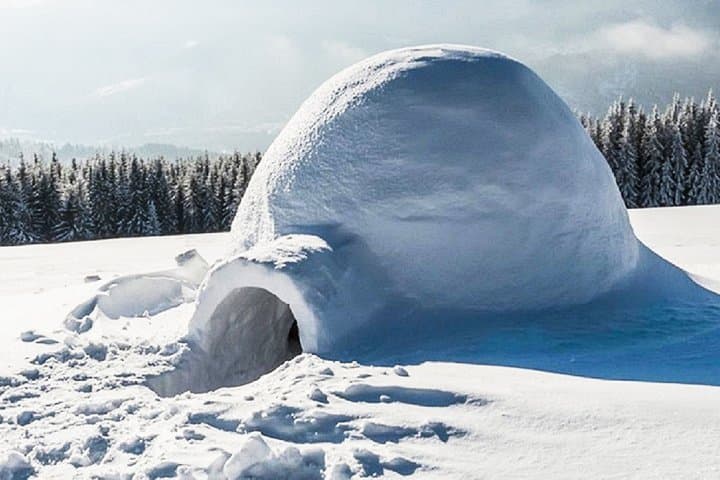
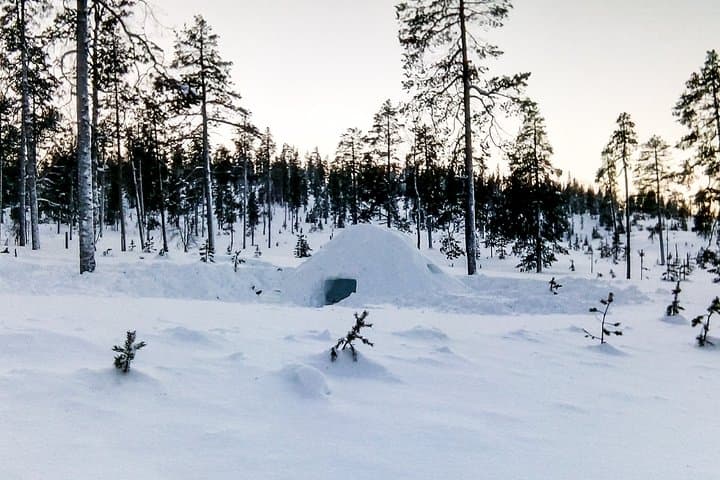
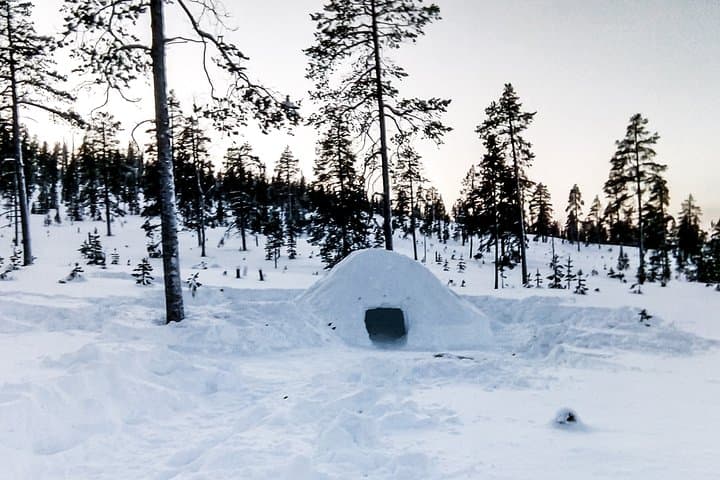
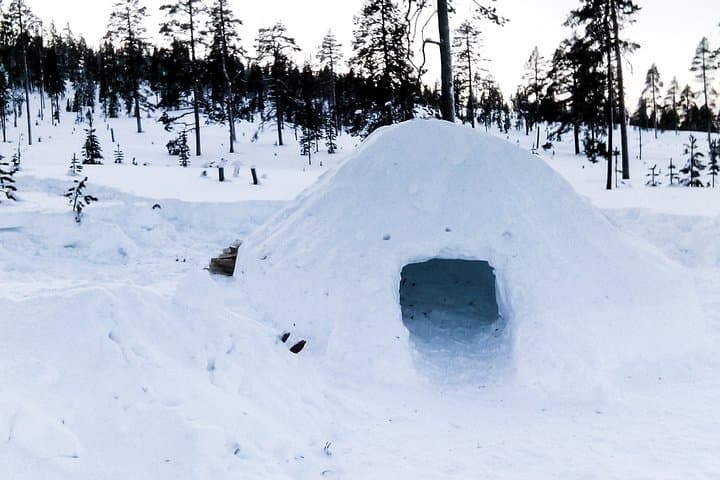
Under a pale Arctic sky, a field of powder waits like raw canvas. Participants gather shovels and sleds as steam curls from breath; the guide points to a drift of wind-packed snow and explains how a pile becomes shelter. Over the next hours you cut and shape blocks, stack a 30–40 cm-thick wall and carve a doorway and sleeping ledge — the work is physical, surprising and communal.
Under a pale Arctic sky, a field of powder waits like raw canvas. Participants gather shovels and sleds as steam curls from breath; the guide points to a drift of wind-packed snow and explains how a pile becomes shelter. Over the next hours you cut and shape blocks, stack a 30–40 cm-thick wall and carve a doorway and sleeping ledge — the work is physical, surprising and communal.
The technique has deep Arctic roots: igloos as quick shelters were perfected by Inuit hunters who used the insulating air in snow to survive temperatures far below freezing. In Finnish Lapland, the practice is now part cultural demonstration, part outdoor education, and part family play. The geology of the region — fine, wind-compacted snow and flat coastal plains near the Bothnian Bay — makes block-building straightforward when temperatures are steady below freezing.
Expect clear practical instruction from guides, hotel transfers from Kemi, hot drinks and a barbecue lunch in a tepee beside an open fire. The session moves at a steady pace: snow selection, block cutting, dome formation, and interior finishing. Children can join when accompanied by adults; physical demands are moderate but require safe footwear and warm layers.
Plan for strong outerwear, waterproof boots, and time to warm up between tasks. Work with the guide on ventilation and doorway orientation — small details that keep the structure habitable. This is a tactile, regional winter experience: you leave with a hand-built shelter, a better sense of Arctic craft, and memories of a very quiet, very white landscape.