THE ADVENTURE COLLECTIVE® · Independent discovery and booking for outdoor travel

Spend 90 minutes on a working buffalo dairy outside Tissamaharama learning traditional curd making from milking to clay-pot setting, then taste freshly made curd with kithul treacle. Practical, hands-on, and rooted in village foodways.
Spend 90 minutes on a working buffalo dairy outside Tissamaharama learning traditional curd making from milking to clay-pot setting, then taste freshly made curd with kithul treacle. Practical, hands-on, and rooted in village foodways.
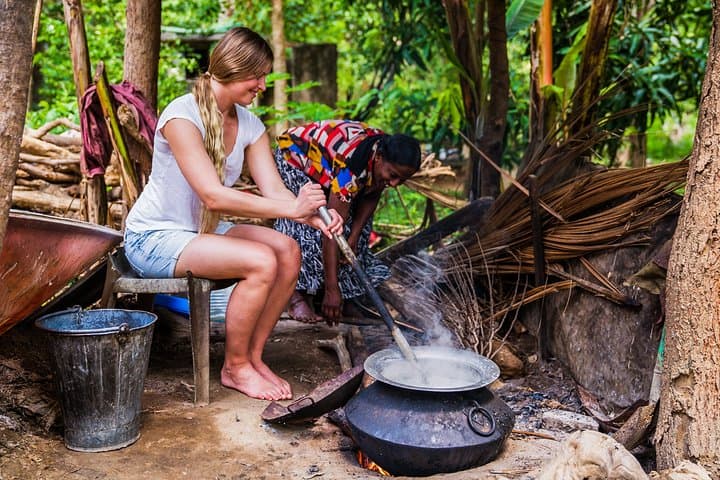
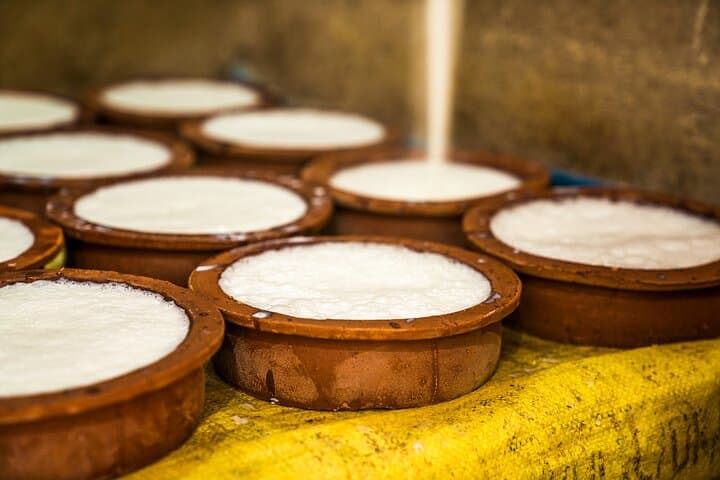
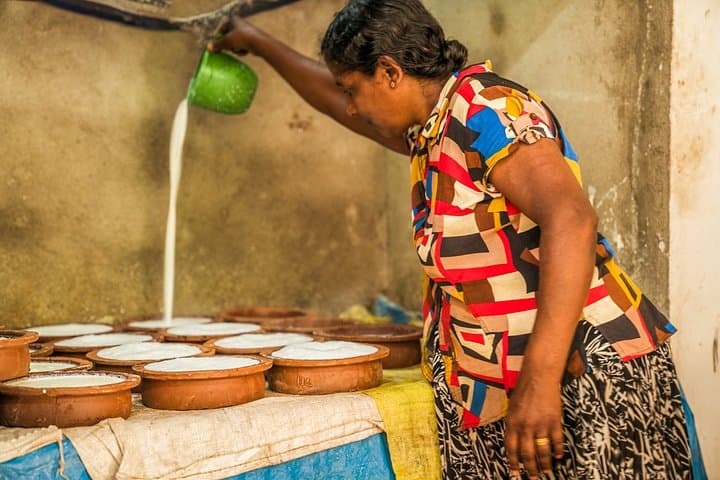
A low-slung clay pot steams in the early light while a line of water buffaloes stand patient at the yard’s edge — this is the rhythm of a curd-making village outside Tissamaharama. The workshop places you beside producers who still follow methods passed through generations: hand-milking, slow boiling, and the careful transfer of warm milk into reddish-brown earthenware where the curd sets.
Verified experiences and guided adventures in the surrounding area.
Operated by Lakpura LLC · Tissamaharama, Southern Province
A low-slung clay pot steams in the early light while a line of water buffaloes stand patient at the yard’s edge — this is the rhythm of a curd-making village outside Tissamaharama. The workshop places you beside producers who still follow methods passed through generations: hand-milking, slow boiling, and the careful transfer of warm milk into reddish-brown earthenware where the curd sets.
Sri Lanka’s southern plains around Tissamaharama are fertile and flat, dotted with reservoirs and paddy land; the area’s sandy loam and local microorganisms shape the flavor of buffalo curd. The practice ties into regional culture: kithul treacle served with curd is a sugar tradition unique to the island’s palms and smallholder economies.
Expect a technically detailed demonstration: observing hand-milking, straining and boiling, the addition of souring agents, and the clay-pot setting process. The host explains hygiene and timing — the boiling stage can be long but you’ll rotate through stations to see continuous work.
Practical guidance: wear close-toed shoes and clothes you don’t mind dusting with milk spray; plan for 90 minutes on-site with a short tasting included. Bring water, sun protection, and mention dietary restrictions in advance. Photography is usually welcome but respect the animals and production surfaces. The curd you taste will be thicker than cow curd, sweetened locally with kithul treacle — a simple, rural flavor that reflects land, livestock, and careful human craft.
easy.
1.5 hours.
Minimal physical exertion; participants should be able to stand and walk short farm paths.
Yes — families are welcome, but infants must sit on an adult’s lap and children should be supervised near animals and cooking equipment.
Guests are sometimes allowed to try milking if the buffalo is calm and handlers agree; participation depends on the animal’s temperament and safety considerations.
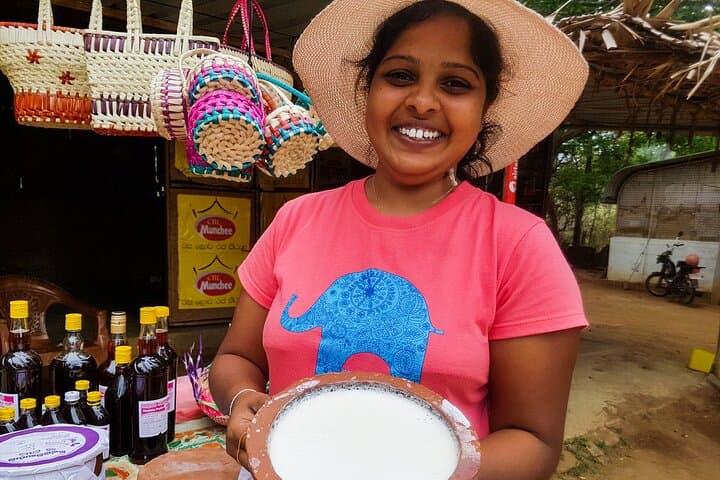
You’ll sample freshly made buffalo curd, notably thicker and creamier than cow curd, traditionally served with kithul treacle (palm syrup).
Public transport options are nearby; check the booking page or contact the operator about private pickup or directions to the farm.
Curd-making in this region is a long-standing rural craft tied to buffalo dairying and household economies; clay pots and local souring agents reflect generations of practice.
Support smallholders by following biosecurity measures (no shoes in production areas if requested) and avoid single-use plastics when sampling locally produced foods.
Lakpura LLC operates guided outdoor trips and adventures with an emphasis on safety, stewardship, and memorable experiences.
A low-slung clay pot steams in the early light while a line of water buffaloes stand patient at the yard’s edge — this is the rhythm of a curd-making village outside Tissamaharama. The workshop places you beside producers who still follow methods passed through generations: hand-milking, slow boiling, and the careful transfer of warm milk into reddish-brown earthenware where the curd sets.
A low-slung clay pot steams in the early light while a line of water buffaloes stand patient at the yard’s edge — this is the rhythm of a curd-making village outside Tissamaharama. The workshop places you beside producers who still follow methods passed through generations: hand-milking, slow boiling, and the careful transfer of warm milk into reddish-brown earthenware where the curd sets.
Sri Lanka’s southern plains around Tissamaharama are fertile and flat, dotted with reservoirs and paddy land; the area’s sandy loam and local microorganisms shape the flavor of buffalo curd. The practice ties into regional culture: kithul treacle served with curd is a sugar tradition unique to the island’s palms and smallholder economies.
Expect a technically detailed demonstration: observing hand-milking, straining and boiling, the addition of souring agents, and the clay-pot setting process. The host explains hygiene and timing — the boiling stage can be long but you’ll rotate through stations to see continuous work.
Practical guidance: wear close-toed shoes and clothes you don’t mind dusting with milk spray; plan for 90 minutes on-site with a short tasting included. Bring water, sun protection, and mention dietary restrictions in advance. Photography is usually welcome but respect the animals and production surfaces. The curd you taste will be thicker than cow curd, sweetened locally with kithul treacle — a simple, rural flavor that reflects land, livestock, and careful human craft.