THE ADVENTURE COLLECTIVE® · Independent discovery and booking for outdoor travel

Explore Karnak’s towering columns and Luxor Temple’s monumental statuary on an affordable small-group tour. Ideal for budget-minded travelers who want expert context, hotel transfers, and flexible ticket options.
Explore Karnak’s towering columns and Luxor Temple’s monumental statuary on an affordable small-group tour. Ideal for budget-minded travelers who want expert context, hotel transfers, and flexible ticket options.
You step off the shared minivan into a courtyard of sandstone shadows and sun — columns rising like an ancient forest and the Nile murmuring nearby, daring you to slow down and look. This budget small-group tour moves deliberately between two of Egypt’s most concentrated chapters of history: Karnak’s monumental pylons and Luxor Temple’s row of towering statues.
Verified experiences and guided adventures in the surrounding area.
Operated by Eyes of Egypt · Luxor, Luxor Governorate
You step off the shared minivan into a courtyard of sandstone shadows and sun — columns rising like an ancient forest and the Nile murmuring nearby, daring you to slow down and look. This budget small-group tour moves deliberately between two of Egypt’s most concentrated chapters of history: Karnak’s monumental pylons and Luxor Temple’s row of towering statues.
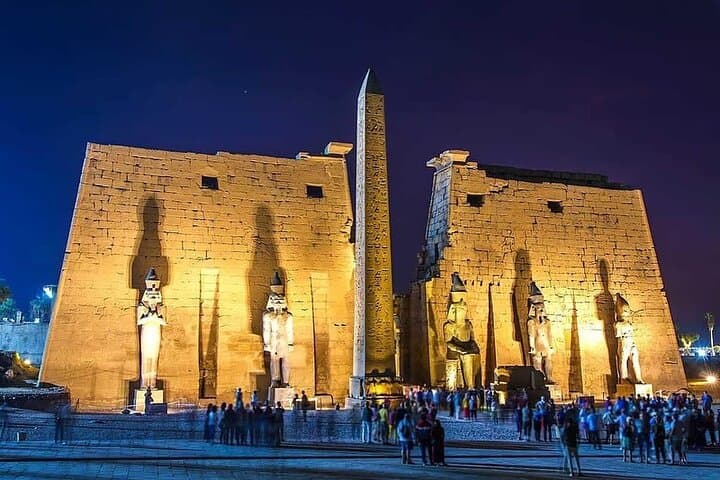
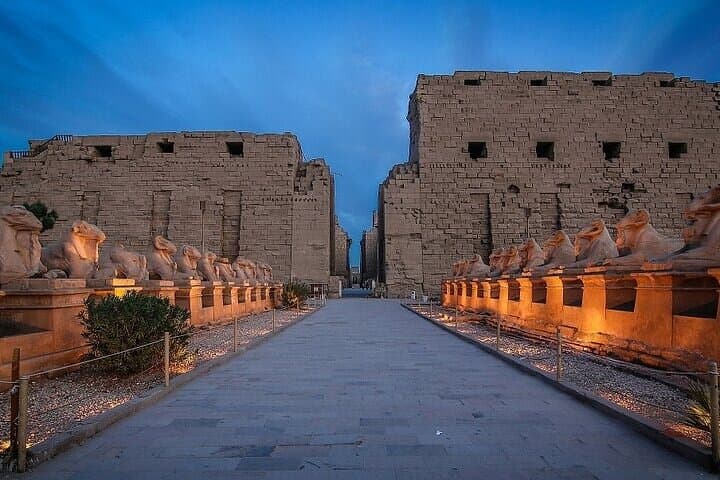
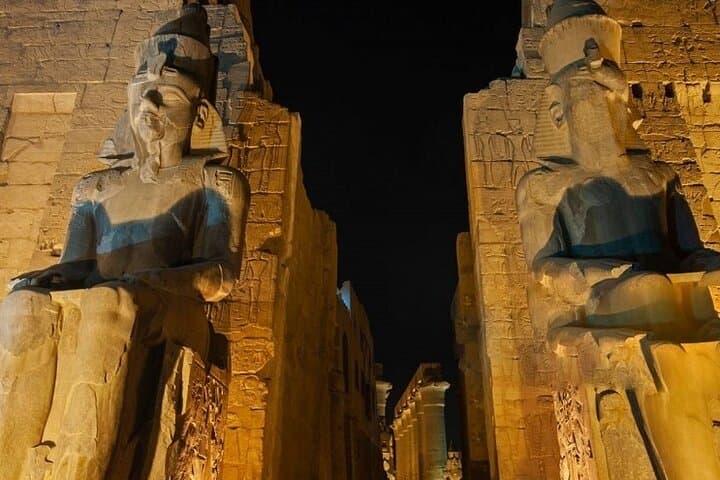
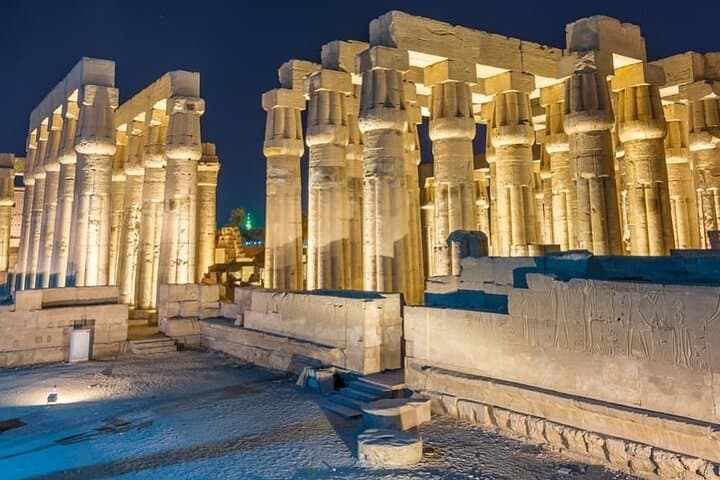
Karnak grew over 1,500 years, an accretion of pharaohs’ ambitions; its Great Hypostyle Hall holds 134 columns that taught stone how to imitate sunlight. Luxor Temple, closer to the modern town, reads as a ritual avenue: obelisks, colossal seated figures and layers of reliefs that reference festivals, priests and royal power. Geology matters here — the soft local sandstone weathers in sheets, revealing ancient tool marks and the slow work of wind, sun and human hands.
Culturally the two sites bridge living Luxor and its Pharaonic past. Local guides often add context about temple festivals and the role of the Nile in daily life; small-group tours make those conversations easier without the cost of a private guide.
Practical guidance: the tour typically lasts 3–4 hours with hotel pickup and drop-off, and groups capped at about six. Entrance fees may be extra depending on the package; bring Egyptian pounds for tickets, tips and small purchases. Dress modestly (light, breathable fabrics), wear sturdy walking shoes on uneven stone, and plan morning or late-afternoon visits to avoid high sun. Hydrate—carry water—and allow time to sit in the shade to let the scale register. With a bit of preparation, this affordable tour delivers concentrated history and memorable vistas without the premium price of a private excursion.
easy.
3–4 hours.
Suitable for most fitness levels; involves walking on uneven ground and short stair sections
Depending on the pricing option you select, entrance tickets may be included; check the package details — otherwise you can pay on-site in Egyptian pounds.
The tour lasts about 3–4 hours including transfers; exact return time depends on pickup location and group flow, typically mid-morning or early evening for illuminated visits.
The operator lists wheelchair-accessible options for transportation and some surfaces, but access within ancient sites is limited by steps and uneven ground — contact the provider to confirm specific needs.
Yes — some packages offer a night-time option or evening drop-off timings; request this when booking since it may affect the schedule.
Karnak and Luxor were centers of Theban worship for millennia; successive pharaohs added pylons, statues and obelisks, creating a layered record of ancient state religion.
Heavy visitation stresses fragile stone and painted reliefs; follow walkways, avoid touching carvings and support local conservation fees when offered.
Eyes of Egypt operates guided outdoor trips and adventures with an emphasis on safety, stewardship, and memorable experiences.
You step off the shared minivan into a courtyard of sandstone shadows and sun — columns rising like an ancient forest and the Nile murmuring nearby, daring you to slow down and look. This budget small-group tour moves deliberately between two of Egypt’s most concentrated chapters of history: Karnak’s monumental pylons and Luxor Temple’s row of towering statues.
You step off the shared minivan into a courtyard of sandstone shadows and sun — columns rising like an ancient forest and the Nile murmuring nearby, daring you to slow down and look. This budget small-group tour moves deliberately between two of Egypt’s most concentrated chapters of history: Karnak’s monumental pylons and Luxor Temple’s row of towering statues.
Karnak grew over 1,500 years, an accretion of pharaohs’ ambitions; its Great Hypostyle Hall holds 134 columns that taught stone how to imitate sunlight. Luxor Temple, closer to the modern town, reads as a ritual avenue: obelisks, colossal seated figures and layers of reliefs that reference festivals, priests and royal power. Geology matters here — the soft local sandstone weathers in sheets, revealing ancient tool marks and the slow work of wind, sun and human hands.
Culturally the two sites bridge living Luxor and its Pharaonic past. Local guides often add context about temple festivals and the role of the Nile in daily life; small-group tours make those conversations easier without the cost of a private guide.
Practical guidance: the tour typically lasts 3–4 hours with hotel pickup and drop-off, and groups capped at about six. Entrance fees may be extra depending on the package; bring Egyptian pounds for tickets, tips and small purchases. Dress modestly (light, breathable fabrics), wear sturdy walking shoes on uneven stone, and plan morning or late-afternoon visits to avoid high sun. Hydrate—carry water—and allow time to sit in the shade to let the scale register. With a bit of preparation, this affordable tour delivers concentrated history and memorable vistas without the premium price of a private excursion.