THE ADVENTURE COLLECTIVE® · Independent discovery and booking for outdoor travel

See Giza’s pyramids, Saqqara’s step pyramid, Cairo’s museum and bazaars, then a day on Alexandria’s Mediterranean coast—all in three days with a private Egyptologist guide. Practical transport, lunches included, and door-to-door pickup make this an efficient cultural crash course.
See Giza’s pyramids, Saqqara’s step pyramid, Cairo’s museum and bazaars, then a day on Alexandria’s Mediterranean coast—all in three days with a private Egyptologist guide. Practical transport, lunches included, and door-to-door pickup make this an efficient cultural crash course.
Morning light hits the Giza Plateau and the air smells of sun-warmed limestone; a private guide opens a gate in the city's flow and the pyramids stand like tasks waiting to be read. Over three compact days travelers move from the step pyramid at Saqqara to the fallen colossus at Memphis, then into Cairo's crowded alleys and finally along Alexandria's wind-bent Mediterranean corniche.
Verified experiences and guided adventures in the surrounding area.
Operated by Egypt Lifetime Tours · Cairo, Cairo Governorate
Morning light hits the Giza Plateau and the air smells of sun-warmed limestone; a private guide opens a gate in the city's flow and the pyramids stand like tasks waiting to be read. Over three compact days travelers move from the step pyramid at Saqqara to the fallen colossus at Memphis, then into Cairo's crowded alleys and finally along Alexandria's wind-bent Mediterranean corniche.
The route follows millennia: Djoser’s step pyramid at Saqqara (one of the world’s oldest monumental stone structures), Memphis’ open-air relics from the Old Kingdom, then the Giza trio and Sphinx whose blocks still carry the marks of ancient quarrying. Cairo layers Islamic, Coptic and modern histories—Khan al-Khalili’s marketface and the Citadel’s Ottoman-era profile—while Alexandria presents Greco-Roman ruins, catacombs and a coastal citadel at Qaitbay built on the old lighthouse site.
Expect mostly urban walking, short site climbs and museum time; heat and crowds shape pacing more than steep trails. Practicalities are simple: carry a copy of your passport, wear closed-toe shoes for uneven stones, and schedule the oldest sites for morning light. Guides explain ticketing and help navigate card-only payments at major museums. For comfort, plan rest stops between museums and a seafood lunch in Alexandria to reset before the return to Cairo.
This itinerary suits history-minded travelers who want concentrated access to Egypt’s headline sites with private transport and a local Egyptologist’s context—efficient, interpretive, and grounded in straightforward logistics.
easy.
3 days (approx. 72 hours).
Light activity level: able to walk 2–4 miles across uneven surfaces per day and handle stairs; no special fitness required.
No — entrance fees are typically paid by the traveler on-site; guides will advise on current prices and whether card or cash is accepted.
Pickup from Cairo International Airport or 6th of October City is available for an extra fee; confirm your pickup point when booking.
(duplicate removed)
The standard offering includes an English-speaking Egyptologist; guides in other languages may be available for an additional charge—request this at booking.
The itinerary threads Egypt’s long chronology—from Djoser’s 27th-century B.C. step pyramid at Saqqara to Alexandria’s Greco-Roman monuments—highlighting shifting capitals and cultural layers.
Tourism concentrates wear on ancient stone and museum collections; follow guides’ instructions, avoid touching artifacts and support licensed local guides and restaurants to keep revenue local.
Egypt Lifetime Tours operates guided outdoor trips and adventures with an emphasis on safety, stewardship, and memorable experiences.



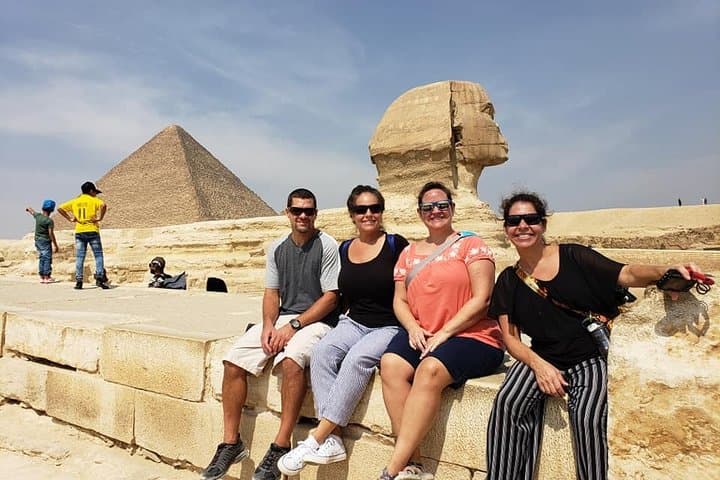
Morning light hits the Giza Plateau and the air smells of sun-warmed limestone; a private guide opens a gate in the city's flow and the pyramids stand like tasks waiting to be read. Over three compact days travelers move from the step pyramid at Saqqara to the fallen colossus at Memphis, then into Cairo's crowded alleys and finally along Alexandria's wind-bent Mediterranean corniche.
Morning light hits the Giza Plateau and the air smells of sun-warmed limestone; a private guide opens a gate in the city's flow and the pyramids stand like tasks waiting to be read. Over three compact days travelers move from the step pyramid at Saqqara to the fallen colossus at Memphis, then into Cairo's crowded alleys and finally along Alexandria's wind-bent Mediterranean corniche.
The route follows millennia: Djoser’s step pyramid at Saqqara (one of the world’s oldest monumental stone structures), Memphis’ open-air relics from the Old Kingdom, then the Giza trio and Sphinx whose blocks still carry the marks of ancient quarrying. Cairo layers Islamic, Coptic and modern histories—Khan al-Khalili’s marketface and the Citadel’s Ottoman-era profile—while Alexandria presents Greco-Roman ruins, catacombs and a coastal citadel at Qaitbay built on the old lighthouse site.
Expect mostly urban walking, short site climbs and museum time; heat and crowds shape pacing more than steep trails. Practicalities are simple: carry a copy of your passport, wear closed-toe shoes for uneven stones, and schedule the oldest sites for morning light. Guides explain ticketing and help navigate card-only payments at major museums. For comfort, plan rest stops between museums and a seafood lunch in Alexandria to reset before the return to Cairo.
This itinerary suits history-minded travelers who want concentrated access to Egypt’s headline sites with private transport and a local Egyptologist’s context—efficient, interpretive, and grounded in straightforward logistics.