THE ADVENTURE COLLECTIVE® · Independent discovery and booking for outdoor travel

Glide beneath the lit facades of Budapest on a 120‑minute Danube cruise that pairs panoramic sightseeing with live folklore music and an on‑board bar. This is an accessible, sensory introduction to the city’s landmarks and musical traditions.
Glide beneath the lit facades of Budapest on a 120‑minute Danube cruise that pairs panoramic sightseeing with live folklore music and an on‑board bar. This is an accessible, sensory introduction to the city’s landmarks and musical traditions.
The boat slips away from Dock #11 on the Pest side and the city rearranges itself into light and shadow: the Parliament’s lace-like facade glows amber, Buda Castle watches from its height, and the Chain Bridge becomes a string of reflected lamps pulled taut across the Danube.
Verified experiences and guided adventures in the surrounding area.
Operated by Silverline Cruises Kft. · Budapest, Budapest
The boat slips away from Dock #11 on the Pest side and the city rearranges itself into light and shadow: the Parliament’s lace-like facade glows amber, Buda Castle watches from its height, and the Chain Bridge becomes a string of reflected lamps pulled taut across the Danube.
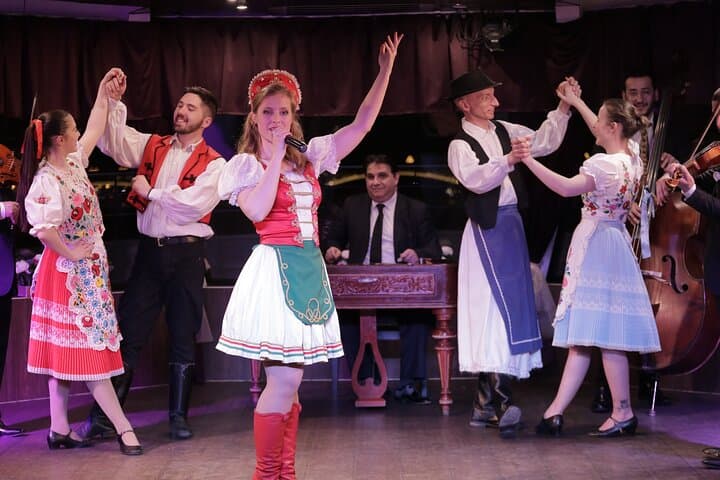
For 120 minutes you move through that illuminated corridor—an audience to an urban pageant while a small stage on the lower deck fills with violins, cimbalom and dancers. The music is not background; it punctuates the route with stories: gypsy-tinged melodies, regional dances, and folk songs that give texture to the monuments you glide past.
Budapest’s geography and history are inseparable from the Danube. The river splits ancient Buda’s rolling hills from Pest’s flat, neo-classical avenues; the lights on the water betray an older city of fortresses, bridges and parliamentarian ambition. The Chain Bridge, built in the 1840s, was the first permanent link between the two settlements; the Parliament is a late-19th-century neo-Gothic flourish signaling national identity. Gellért Hill, rising abruptly from the river’s edge, is a reminder that these are not just floodplain streets but a landscape of older rock and human endeavor.
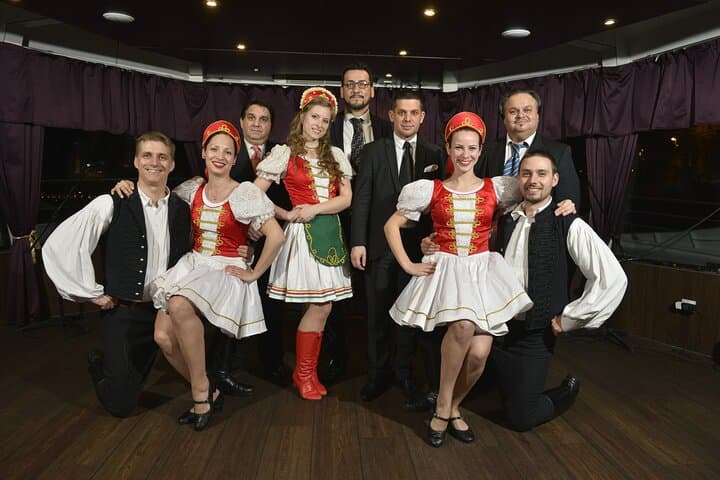
The show is a compact introduction to Hungarian culture: costumes reference rural regions, dancers demonstrate patterns that predate the modern nation, and musicians play tunes shaped by Ottoman, Central European and Roma influences. Onboard, the bar serves Hungarian wines, pálinka and cocktails—an easy way to meet the night’s mood, though staff may refuse boarding to visibly intoxicated guests.
Practicalities keep the evening smooth. Board at Dock #11, next to Elizabeth Bridge; arrival 10–15 minutes before departure is recommended. Mobile tickets are accepted; one ticket per booking. Outside food and drink are not permitted. The cruise runs 120 minutes and is paced for sightseeing and entertainment—comfortable for most travelers. If you miss your departure you can rebook subject to availability for an on-the-spot surcharge. The operator accepts public-transport access nearby, and the cancellation policy offers a full refund if you cancel at least 24 hours before.
For photographers, the best frames come at dusk or night when the façades switch on; plan to shoot from the starboard side for Parliament and from the port side for Buda Castle. Wear a light jacket—the river breeze can be surprisingly sharp after dark—and keep a small cross-body bag for your passport and ticket. This is a show more than a history lesson: it opens a door to Budapest’s past and present in two hospitable hours, leaving you with music in your mind and a clear line of monuments to explore the next day.
easy.
2 hours.
Suitable for all fitness levels; minimal mobility needed though there are stairs between decks
The cruise lasts 120 minutes (2 hours) and follows a set route past Budapest’s major riverside sights.
Board at Dock #11 on the Pest side, next to Elizabeth (Erzsébet) Bridge—look for the Silverline logo.
Alcoholic beverages are available onboard as part of the bar service but are not included automatically in the ticket price.
Yes; the cruise is family‑friendly, but staff may refuse boarding to guests who appear intoxicated.
You can receive a full refund if you cancel at least 24 hours before departure; cancellations within 24 hours are non‑refundable.
Late guests may be rebooked subject to availability for an additional surcharge (typically 50% of the original price) payable onboard.
The Danube has defined Budapest’s urban development for centuries; the 19th‑century construction of the Chain Bridge helped unify Buda and Pest into a single capital.
The Danube promenade is part of a managed urban waterway—avoid discarding trash on board and use the ship’s recycling bins to reduce river pollution.
Silverline Cruises Kft. operates guided outdoor trips and adventures with an emphasis on safety, stewardship, and memorable experiences.


The boat slips away from Dock #11 on the Pest side and the city rearranges itself into light and shadow: the Parliament’s lace-like facade glows amber, Buda Castle watches from its height, and the Chain Bridge becomes a string of reflected lamps pulled taut across the Danube.
The boat slips away from Dock #11 on the Pest side and the city rearranges itself into light and shadow: the Parliament’s lace-like facade glows amber, Buda Castle watches from its height, and the Chain Bridge becomes a string of reflected lamps pulled taut across the Danube.
For 120 minutes you move through that illuminated corridor—an audience to an urban pageant while a small stage on the lower deck fills with violins, cimbalom and dancers. The music is not background; it punctuates the route with stories: gypsy-tinged melodies, regional dances, and folk songs that give texture to the monuments you glide past.
Budapest’s geography and history are inseparable from the Danube. The river splits ancient Buda’s rolling hills from Pest’s flat, neo-classical avenues; the lights on the water betray an older city of fortresses, bridges and parliamentarian ambition. The Chain Bridge, built in the 1840s, was the first permanent link between the two settlements; the Parliament is a late-19th-century neo-Gothic flourish signaling national identity. Gellért Hill, rising abruptly from the river’s edge, is a reminder that these are not just floodplain streets but a landscape of older rock and human endeavor.
The show is a compact introduction to Hungarian culture: costumes reference rural regions, dancers demonstrate patterns that predate the modern nation, and musicians play tunes shaped by Ottoman, Central European and Roma influences. Onboard, the bar serves Hungarian wines, pálinka and cocktails—an easy way to meet the night’s mood, though staff may refuse boarding to visibly intoxicated guests.
Practicalities keep the evening smooth. Board at Dock #11, next to Elizabeth Bridge; arrival 10–15 minutes before departure is recommended. Mobile tickets are accepted; one ticket per booking. Outside food and drink are not permitted. The cruise runs 120 minutes and is paced for sightseeing and entertainment—comfortable for most travelers. If you miss your departure you can rebook subject to availability for an on-the-spot surcharge. The operator accepts public-transport access nearby, and the cancellation policy offers a full refund if you cancel at least 24 hours before.
For photographers, the best frames come at dusk or night when the façades switch on; plan to shoot from the starboard side for Parliament and from the port side for Buda Castle. Wear a light jacket—the river breeze can be surprisingly sharp after dark—and keep a small cross-body bag for your passport and ticket. This is a show more than a history lesson: it opens a door to Budapest’s past and present in two hospitable hours, leaving you with music in your mind and a clear line of monuments to explore the next day.