THE ADVENTURE COLLECTIVE® · Independent discovery and booking for outdoor travel

Cover Budapest’s essentials in comfort: a private Mercedes, an expert local guide, and a curated route that moves from Parliament’s riverside drama to the gabled baths of Buda. Ideal for travelers who want maximum discovery with minimum logistics.
Cover Budapest’s essentials in comfort: a private Mercedes, an expert local guide, and a curated route that moves from Parliament’s riverside drama to the gabled baths of Buda. Ideal for travelers who want maximum discovery with minimum logistics.
You step into a polished black Mercedes as the city wakes — yellow tram bells mix with the soft swell of the Danube, which pushes itself through Budapest as if daring you to keep up. Over the course of eight hours a local guide rearranges the map in front of you: broad avenues, imperial facades, thermal-steam clouds curling above spa basins. The vehicle hums across chain-linked bridges while the guide threads stories through each turn — Habsburg dignitaries, Ottoman garrisons, and 19th-century planners who stitched Buda and Pest into a single capital in 1873.
Verified experiences and guided adventures in the surrounding area.
Operated by Sweet Travel Private Tours Kft. · Budapest, Budapest
You step into a polished black Mercedes as the city wakes — yellow tram bells mix with the soft swell of the Danube, which pushes itself through Budapest as if daring you to keep up. Over the course of eight hours a local guide rearranges the map in front of you: broad avenues, imperial facades, thermal-steam clouds curling above spa basins. The vehicle hums across chain-linked bridges while the guide threads stories through each turn — Habsburg dignitaries, Ottoman garrisons, and 19th-century planners who stitched Buda and Pest into a single capital in 1873.
This private, chauffeured circuit moves deliberately between the city’s headline monuments and small revelations. You’ll pause for photos of the Hungarian Parliament’s Gothic crenellations reflected in the river, walk along the memorials at the Shoes on the Danube, and feel the steam rising off Szechenyi — Europe’s largest medicinal bath, itself a sign of Budapest’s geothermal undercurrent. On Gellért Hill the Citadel looks out like a fortress of memory; from there the bridges fan across the Danube and the rhythm of the city unfolds below.
Geology plays a quiet role: thermal springs beneath the Buda Hills fed the spa culture that Ottoman physicians first exploited. Architecture reads like a timeline — Baroque rooftops, Neo-Renaissance opera houses, Art Nouveau flourishes — each era visible in the stone and stucco. Cultural life folds into every stop: daytime coffeehouses, afternoon market stalls, and evening opera rehearsals still audible if you lean close to the State Opera House.
Practical planning for a day like this is simple but precise. The tour is mostly driven, with short walks at each stop (expect 10–20 minute strolls). Wheelchair access is available, but advise the operator of mobility needs in advance. Bring comfortable shoes for cobbled streets, a light waterproof layer for sudden rain, and a refillable water bottle — Budapest can be hot in summer and breezy along the river.
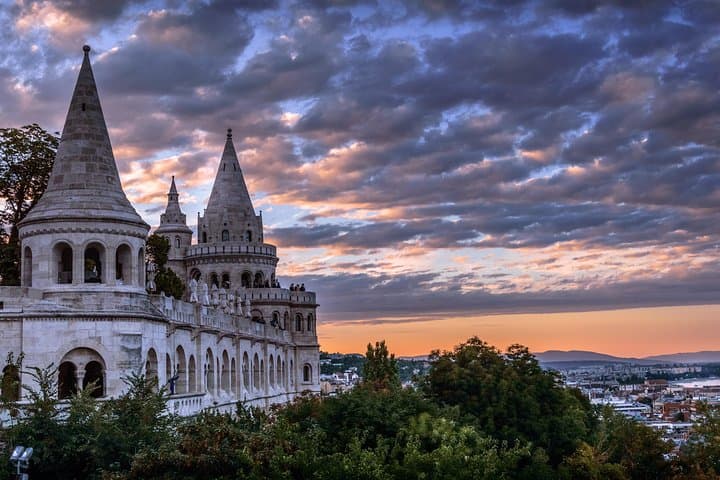
Timing matters: early starts avoid cruise crowds at the Parliament and give you crisper photos from Fisherman’s Bastion. If you want to enter Szechenyi or the Opera, plan for extra time and admission fees — the guide can adjust the itinerary to match your priorities. Tipping is customary for guides and drivers; local restaurants accept cards but carry some for smaller vendors. By evening you'll have covered political history, thermal geology, and a string of neighborhoods; the city that challenged empires will have, for one day, been wholly at your pace.
easy.
8 hours.
Light; participants should be able to manage short, flat walks of 10–20 minutes and occasional steps.
Typical duration is eight hours; exact pickup time is arranged based on your hotel and preferences—expect a morning departure to maximize daylight.
Standard tour pricing covers transport and guiding; admissions to baths, museums or Opera performances are not included unless specified.
Yes — the tour is wheelchair accessible. Notify the operator at booking so they can arrange suitable transport and adapt stops.
Yes — it’s a private tour and the guide can tailor stops, pacing, and timing to your interests and any mobility considerations.
Tipping is customary in Hungary; 10–15% of the tour cost is a common guideline, or a set amount you feel reflects the service.
The tour runs in most weather; the vehicle provides shelter and many stops have indoor components. Check cancellation policy for refunds.
Budapest was formally created in 1873 when Buda, Pest and Óbuda united; layers of Ottoman and Habsburg rule still shape the city’s architecture and baths.
Thermal baths and riverfront areas face heavy visitation—use refillable bottles, stay on designated paths, and support small local businesses to spread benefits.
Sweet Travel Private Tours Kft. operates guided outdoor trips and adventures with an emphasis on safety, stewardship, and memorable experiences.

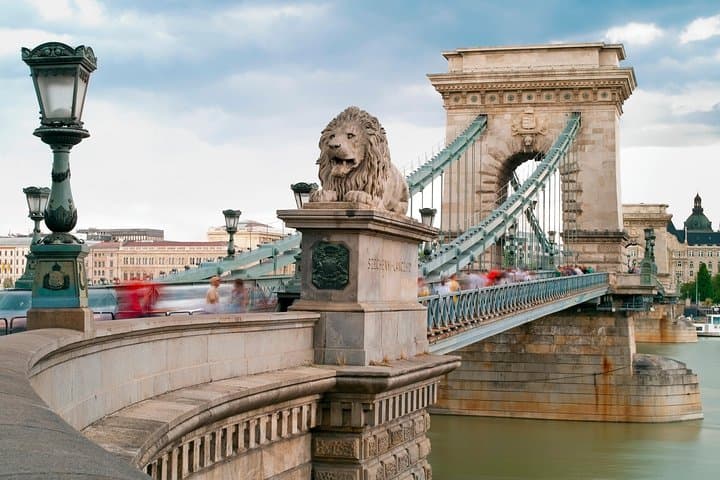
You step into a polished black Mercedes as the city wakes — yellow tram bells mix with the soft swell of the Danube, which pushes itself through Budapest as if daring you to keep up. Over the course of eight hours a local guide rearranges the map in front of you: broad avenues, imperial facades, thermal-steam clouds curling above spa basins. The vehicle hums across chain-linked bridges while the guide threads stories through each turn — Habsburg dignitaries, Ottoman garrisons, and 19th-century planners who stitched Buda and Pest into a single capital in 1873.
You step into a polished black Mercedes as the city wakes — yellow tram bells mix with the soft swell of the Danube, which pushes itself through Budapest as if daring you to keep up. Over the course of eight hours a local guide rearranges the map in front of you: broad avenues, imperial facades, thermal-steam clouds curling above spa basins. The vehicle hums across chain-linked bridges while the guide threads stories through each turn — Habsburg dignitaries, Ottoman garrisons, and 19th-century planners who stitched Buda and Pest into a single capital in 1873.
This private, chauffeured circuit moves deliberately between the city’s headline monuments and small revelations. You’ll pause for photos of the Hungarian Parliament’s Gothic crenellations reflected in the river, walk along the memorials at the Shoes on the Danube, and feel the steam rising off Szechenyi — Europe’s largest medicinal bath, itself a sign of Budapest’s geothermal undercurrent. On Gellért Hill the Citadel looks out like a fortress of memory; from there the bridges fan across the Danube and the rhythm of the city unfolds below.
Geology plays a quiet role: thermal springs beneath the Buda Hills fed the spa culture that Ottoman physicians first exploited. Architecture reads like a timeline — Baroque rooftops, Neo-Renaissance opera houses, Art Nouveau flourishes — each era visible in the stone and stucco. Cultural life folds into every stop: daytime coffeehouses, afternoon market stalls, and evening opera rehearsals still audible if you lean close to the State Opera House.
Practical planning for a day like this is simple but precise. The tour is mostly driven, with short walks at each stop (expect 10–20 minute strolls). Wheelchair access is available, but advise the operator of mobility needs in advance. Bring comfortable shoes for cobbled streets, a light waterproof layer for sudden rain, and a refillable water bottle — Budapest can be hot in summer and breezy along the river.
Timing matters: early starts avoid cruise crowds at the Parliament and give you crisper photos from Fisherman’s Bastion. If you want to enter Szechenyi or the Opera, plan for extra time and admission fees — the guide can adjust the itinerary to match your priorities. Tipping is customary for guides and drivers; local restaurants accept cards but carry some for smaller vendors. By evening you'll have covered political history, thermal geology, and a string of neighborhoods; the city that challenged empires will have, for one day, been wholly at your pace.