THE ADVENTURE COLLECTIVE® · Independent discovery and booking for outdoor travel

Cross the Danube and compress centuries into five hours on this intimate, private half-day tour of Budapest’s top viewpoints—St. Stephen’s Square, Fisherman’s Bastion, Gellért Hill and Heroes’ Square. Expect concise history, local recommendations, and a practical primer to explore more on your own.
Cross the Danube and compress centuries into five hours on this intimate, private half-day tour of Budapest’s top viewpoints—St. Stephen’s Square, Fisherman’s Bastion, Gellért Hill and Heroes’ Square. Expect concise history, local recommendations, and a practical primer to explore more on your own.
You meet at the corner of St. Stephen’s Square where the basilica’s stone face throws long shadows across the pavement. Guides arrive with a calm confidence—maps folded, umbrellas at the ready if the weather shifts—and the city opens like a well-worn book. The group threads past tram lines and café tables, each step an entry point into Budapest’s layered past: imperial ambition on the Pest plain, the medieval and baroque raised on Buda’s slopes, and the Danube threading the two like an old argument finally settled.
Verified experiences and guided adventures in the surrounding area.
Operated by Zsuzsi · Budapest, Central Hungary
You meet at the corner of St. Stephen’s Square where the basilica’s stone face throws long shadows across the pavement. Guides arrive with a calm confidence—maps folded, umbrellas at the ready if the weather shifts—and the city opens like a well-worn book. The group threads past tram lines and café tables, each step an entry point into Budapest’s layered past: imperial ambition on the Pest plain, the medieval and baroque raised on Buda’s slopes, and the Danube threading the two like an old argument finally settled.
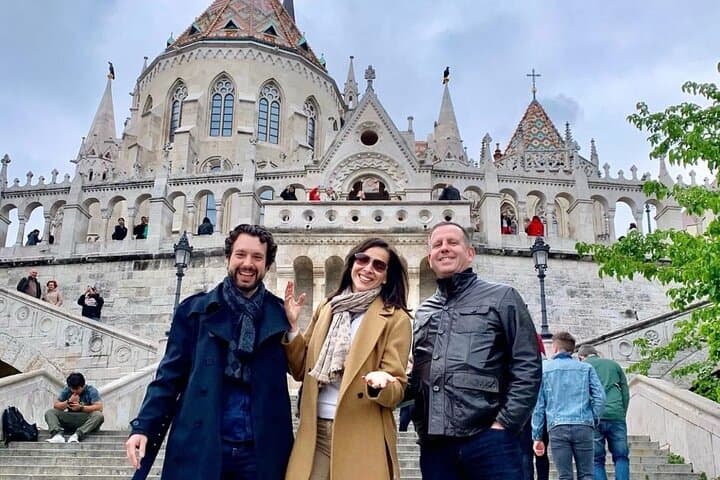
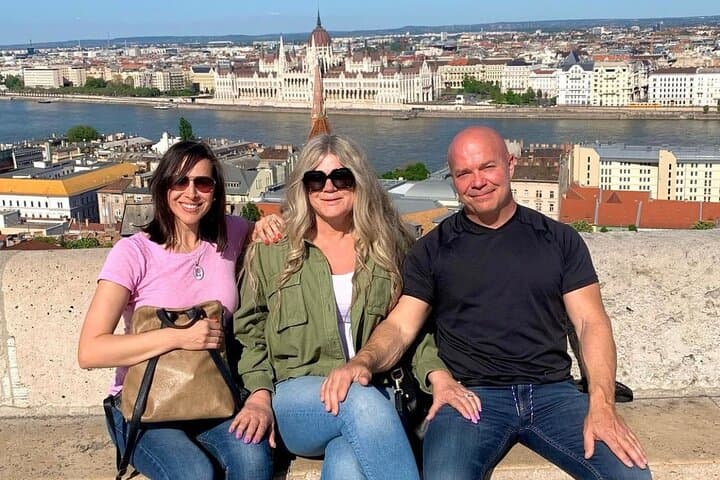
The itinerary moves with purpose. From the basilica the tour crosses to Buda: the honey-colored terraces of the Castle District, the white crenellations of Fisherman’s Bastion and the glassy spire of Matthias Church. Here, the guide unspools stories—royal coronations, Ottoman sieges, and 19th-century nation-building—while pointing to vistas that frame the Hungarian Parliament across the river.
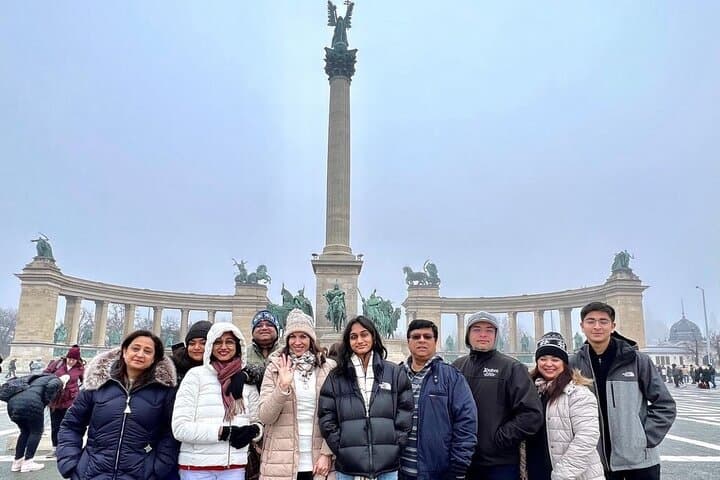
Heading east, the walk returns to Pest where Heroes’ Square and the City Park condense national myth into statues and landscaped lawns. Vajdahunyad Castle’s faux-medieval façades make for good photographs, and the steam-and-steaminess of the Széchenyi Thermal Baths signals Budapest’s love language: water, for health and socializing. Gellért Hill completes the loop with a panorama that pulls the city into a single readable view—bridges, boulevards and the river’s steady curve.
Practical context matters on a half-day tour: the route covers roughly 6–8 kilometers of mostly paved streets and gentle inclines; expect multiple stops totaling about five hours. The tour is private and family-friendly—strollers and infant seats are possible—and bottled water is provided. Guides stress local tips: how to navigate public transport after the tour, where to try chimney cake and lángos, and which museums charge entry if you plan to linger.
For first-time visitors this is an efficient primer—part orientation, part cultural primer. It’s also a reminder that Budapest rewards a slower return: the Parliament’s details, the carved gargoyles on Matthias Church, and the lines of café tables that mark a city still very much lived-in.
Timing is practical: mornings are quieter at viewpoints; late afternoon light makes the Danube glow. Bring comfortable shoes, a light layer against river breezes, and a card for small purchases—many kiosks accept cards, but some smaller vendors prefer forints. The guide’s recommendations will point you to deeper dives—baths, ruin bars, or a full-day castle exploration—once you’ve gotten your bearings.
easy.
5 hours.
Suitable for most fitness levels; requires steady walking on paved surfaces and a few gentle climbs.
The private tour lasts about five hours and walks roughly 6–8 km, mostly on paved streets with some gentle uphill sections.
Meet at the right side of the entrance to St. Stephen’s Basilica, at the corner of St. Stephen’s Square; guides will wait there.
Yes—infants and small children can be in strollers and infant seats are available; the route is family-friendly.
No; the tour does not include entrance fees. Guides can advise which sites to purchase tickets for after the tour.
This listing is for a private tour with the guide providing local commentary; confirm language needs at booking.
Full refund if canceled at least 24 hours before departure; no refund within 24 hours of the scheduled start.
Budapest’s current form dates to 1873 when Buda, Pest and Óbuda were unified, merging different architectural eras from Ottoman to Habsburg grandiosity.
City conservation focuses on preserving historical façades and reducing riverbank pollution; visitors are encouraged to use marked paths and avoid littering in protected areas.
Zsuzsi operates guided outdoor trips and adventures with an emphasis on safety, stewardship, and memorable experiences.

You meet at the corner of St. Stephen’s Square where the basilica’s stone face throws long shadows across the pavement. Guides arrive with a calm confidence—maps folded, umbrellas at the ready if the weather shifts—and the city opens like a well-worn book. The group threads past tram lines and café tables, each step an entry point into Budapest’s layered past: imperial ambition on the Pest plain, the medieval and baroque raised on Buda’s slopes, and the Danube threading the two like an old argument finally settled.
You meet at the corner of St. Stephen’s Square where the basilica’s stone face throws long shadows across the pavement. Guides arrive with a calm confidence—maps folded, umbrellas at the ready if the weather shifts—and the city opens like a well-worn book. The group threads past tram lines and café tables, each step an entry point into Budapest’s layered past: imperial ambition on the Pest plain, the medieval and baroque raised on Buda’s slopes, and the Danube threading the two like an old argument finally settled.
The itinerary moves with purpose. From the basilica the tour crosses to Buda: the honey-colored terraces of the Castle District, the white crenellations of Fisherman’s Bastion and the glassy spire of Matthias Church. Here, the guide unspools stories—royal coronations, Ottoman sieges, and 19th-century nation-building—while pointing to vistas that frame the Hungarian Parliament across the river.
Heading east, the walk returns to Pest where Heroes’ Square and the City Park condense national myth into statues and landscaped lawns. Vajdahunyad Castle’s faux-medieval façades make for good photographs, and the steam-and-steaminess of the Széchenyi Thermal Baths signals Budapest’s love language: water, for health and socializing. Gellért Hill completes the loop with a panorama that pulls the city into a single readable view—bridges, boulevards and the river’s steady curve.
Practical context matters on a half-day tour: the route covers roughly 6–8 kilometers of mostly paved streets and gentle inclines; expect multiple stops totaling about five hours. The tour is private and family-friendly—strollers and infant seats are possible—and bottled water is provided. Guides stress local tips: how to navigate public transport after the tour, where to try chimney cake and lángos, and which museums charge entry if you plan to linger.
For first-time visitors this is an efficient primer—part orientation, part cultural primer. It’s also a reminder that Budapest rewards a slower return: the Parliament’s details, the carved gargoyles on Matthias Church, and the lines of café tables that mark a city still very much lived-in.
Timing is practical: mornings are quieter at viewpoints; late afternoon light makes the Danube glow. Bring comfortable shoes, a light layer against river breezes, and a card for small purchases—many kiosks accept cards, but some smaller vendors prefer forints. The guide’s recommendations will point you to deeper dives—baths, ruin bars, or a full-day castle exploration—once you’ve gotten your bearings.