THE ADVENTURE COLLECTIVE® · Independent discovery and booking for outdoor travel

Cover Budapest’s top sights without the miles under your feet—this Segway tour moves from Buda Castle to the Parliament while weaving history, architecture and Danube views into an easy, guided loop. Ideal for first-time visitors who want a fast, photo-ready overview.
Cover Budapest’s top sights without the miles under your feet—this Segway tour moves from Buda Castle to the Parliament while weaving history, architecture and Danube views into an easy, guided loop. Ideal for first-time visitors who want a fast, photo-ready overview.
You glide out from Galamb utca as the city wakes: wet cobblestones flashing under the Segway's wheels, trams whispering along the tracks, and the first light catching the patterned roof of St. Stephen’s Basilica. The guide gives a short safety run-through, and then Budapest expands around you—an architectural narrative that moves fast enough to excite but slow enough to take in.
Verified experiences and guided adventures in the surrounding area.
Operated by Segway Tours Budapest by GetSegway™ · Budapest, Budapest
You glide out from Galamb utca as the city wakes: wet cobblestones flashing under the Segway's wheels, trams whispering along the tracks, and the first light catching the patterned roof of St. Stephen’s Basilica. The guide gives a short safety run-through, and then Budapest expands around you—an architectural narrative that moves fast enough to excite but slow enough to take in.
The tour stitches together Buda and Pest across centuries. On the Buda side, medieval castle walls and narrow streets recall Ottoman sieges and Habsburg rebuilds; on the Pest plain, wide boulevards and the Neo-Gothic Parliament reveal 19th-century ambitions when the twin cities formally united in 1873. The Danube isn’t just scenery—it is the city's spine, daring riders to cross and look back, where terraces, bridges and statues form readable chapters in stone.
Geology plays a quiet role: Gellért Hill's limestone outcrops and thermal springs shaped early settlement and modern spa culture. Cultural notes surface as guides point out cafés where poets met and Jewish memorials that mark painful chapters of the 20th century. The experience is urban history sped up—an efficient survey that still leaves room for the small moments: a stork-like silhouette on Fisherman's Bastion, the chime of a church bell across the river.
Practical guidance follows the scenery. The fleet uses modern self-balancing Segways programmed for city streets—training, supervised test drive, and helmets are included. Routes vary by option; typical shared-group departures run 1–2 hours and cover major stops: Buda Castle, Fisherman's Bastion, St. Matthias, Gellért Hill, St. Stephen’s Basilica, Parliament and the Danube promenade. Private tours allow slower pacing and different language options.
Safety is straightforward: closed-toe shoes, comfortable clothing, and a brief on traffic rules are essential. Expect cobblestones and occasional tram tracks—the guides will route around the trickiest surfaces and brief riders before steeper descents. Bring a small camera or phone with a secure strap; many guides offer photo stops and on-board shots.
For planning: book morning slots to avoid heat and crowds in summer, and reserve private tours if you need a language other than English. This tour is particularly effective for first-time visitors who want a concentrated overview without the fatigue of a walking tour—opening up the city in a way that feels exploratory and efficient rather than rushed.
easy.
1–2 hours.
Minimal fitness—standing and balancing for the tour; suitable for teenagers (10+) and most adults.
Riders must generally be 10 years or older; operators also enforce maximum weight/height limits for safe Segway operation—check at booking.
Shared-group tours are typically in English; private tours can be arranged in other languages on request.
Price commonly includes Segway use, helmet, safety training, a supervised test-drive and guide photography.
Meet at Galamb utca 3, Budapest 1052—your confirmation will include exact meeting details and a map link.
Light rain usually does not cancel tours; heavy rain, icy conditions or operator discretion may lead to rescheduling or refunds.
Yes; guides schedule photo stops and often take group images, but bring a secure strap for your device.
Budapest formed by the 1873 unification of Buda, Óbuda and Pest; its streets reflect Ottoman, Habsburg and 19th-century Austro-Hungarian layers of development.
Stay on designated paths and avoid off-route riding to protect historic paving; local operators promote helmet use and limited group sizes to reduce street congestion.
Segway Tours Budapest by GetSegway™ operates guided outdoor trips and adventures with an emphasis on safety, stewardship, and memorable experiences.
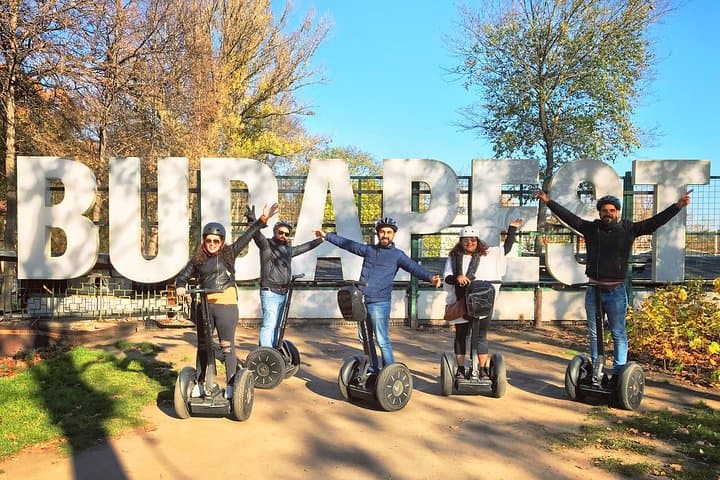
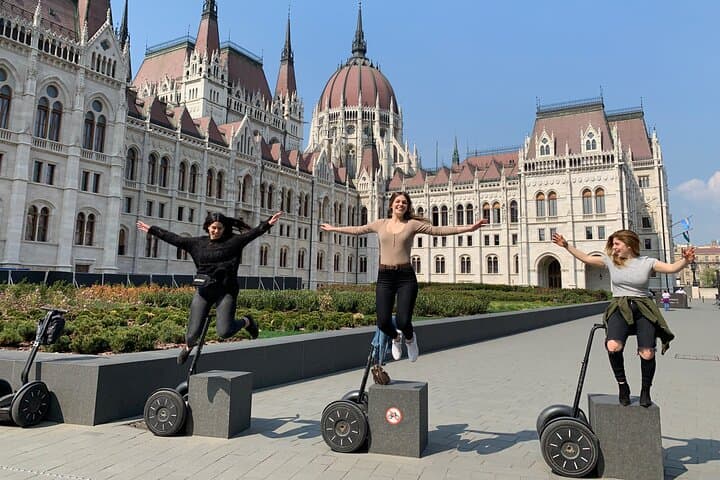

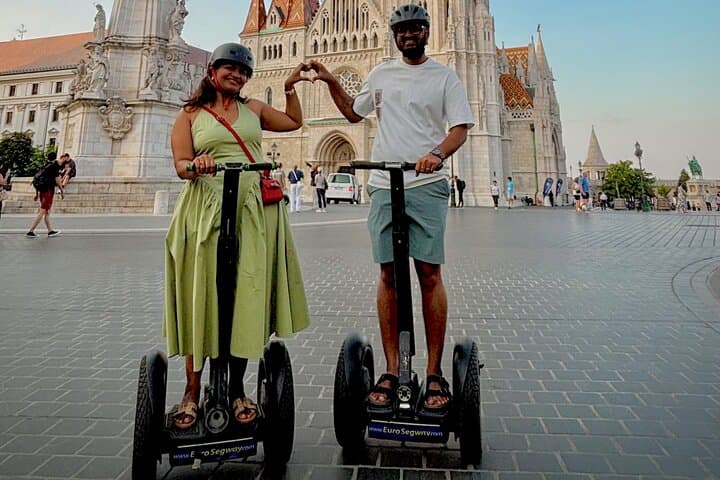
You glide out from Galamb utca as the city wakes: wet cobblestones flashing under the Segway's wheels, trams whispering along the tracks, and the first light catching the patterned roof of St. Stephen’s Basilica. The guide gives a short safety run-through, and then Budapest expands around you—an architectural narrative that moves fast enough to excite but slow enough to take in.
You glide out from Galamb utca as the city wakes: wet cobblestones flashing under the Segway's wheels, trams whispering along the tracks, and the first light catching the patterned roof of St. Stephen’s Basilica. The guide gives a short safety run-through, and then Budapest expands around you—an architectural narrative that moves fast enough to excite but slow enough to take in.
The tour stitches together Buda and Pest across centuries. On the Buda side, medieval castle walls and narrow streets recall Ottoman sieges and Habsburg rebuilds; on the Pest plain, wide boulevards and the Neo-Gothic Parliament reveal 19th-century ambitions when the twin cities formally united in 1873. The Danube isn’t just scenery—it is the city's spine, daring riders to cross and look back, where terraces, bridges and statues form readable chapters in stone.
Geology plays a quiet role: Gellért Hill's limestone outcrops and thermal springs shaped early settlement and modern spa culture. Cultural notes surface as guides point out cafés where poets met and Jewish memorials that mark painful chapters of the 20th century. The experience is urban history sped up—an efficient survey that still leaves room for the small moments: a stork-like silhouette on Fisherman's Bastion, the chime of a church bell across the river.
Practical guidance follows the scenery. The fleet uses modern self-balancing Segways programmed for city streets—training, supervised test drive, and helmets are included. Routes vary by option; typical shared-group departures run 1–2 hours and cover major stops: Buda Castle, Fisherman's Bastion, St. Matthias, Gellért Hill, St. Stephen’s Basilica, Parliament and the Danube promenade. Private tours allow slower pacing and different language options.
Safety is straightforward: closed-toe shoes, comfortable clothing, and a brief on traffic rules are essential. Expect cobblestones and occasional tram tracks—the guides will route around the trickiest surfaces and brief riders before steeper descents. Bring a small camera or phone with a secure strap; many guides offer photo stops and on-board shots.
For planning: book morning slots to avoid heat and crowds in summer, and reserve private tours if you need a language other than English. This tour is particularly effective for first-time visitors who want a concentrated overview without the fatigue of a walking tour—opening up the city in a way that feels exploratory and efficient rather than rushed.