THE ADVENTURE COLLECTIVE® · Independent discovery and booking for outdoor travel

Cover Bucharest’s big landmarks and hidden corners on two wheels. This guided 2–3 hour bike tour moves through parks, Old Town streets, and the Soviet-era avenues around the Palace of the Parliament.
Cover Bucharest’s big landmarks and hidden corners on two wheels. This guided 2–3 hour bike tour moves through parks, Old Town streets, and the Soviet-era avenues around the Palace of the Parliament.
You wheel away from a wide boulevard and into the layered city: tramlines clicking, plane trees shading the curb, and the bulk of the Palace of the Parliament looming to your left like a modern cliff face. The guide sets a steady pace, and the Dâmbovița River seems to tug direction—pulling the group toward quiet parks, sudden courtyards, and streets where façades reveal different eras.
Verified experiences and guided adventures in the surrounding area.
Operated by CarpatBike SRL · Bucharest, Bucharest
You wheel away from a wide boulevard and into the layered city: tramlines clicking, plane trees shading the curb, and the bulk of the Palace of the Parliament looming to your left like a modern cliff face. The guide sets a steady pace, and the Dâmbovița River seems to tug direction—pulling the group toward quiet parks, sudden courtyards, and streets where façades reveal different eras.
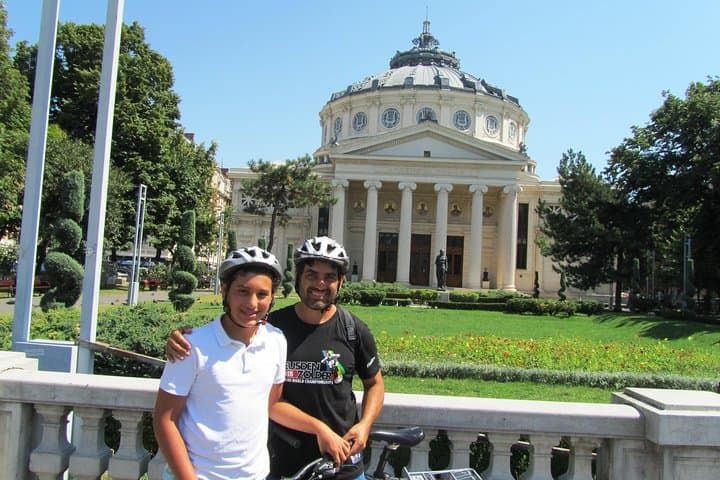
This two- to three-hour route stitches together Bucharest’s history: Belle Époque and neoclassical palaces, the scars and structures of communist urban planning, and the open-air fragments of medieval Curtea Veche. Geologically the city sits on the Romanian Plain—flat ground that made grand, wide boulevards possible and lent itself to rapid 19th–20th century expansion.
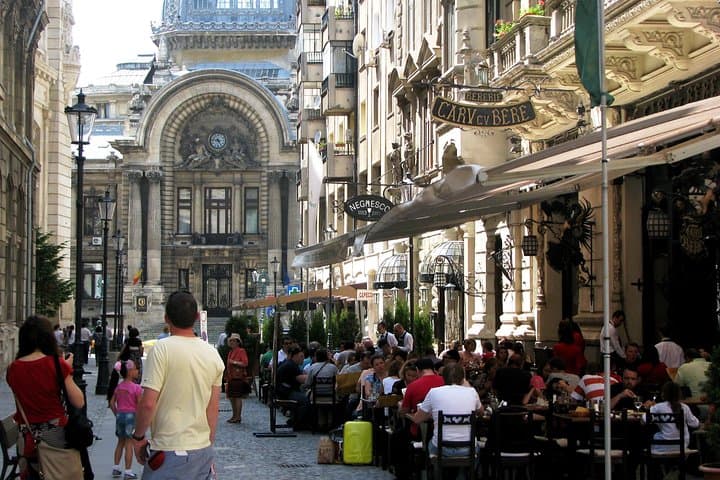
Culturally the ride surfaces local rhythms: cafés spilling onto sidewalks, market stalls selling pickled vegetables and local wine, and parks where older residents play chess. Guides tell compact stories of the 1989 revolution and of how the city reclaimed green space in recent decades.
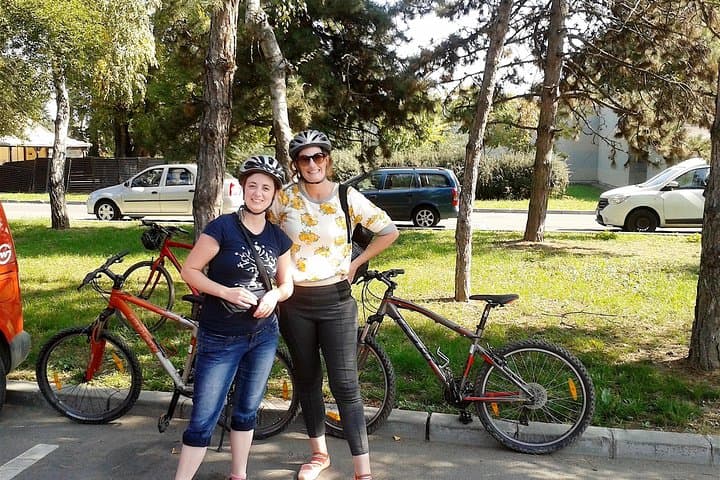
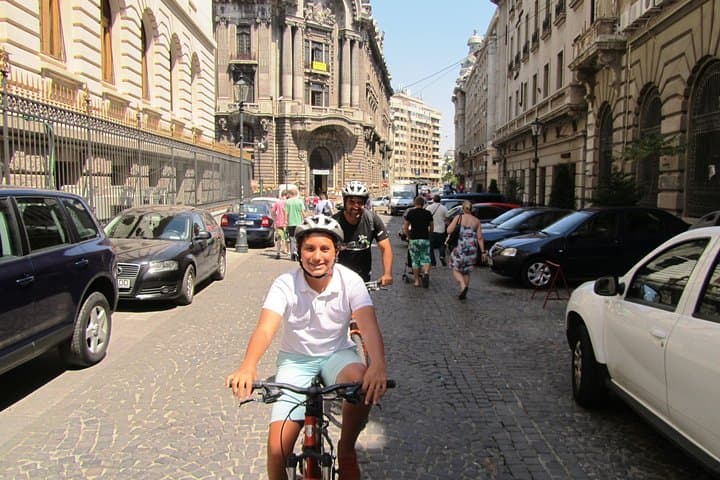
Practical notes: expect a flat, mostly paved route with short cobbled sections and tram tracks—basic bike-handling skills are required. Helmets and bikes are provided and bottled water is included; bring closed shoes, a light jacket, and sun protection. Mid-morning or late afternoon rides avoid the hottest hours and heavy traffic.
This tour fits travelers who want to cover more ground than a walking tour while still stopping often to listen, photograph, and sample local flavors.
easy.
2–3 hours.
Suitable for most people with basic cycling fitness; able to ride for 2–3 hours with short stops.
Yes; this tour includes use of a bicycle and helmet, and bottled water is supplied.
Children can join if accompanied by an adult; specialized infant seats are available and a child rate applies when sharing with two paying adults.
The booking policy does not automatically cancel for bad weather; check with the operator if conditions are severe—minimum participants are required for the tour to run.
Small daypacks are fine; larger luggage is not practical on a city bike tour and should be stored elsewhere.
Bucharest’s urban form reflects rapid 19th-century expansion and later large-scale remodeling under Communist rule, most visibly in the vast Palace of the Parliament and broad axial avenues.
Cycling tours reduce individual car use and help relieve congestion; stay on paved paths in parks and avoid feeding wildlife to protect urban ecosystems.
CarpatBike SRL operates guided outdoor trips and adventures with an emphasis on safety, stewardship, and memorable experiences.
You wheel away from a wide boulevard and into the layered city: tramlines clicking, plane trees shading the curb, and the bulk of the Palace of the Parliament looming to your left like a modern cliff face. The guide sets a steady pace, and the Dâmbovița River seems to tug direction—pulling the group toward quiet parks, sudden courtyards, and streets where façades reveal different eras.
You wheel away from a wide boulevard and into the layered city: tramlines clicking, plane trees shading the curb, and the bulk of the Palace of the Parliament looming to your left like a modern cliff face. The guide sets a steady pace, and the Dâmbovița River seems to tug direction—pulling the group toward quiet parks, sudden courtyards, and streets where façades reveal different eras.
This two- to three-hour route stitches together Bucharest’s history: Belle Époque and neoclassical palaces, the scars and structures of communist urban planning, and the open-air fragments of medieval Curtea Veche. Geologically the city sits on the Romanian Plain—flat ground that made grand, wide boulevards possible and lent itself to rapid 19th–20th century expansion.
Culturally the ride surfaces local rhythms: cafés spilling onto sidewalks, market stalls selling pickled vegetables and local wine, and parks where older residents play chess. Guides tell compact stories of the 1989 revolution and of how the city reclaimed green space in recent decades.
Practical notes: expect a flat, mostly paved route with short cobbled sections and tram tracks—basic bike-handling skills are required. Helmets and bikes are provided and bottled water is included; bring closed shoes, a light jacket, and sun protection. Mid-morning or late afternoon rides avoid the hottest hours and heavy traffic.
This tour fits travelers who want to cover more ground than a walking tour while still stopping often to listen, photograph, and sample local flavors.