THE ADVENTURE COLLECTIVE® · Independent discovery and booking for outdoor travel

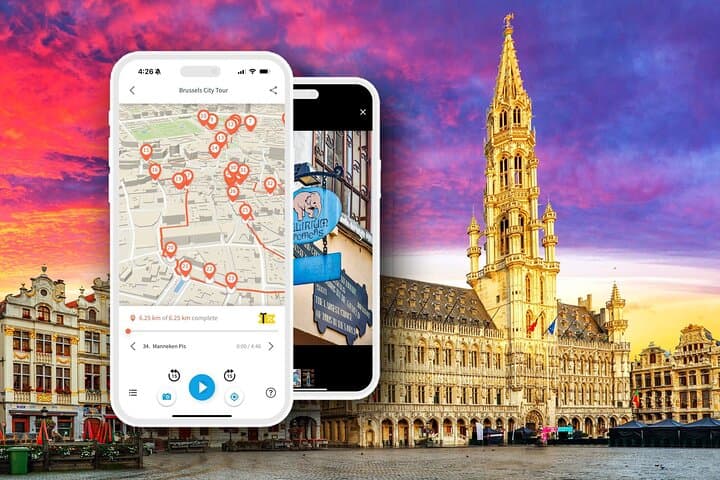
Short on time? This 2–3 hour self-guided Brussels walk uses an offline audioguide to connect Grand Place, the Sablon, Marolles flea market and hidden city oddities. Download the app, put on headphones, and move through centuries of civic life at your own pace.
Short on time? This 2–3 hour self-guided Brussels walk uses an offline audioguide to connect Grand Place, the Sablon, Marolles flea market and hidden city oddities. Download the app, put on headphones, and move through centuries of civic life at your own pace.
You step out of a narrow arcade and the Grand Place opens like a theater: gilded guildhouses catch the light while a tiny bronze boy keeps on peeing, utterly unconcerned.
Verified experiences and guided adventures in the surrounding area.
Operated by TouringBee · Brussels, Brussels-Capital Region
You step out of a narrow arcade and the Grand Place opens like a theater: gilded guildhouses catch the light while a tiny bronze boy keeps on peeing, utterly unconcerned.
This self-guided Brussels walk strings together that theatrical center with Gothic spires, neoclassical plazas and a scattering of urban curios—Marolles flea stalls, the austere Palace of Justice, and the quiet statuary of Petit Sablon. The route follows streets that evolved from medieval trade lanes and the buried course of the River Senne, whose covering in the 19th century reshaped the city’s circulation and architecture.
Expect art-history notes on Magritte and Horta, civic history at the Royal Square, and everyday culture—chocolate shops, beer cafés, and market stalls that anchor Brussels’ civic life. Geology here is subtle: limestone façades and cobbled stones that record centuries of repair and reuse rather than dramatic uplift.
Practically, the product is an offline audioguide and map for 2–3 hours of walking; museums and entries aren’t included. Download before you go, charge your device, and follow the app’s GPS while wearing headphones. Travel at your pace: linger for a pastry, skip a museum, or take the stair to Mont des Arts for a sculpted city view. Peak hours in summer mean crowds at the Grand Place; early morning or late afternoon gives clearer air and better photos. The route is flat, pedestrian-friendly, and suited to most fitness levels—Brussels invites you to walk, listen, and collect stories at street level.
easy.
2–3 hours.
Suitable for most fitness levels; requires standing and walking on paved and cobbled streets for several hours.
No — the tour and offline map can be downloaded in advance so you can follow the route without mobile data.
No — entry fees to museums like the Magritte or MIM are not included and should be purchased separately if you plan to visit.
Much of the core route is on paved streets but cobblestones and occasional steps can make some sections challenging; check specific streets in the app for alternatives.
Yes — this is self-guided and available year-round once you activate your access; choose start times that avoid peak crowds if preferred.
Brussels grew from a medieval market town beside the River Senne; 19th-century urban projects covered the river and reshaped the city’s boulevards and monumental squares.
Stick to existing paths, avoid littering in historic plazas, and favor public transport or walking to reduce the impacts of tourism on the compact historic center.
TouringBee operates guided outdoor trips and adventures with an emphasis on safety, stewardship, and memorable experiences.
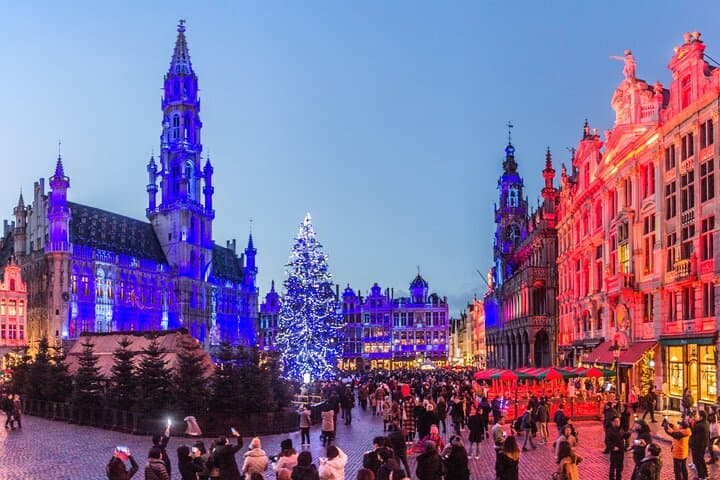
You step out of a narrow arcade and the Grand Place opens like a theater: gilded guildhouses catch the light while a tiny bronze boy keeps on peeing, utterly unconcerned.
You step out of a narrow arcade and the Grand Place opens like a theater: gilded guildhouses catch the light while a tiny bronze boy keeps on peeing, utterly unconcerned.
This self-guided Brussels walk strings together that theatrical center with Gothic spires, neoclassical plazas and a scattering of urban curios—Marolles flea stalls, the austere Palace of Justice, and the quiet statuary of Petit Sablon. The route follows streets that evolved from medieval trade lanes and the buried course of the River Senne, whose covering in the 19th century reshaped the city’s circulation and architecture.
Expect art-history notes on Magritte and Horta, civic history at the Royal Square, and everyday culture—chocolate shops, beer cafés, and market stalls that anchor Brussels’ civic life. Geology here is subtle: limestone façades and cobbled stones that record centuries of repair and reuse rather than dramatic uplift.
Practically, the product is an offline audioguide and map for 2–3 hours of walking; museums and entries aren’t included. Download before you go, charge your device, and follow the app’s GPS while wearing headphones. Travel at your pace: linger for a pastry, skip a museum, or take the stair to Mont des Arts for a sculpted city view. Peak hours in summer mean crowds at the Grand Place; early morning or late afternoon gives clearer air and better photos. The route is flat, pedestrian-friendly, and suited to most fitness levels—Brussels invites you to walk, listen, and collect stories at street level.