THE ADVENTURE COLLECTIVE® · Independent discovery and booking for outdoor travel

Turn a morning in Boston into a culinary workshop: learn techniques for ricotta pancakes, French toast and eggs Benedict in a hands-on class steps from Haymarket and Chinatown. Practical tips and market ideas make this a compact edible adventure.
Turn a morning in Boston into a culinary workshop: learn techniques for ricotta pancakes, French toast and eggs Benedict in a hands-on class steps from Haymarket and Chinatown. Practical tips and market ideas make this a compact edible adventure.
Step inside a bright, city kitchen on Kingston Street where steam and citrus oil hang in the air and a small brigade of classmates moves between stations. The soundscape is urban — distant traffic, a neighbor’s delivery, a whisk tapping metal — but at your counter the morning narrows to batter, hollandaise, and carefully plated bites.
Verified experiences and guided adventures in the surrounding area.
Operated by Selfup · Boston, Massachusetts
Step inside a bright, city kitchen on Kingston Street where steam and citrus oil hang in the air and a small brigade of classmates moves between stations. The soundscape is urban — distant traffic, a neighbor’s delivery, a whisk tapping metal — but at your counter the morning narrows to batter, hollandaise, and carefully plated bites.
Boston’s culinary story is patchwork: early colonial stores, waves of immigrants adding Chinese, Italian and Irish flavor, and a contemporary push toward seasonal produce from nearby markets. Geologically, you’re on land shaped by glaciers and fill — Boston’s reclaimed flats lie just a few blocks away, and the city’s compact street grid channels salt air and harbor breeze into downtown kitchens.
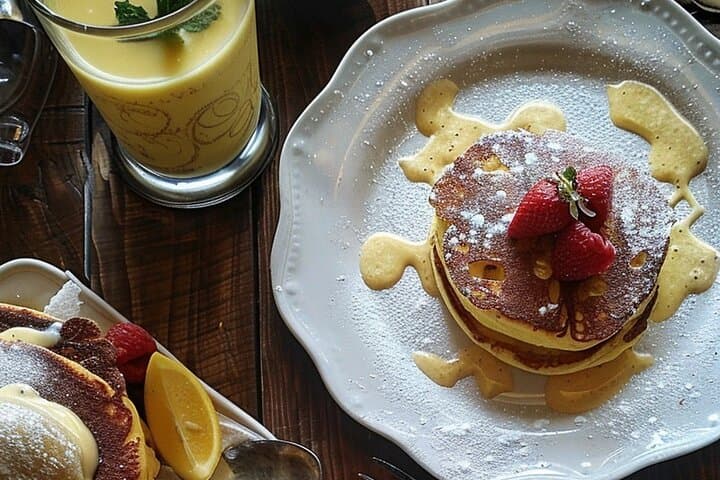
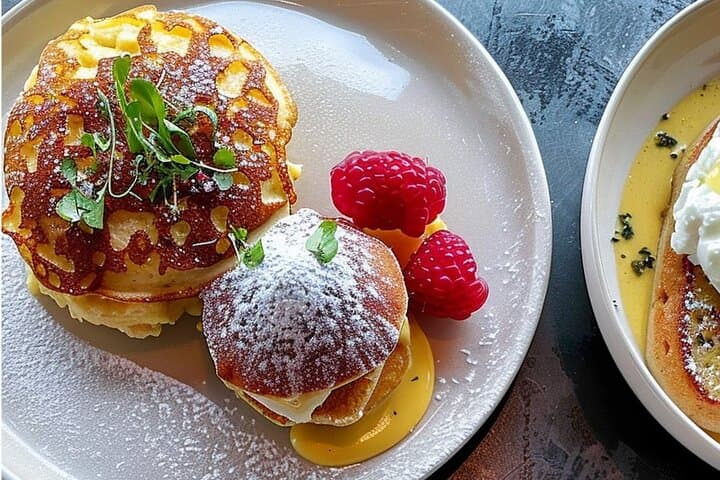
Culturally, this class sits at the crossroads of Chinatown and Downtown Crossing, within easy reach of Haymarket stalls and historic Faneuil Hall — places to extend a food day into a market run. Expect instruction focused on technique and plating as you make lemon-raspberry ricotta pancakes, blueberry-ricotta French toast and eggs Benedict with crisp pancetta.
Practical guidance: arrive 10–15 minutes early to check in at 19 Kingston St and press the buzzer; wear closed-toe shoes and an apron (often provided); bring a notebook for recipes and timing tips. Allow three hours; the pace is hands-on but measured, with sanitation and allergy questions asked up front. Plan post-class storage for leftovers and bring a tote if you want to take home extra ingredients from nearby markets.
easy.
3 hours.
No special fitness required beyond standing for 2–3 hours and light lifting of pans or bowls.
The experience runs approximately three hours, including hands-on cooking and tasting time.
Yes — the venue indicates wheelchair accessibility; notify the operator of any needs when booking.
Yes — the class includes all ingredients, prepared brunch items and non-alcoholic beverages as listed.
This activity is sold as all-sales-final; confirm availability and restrictions before booking, as refunds are not offered for cancellations.
Kingston Street sits on the edge of Boston’s historic downtown; the area reflects colonial-era trade routes and later immigrant culinary traditions that shaped the city’s brunch culture.
Many Boston kitchens emphasize reducing food waste and sourcing local, seasonal produce; consider using public transit to reach the class to lower your carbon footprint.
Selfup operates guided outdoor trips and adventures with an emphasis on safety, stewardship, and memorable experiences.
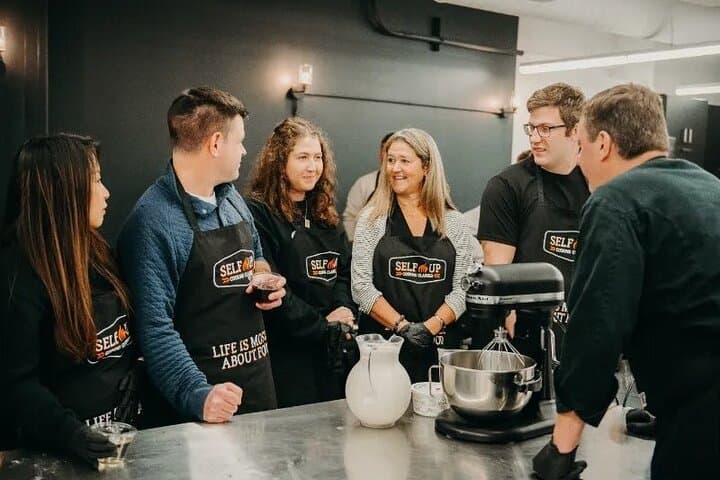
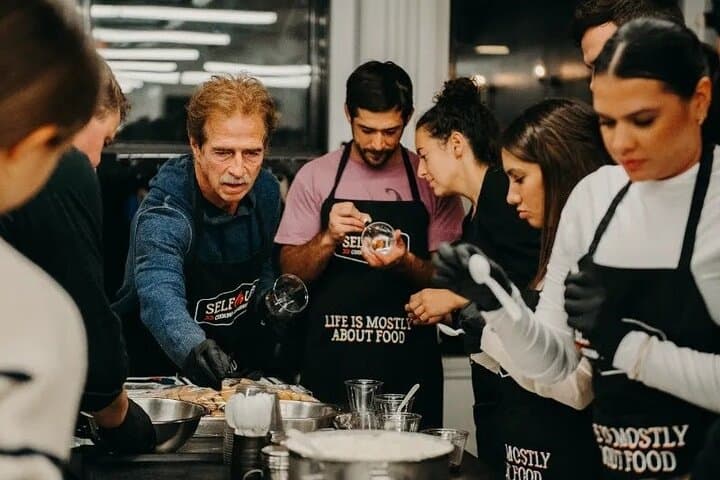
Step inside a bright, city kitchen on Kingston Street where steam and citrus oil hang in the air and a small brigade of classmates moves between stations. The soundscape is urban — distant traffic, a neighbor’s delivery, a whisk tapping metal — but at your counter the morning narrows to batter, hollandaise, and carefully plated bites.
Step inside a bright, city kitchen on Kingston Street where steam and citrus oil hang in the air and a small brigade of classmates moves between stations. The soundscape is urban — distant traffic, a neighbor’s delivery, a whisk tapping metal — but at your counter the morning narrows to batter, hollandaise, and carefully plated bites.
Boston’s culinary story is patchwork: early colonial stores, waves of immigrants adding Chinese, Italian and Irish flavor, and a contemporary push toward seasonal produce from nearby markets. Geologically, you’re on land shaped by glaciers and fill — Boston’s reclaimed flats lie just a few blocks away, and the city’s compact street grid channels salt air and harbor breeze into downtown kitchens.
Culturally, this class sits at the crossroads of Chinatown and Downtown Crossing, within easy reach of Haymarket stalls and historic Faneuil Hall — places to extend a food day into a market run. Expect instruction focused on technique and plating as you make lemon-raspberry ricotta pancakes, blueberry-ricotta French toast and eggs Benedict with crisp pancetta.
Practical guidance: arrive 10–15 minutes early to check in at 19 Kingston St and press the buzzer; wear closed-toe shoes and an apron (often provided); bring a notebook for recipes and timing tips. Allow three hours; the pace is hands-on but measured, with sanitation and allergy questions asked up front. Plan post-class storage for leftovers and bring a tote if you want to take home extra ingredients from nearby markets.