THE ADVENTURE COLLECTIVE® · Independent discovery and booking for outdoor travel

Taste your way through medieval Bruges on a focused 2.5-hour walk that mixes history with local eats—waffles, chocolate, fries and a lambic beer. Expect compact streets, canal-side stories, and hands-on tastings at small producers.
Taste your way through medieval Bruges on a focused 2.5-hour walk that mixes history with local eats—waffles, chocolate, fries and a lambic beer. Expect compact streets, canal-side stories, and hands-on tastings at small producers.
Morning light cuts across Bruges' cobblestones as the guide gathers the small group near the main square. The canals ripple like old stories; the city feels both brisk and intimate. You move at a walking-tour pace, stopping to sample a warm waffle, a sliver of bitter chocolate, a crisp portion of fries and, of course, a local lambic beer that tastes like the region's slow patience.
Verified experiences and guided adventures in the surrounding area.
Operated by Latin Tours Brugge · Bruges, West Flanders
Morning light cuts across Bruges' cobblestones as the guide gathers the small group near the main square. The canals ripple like old stories; the city feels both brisk and intimate. You move at a walking-tour pace, stopping to sample a warm waffle, a sliver of bitter chocolate, a crisp portion of fries and, of course, a local lambic beer that tastes like the region's slow patience.
Bruges grew rich on medieval cloth trade, and its compact center still wears the geometry of that commerce—narrow lanes, guild houses, and market squares that mapped power and profit. Geology here is simple: reclaimed peat and clay shaped the lowlands, and canals were engineered arteries. Culturally, the city is Flemish: expect Dutch-language place names, hearty provincial cuisine, and centuries-old brewing traditions preserved by dedicated family shops.
The tour alternates short historical stops—churches, a hospital courtyard, a guildhall—with seated tastings at artisanal vendors. Guides point out small details: carved dates on facades, a hidden courtyard garden, the hydrology that kept the city afloat.
Practical guidance: confirm meeting point and allergy needs when you book; the route covers roughly 2–3 kilometers over 2.5 hours with repeated standing breaks. Wear comfortable shoes for cobbles and bring a light rain layer—Belgian weather turns fast. Carry a small amount of cash for extra treats, and pace yourself on the beer tastings if you plan to keep exploring afterward.
This walk is sensory and social—part history lesson, part market crawl—designed to give a clear taste of Bruges in one tidy loop.
moderate.
2–3 hours.
Suitable for people who can walk 2–3 km and stand for short tastings; basic mobility required.
The tour lasts about 2.5 hours and covers roughly 2–3 kilometres with several short stops for tastings and historical commentary.
Yes—samples like waffles, chocolate, fries and a beer tasting are included in the tour price; extras can be purchased separately.
Yes—notify the operator at booking and they will advise which stops can accommodate allergies or offer alternatives when possible.
The tour finishes at the main square with a beer stop; you’re free to stay and explore cafes, museums or return to your accommodation on foot.
Bruges rose to prominence in the 12th–15th centuries as a major cloth-trading port; many guild houses and merchant facades date to that era.
Support small producers featured on the tour and minimize single-use plastics by using a reusable bottle; stick to marked paths to protect canal banks and historic pavements.
Latin Tours Brugge operates guided outdoor trips and adventures with an emphasis on safety, stewardship, and memorable experiences.


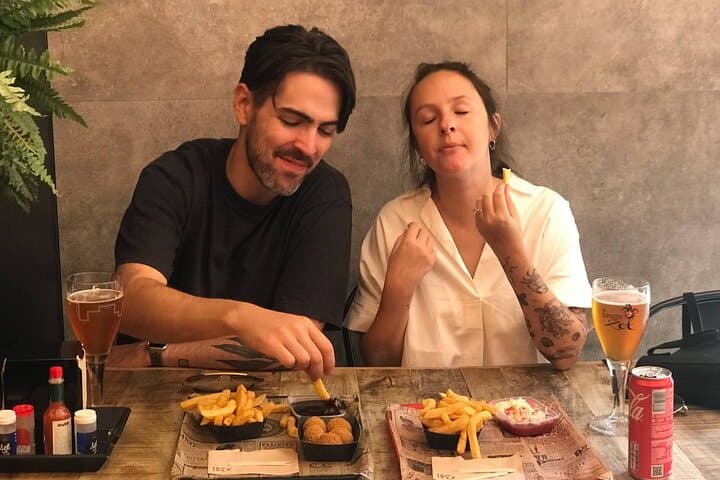

Morning light cuts across Bruges' cobblestones as the guide gathers the small group near the main square. The canals ripple like old stories; the city feels both brisk and intimate. You move at a walking-tour pace, stopping to sample a warm waffle, a sliver of bitter chocolate, a crisp portion of fries and, of course, a local lambic beer that tastes like the region's slow patience.
Morning light cuts across Bruges' cobblestones as the guide gathers the small group near the main square. The canals ripple like old stories; the city feels both brisk and intimate. You move at a walking-tour pace, stopping to sample a warm waffle, a sliver of bitter chocolate, a crisp portion of fries and, of course, a local lambic beer that tastes like the region's slow patience.
Bruges grew rich on medieval cloth trade, and its compact center still wears the geometry of that commerce—narrow lanes, guild houses, and market squares that mapped power and profit. Geology here is simple: reclaimed peat and clay shaped the lowlands, and canals were engineered arteries. Culturally, the city is Flemish: expect Dutch-language place names, hearty provincial cuisine, and centuries-old brewing traditions preserved by dedicated family shops.
The tour alternates short historical stops—churches, a hospital courtyard, a guildhall—with seated tastings at artisanal vendors. Guides point out small details: carved dates on facades, a hidden courtyard garden, the hydrology that kept the city afloat.
Practical guidance: confirm meeting point and allergy needs when you book; the route covers roughly 2–3 kilometers over 2.5 hours with repeated standing breaks. Wear comfortable shoes for cobbles and bring a light rain layer—Belgian weather turns fast. Carry a small amount of cash for extra treats, and pace yourself on the beer tastings if you plan to keep exploring afterward.
This walk is sensory and social—part history lesson, part market crawl—designed to give a clear taste of Bruges in one tidy loop.