THE ADVENTURE COLLECTIVE® · Independent discovery and booking for outdoor travel

Turn a classic Bruges walking tour into a playful quest: an app-led audio guide plus interactive city game that guides groups through the UNESCO-listed centre. Expect 2–3 hours of canals, belfries and history with on-phone riddles and pause-anytime pacing.
Turn a classic Bruges walking tour into a playful quest: an app-led audio guide plus interactive city game that guides groups through the UNESCO-listed centre. Expect 2–3 hours of canals, belfries and history with on-phone riddles and pause-anytime pacing.
Cobblestones click underfoot as you step off the Markt and into a map of canals, belfries and brick façades that still keep time with medieval trade routes.
Verified experiences and guided adventures in the surrounding area.
Operated by Setilo · Bruges, West Flanders
Cobblestones click underfoot as you step off the Markt and into a map of canals, belfries and brick façades that still keep time with medieval trade routes.
This self-guided audio game threads you through Bruges’ compact historic centre—its winding streets, narrow bridges and the occasional canal that seems to dare you to follow its turns. The app pairs narrated context with puzzles and simple tasks, turning a standard walk into a friendly competition for groups of 2–10.
Bruges rose to prominence in the Middle Ages as a northern European trading hub; the Historic Centre is a UNESCO World Heritage Site with visible layers of Gothic civic architecture and quiet courtyard spaces like the Begijnhof. Geologically the region sits on low-lying Flemish clay; water shaped the city’s character and commerce, and canals remain the arteries that define sightlines and neighborhoods.
Locals prize slow discovery: sample fries near the Burg, linger at the Basilica of the Holy Blood, or duck into a chocolate shop off a side street. The app’s audio tracks supply historical context so you aren’t just following clues—you’re learning why the belfry matters and where merchants once counted their coins.
Practical guide: plan 2–3 hours, use headphones, and keep your phone charged and data enabled (or download assets if offered). Walkable surfaces are mostly cobble and flagstone—sturdy shoes matter. The game is wheelchair- and stroller-accessible on many routes, but check the app map for ramps. Start when streets are quieter—early morning or late afternoon—and allow buffer time for photos and café stops.
This is a low-impact, social way to see Bruges: part history lesson, part urban scavenger hunt, and wholly suited to travelers who want structured freedom.
easy.
2–3 hours.
Suitable for most fitness levels; requires ability to walk on uneven city pavements for a few hours
The typical playtime is 2–3 hours, but you can pause and resume—allow extra time for stops, photos and snacks.
The audio tour is offered in English and Dutch according to the tour listing.
Many central streets and select routes are wheelchair-accessible, but check the app map for ramped paths and avoid narrow stepped alleys.
No fixed start times—once you receive the code you can begin the self-guided experience any time during your visit.
Bruges grew as a major medieval trading port and member of Hanseatic trade networks; its historic centre preserves civic and mercantile architecture from that era.
Canal banks and narrow streets are sensitive to erosion and litter; traveling in small groups, staying on marked paths and using local waste bins helps protect the city.
Setilo operates guided outdoor trips and adventures with an emphasis on safety, stewardship, and memorable experiences.

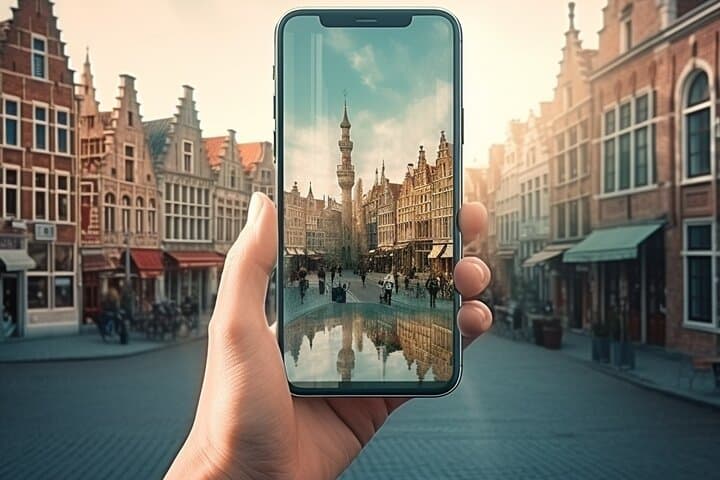
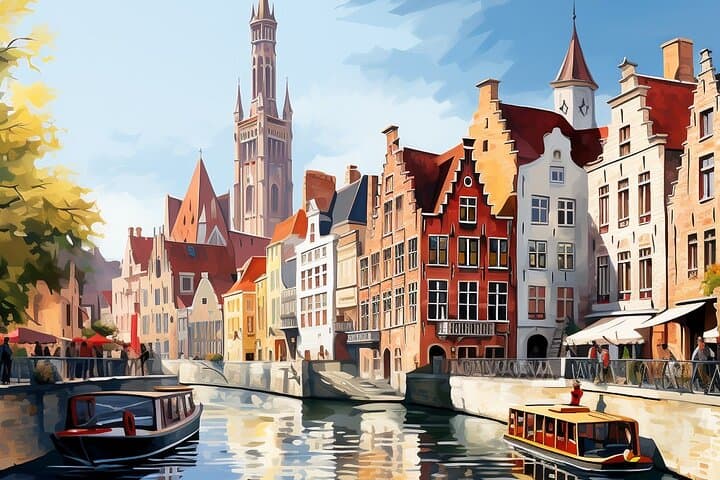

Cobblestones click underfoot as you step off the Markt and into a map of canals, belfries and brick façades that still keep time with medieval trade routes.
Cobblestones click underfoot as you step off the Markt and into a map of canals, belfries and brick façades that still keep time with medieval trade routes.
This self-guided audio game threads you through Bruges’ compact historic centre—its winding streets, narrow bridges and the occasional canal that seems to dare you to follow its turns. The app pairs narrated context with puzzles and simple tasks, turning a standard walk into a friendly competition for groups of 2–10.
Bruges rose to prominence in the Middle Ages as a northern European trading hub; the Historic Centre is a UNESCO World Heritage Site with visible layers of Gothic civic architecture and quiet courtyard spaces like the Begijnhof. Geologically the region sits on low-lying Flemish clay; water shaped the city’s character and commerce, and canals remain the arteries that define sightlines and neighborhoods.
Locals prize slow discovery: sample fries near the Burg, linger at the Basilica of the Holy Blood, or duck into a chocolate shop off a side street. The app’s audio tracks supply historical context so you aren’t just following clues—you’re learning why the belfry matters and where merchants once counted their coins.
Practical guide: plan 2–3 hours, use headphones, and keep your phone charged and data enabled (or download assets if offered). Walkable surfaces are mostly cobble and flagstone—sturdy shoes matter. The game is wheelchair- and stroller-accessible on many routes, but check the app map for ramps. Start when streets are quieter—early morning or late afternoon—and allow buffer time for photos and café stops.
This is a low-impact, social way to see Bruges: part history lesson, part urban scavenger hunt, and wholly suited to travelers who want structured freedom.