THE ADVENTURE COLLECTIVE® · Independent discovery and booking for outdoor travel

Combine Bromo’s dramatic sunrise and Ijen’s blue fire on a compact 2-day shared tour from Malang. Expect jeep crossings across the sand sea, steep crater rims, and up-close encounters with sulfur miners.
Combine Bromo’s dramatic sunrise and Ijen’s blue fire on a compact 2-day shared tour from Malang. Expect jeep crossings across the sand sea, steep crater rims, and up-close encounters with sulfur miners.
Before dawn the jeep engine hums across an alien plain and the horizon ignites—this is Bromo by sunrise: wind pushing fine ash and sand across a shallow sea, cliffs threaded with the silhouettes of hikers and horses. On the second morning the landscape changes again: a sulfur-smoke rim, a turquoise crater lake and the surreal blue fire that seems to burn with its own mood.
Verified experiences and guided adventures in the surrounding area.
Operated by Teguh Prasetyo · Malang, East Java
Before dawn the jeep engine hums across an alien plain and the horizon ignites—this is Bromo by sunrise: wind pushing fine ash and sand across a shallow sea, cliffs threaded with the silhouettes of hikers and horses. On the second morning the landscape changes again: a sulfur-smoke rim, a turquoise crater lake and the surreal blue fire that seems to burn with its own mood.
Geologically these sites are young, restless members of Java’s volcanic chain. Bromo sits inside a larger Tengger caldera; its rim and the Pura Luhur Poten temple reflect the living Hindu culture of the Tengger people. Ijen’s acid lake and blue flame come from high-temperature sulfur gases that combust when they meet air—miners still extract sulfur here with hand tools.
Expect steep stone steps and loose sand at Bromo (summit ~2,329 m) and a sharp descent to Ijen’s crater rim (~2,443 m). Timing is everything: early departures and night driving make the most of cool air and clear skies, but also require patience and warm layers. Guides handle permits, a jeep across the sand sea, and the logistics of an overnight shift between sites; small-group shared tours are common.
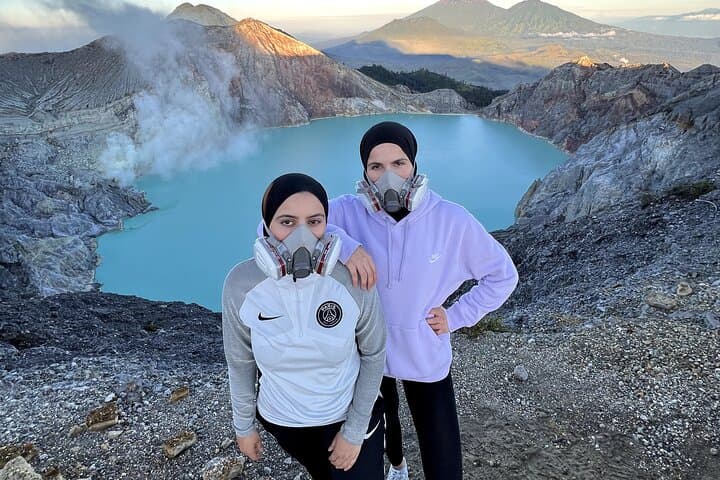
Practical tips: pack a warm shell and headlamp, bring a rated respirator for Ijen’s sulfur fumes, and wear sturdy, grippy footwear for volcanic scree. Plan for early starts, modest altitude exposure, and limited services at remote viewpoints. Leave no trace, respect miners at work, and keep a flexible schedule—volcano weather changes fast, and that unpredictability is part of the journey.
moderate.
2 days (10–14 hours active).
Suitable for travelers in reasonable shape who can handle short steep climbs, stairs and uneven volcanic terrain.
Shared tours typically leave late evening to arrive before sunrise at Bromo; expect pick-up times to be around 10pm–1am depending on your pickup point.
Blue fire is a natural phenomenon best seen before dawn; visibility depends on volcanic activity and weather—guides monitor conditions but sightings cannot be guaranteed.
This tour is not recommended for pregnant travelers or those with serious heart or spinal conditions; children may join but consider the night travel and steep terrain.
Yes—access to Ijen crater often requires a local guide and entrance permit; reputable operators include these logistics with the tour.
The Tenggerese Hindu community has lived around Bromo for centuries and maintains rituals at Pura Luhur Poten; both sites reflect ongoing volcanic activity that shaped East Java.
Crater rims and highland ecosystems are fragile—stay on trails, avoid disturbing miners, and pack out all waste; support local guides who practice low-impact access.
Teguh Prasetyo operates guided outdoor trips and adventures with an emphasis on safety, stewardship, and memorable experiences.
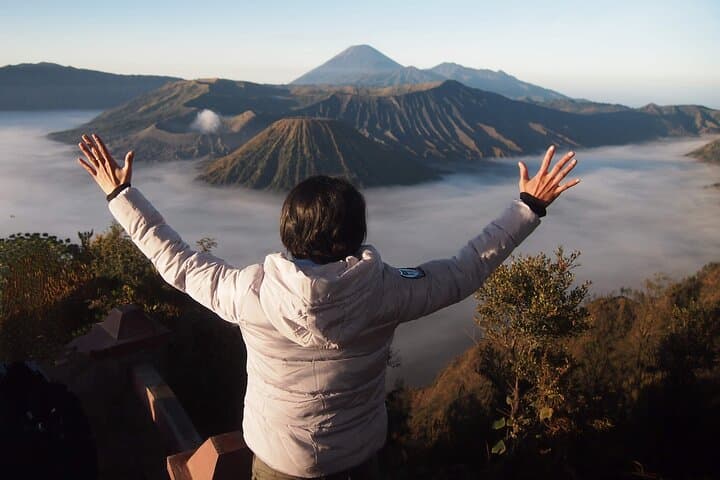
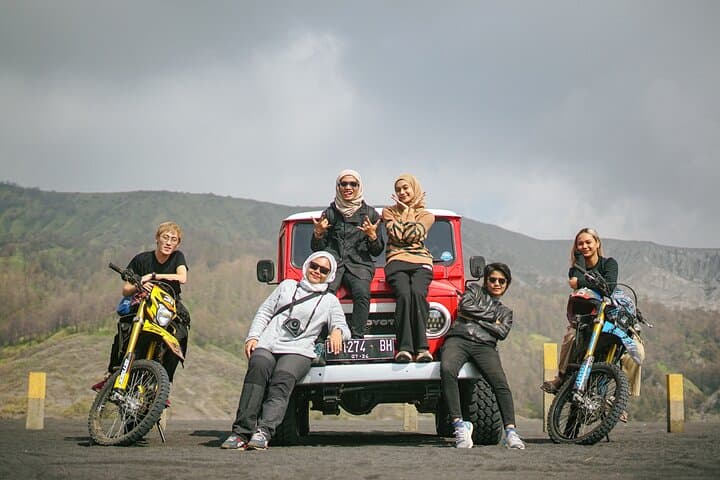
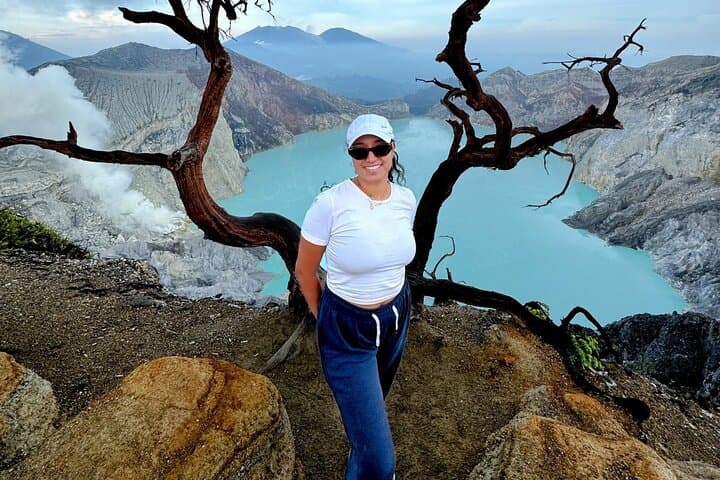
Before dawn the jeep engine hums across an alien plain and the horizon ignites—this is Bromo by sunrise: wind pushing fine ash and sand across a shallow sea, cliffs threaded with the silhouettes of hikers and horses. On the second morning the landscape changes again: a sulfur-smoke rim, a turquoise crater lake and the surreal blue fire that seems to burn with its own mood.
Before dawn the jeep engine hums across an alien plain and the horizon ignites—this is Bromo by sunrise: wind pushing fine ash and sand across a shallow sea, cliffs threaded with the silhouettes of hikers and horses. On the second morning the landscape changes again: a sulfur-smoke rim, a turquoise crater lake and the surreal blue fire that seems to burn with its own mood.
Geologically these sites are young, restless members of Java’s volcanic chain. Bromo sits inside a larger Tengger caldera; its rim and the Pura Luhur Poten temple reflect the living Hindu culture of the Tengger people. Ijen’s acid lake and blue flame come from high-temperature sulfur gases that combust when they meet air—miners still extract sulfur here with hand tools.
Expect steep stone steps and loose sand at Bromo (summit ~2,329 m) and a sharp descent to Ijen’s crater rim (~2,443 m). Timing is everything: early departures and night driving make the most of cool air and clear skies, but also require patience and warm layers. Guides handle permits, a jeep across the sand sea, and the logistics of an overnight shift between sites; small-group shared tours are common.
Practical tips: pack a warm shell and headlamp, bring a rated respirator for Ijen’s sulfur fumes, and wear sturdy, grippy footwear for volcanic scree. Plan for early starts, modest altitude exposure, and limited services at remote viewpoints. Leave no trace, respect miners at work, and keep a flexible schedule—volcano weather changes fast, and that unpredictability is part of the journey.