THE ADVENTURE COLLECTIVE® · Independent discovery and booking for outdoor travel

Witness sunrise over Mount Bromo and the rare blue fire of Ijen in a focused two-day itinerary from Surabaya. This trip combines 4WD access, short hikes to crater rims, and a ferry transfer to Ketapang for onward travel to Bali.
Witness sunrise over Mount Bromo and the rare blue fire of Ijen in a focused two-day itinerary from Surabaya. This trip combines 4WD access, short hikes to crater rims, and a ferry transfer to Ketapang for onward travel to Bali.
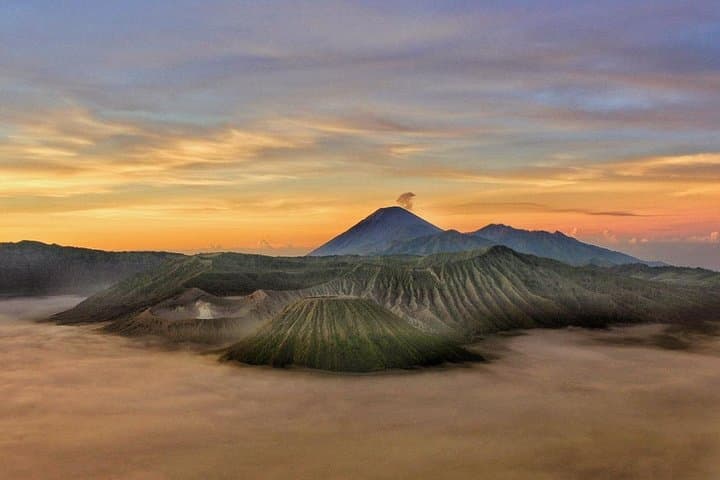
Before dawn the Tengger sands stretch like a dark ocean and headlights pick a path across it—your 4WD climbs toward Penanjakan, where the horizon pulls a thin orange knife through the night. At sunrise Mount Bromo exhales shadow and steam, a crater lip rimmed in light while farther east Ijen guards a somber blue flame that appears to burn out of smoke itself.
Verified experiences and guided adventures in the surrounding area.
Operated by Java Amazing · Probolinggo, East Java
Before dawn the Tengger sands stretch like a dark ocean and headlights pick a path across it—your 4WD climbs toward Penanjakan, where the horizon pulls a thin orange knife through the night. At sunrise Mount Bromo exhales shadow and steam, a crater lip rimmed in light while farther east Ijen guards a somber blue flame that appears to burn out of smoke itself.
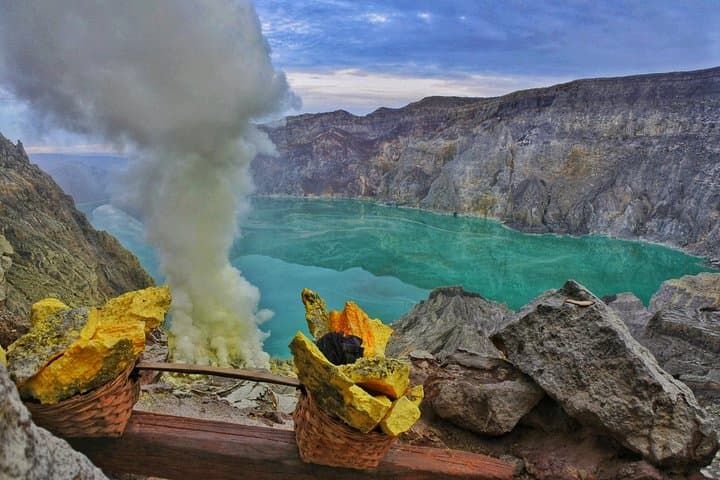
These two volcanic neighbors sit on Java’s rugged spine. Mount Bromo (2,329 m) is part of Bromo Tengger Semeru National Park, its plain of volcanic ash known locally as Segara Wedi. Ijen’s caldera (rim ~2,443 m) holds Kawah Ijen, the world’s largest highly acidic crater lake and the rare nightly phenomenon of blue fire—burning sulfur gases igniting where molten sulfur meets oxygen. Local Tengger and Banyuwangi communities have worked around these peaks for generations; sulfur mining at Ijen continues to be a visceral, human-led industry you’ll observe from a distance.
Practical guidance: expect very early starts, long drives between sites (several hours), and short steep scrambles to crater rims. Guides commonly provide 4WD transfers and ferry tickets to Ketapang (Gilimanuk) for Bali connections. Bring layers for alpine cold, a headlamp for pre-dawn approaches, and a good mask for sulfur fumes near Ijen. Travelers with respiratory, spinal, or cardiovascular conditions, and pregnant people should avoid close approaches to Ijen’s crater. Weather shifts quickly—carry rain protection during the wet season and plan sunrise viewpoints to avoid crowds. The landscape moves and pushes back: volcanic winds will test your jacket and resolve, but the payoff—sunlight on ash and eerie blue flame—is unmistakably elemental.
moderate.
2 days (overnight); 4–6 hours active hiking total, plus driving time.
Moderate fitness required: able to hike short steep sections, stand on uneven volcanic rock, and tolerate early starts
Pickups commonly occur between 2:00–4:00am to reach Penanjakan for sunrise; expect pre-dawn departures and limited sleep between sites.
Blue fire appears year-round but is best seen on clear, windless nights; rainy and windy conditions reduce visibility.
Close approaches to Ijen’s crater are not recommended for pregnant travelers and children should be supervised due to fumes and steep sections.
Most operators include the ferry ticket to Ketapang (Gilimanuk); confirm during booking for onward transfers to Bali.
The Tengger people have lived around Bromo for centuries and maintain Hindu-Balinese traditions; Ijen’s crater has long supported small-scale sulfur extraction by local miners.
Both areas face pressures from tourism and mining; stick to marked trails, avoid disturbing miners, and use local guides to minimize environmental impact.
Java Amazing operates guided outdoor trips and adventures with an emphasis on safety, stewardship, and memorable experiences.
Before dawn the Tengger sands stretch like a dark ocean and headlights pick a path across it—your 4WD climbs toward Penanjakan, where the horizon pulls a thin orange knife through the night. At sunrise Mount Bromo exhales shadow and steam, a crater lip rimmed in light while farther east Ijen guards a somber blue flame that appears to burn out of smoke itself.
Before dawn the Tengger sands stretch like a dark ocean and headlights pick a path across it—your 4WD climbs toward Penanjakan, where the horizon pulls a thin orange knife through the night. At sunrise Mount Bromo exhales shadow and steam, a crater lip rimmed in light while farther east Ijen guards a somber blue flame that appears to burn out of smoke itself.
These two volcanic neighbors sit on Java’s rugged spine. Mount Bromo (2,329 m) is part of Bromo Tengger Semeru National Park, its plain of volcanic ash known locally as Segara Wedi. Ijen’s caldera (rim ~2,443 m) holds Kawah Ijen, the world’s largest highly acidic crater lake and the rare nightly phenomenon of blue fire—burning sulfur gases igniting where molten sulfur meets oxygen. Local Tengger and Banyuwangi communities have worked around these peaks for generations; sulfur mining at Ijen continues to be a visceral, human-led industry you’ll observe from a distance.
Practical guidance: expect very early starts, long drives between sites (several hours), and short steep scrambles to crater rims. Guides commonly provide 4WD transfers and ferry tickets to Ketapang (Gilimanuk) for Bali connections. Bring layers for alpine cold, a headlamp for pre-dawn approaches, and a good mask for sulfur fumes near Ijen. Travelers with respiratory, spinal, or cardiovascular conditions, and pregnant people should avoid close approaches to Ijen’s crater. Weather shifts quickly—carry rain protection during the wet season and plan sunrise viewpoints to avoid crowds. The landscape moves and pushes back: volcanic winds will test your jacket and resolve, but the payoff—sunlight on ash and eerie blue flame—is unmistakably elemental.