THE ADVENTURE COLLECTIVE® · Independent discovery and booking for outdoor travel

A compact 3-day itinerary that pairs Bromo’s sunrise drama with Ijen’s blue fire and working sulfur mines. Expect early starts, steep volcanic trails and up-close encounters with active geology and local mining culture.
A compact 3-day itinerary that pairs Bromo’s sunrise drama with Ijen’s blue fire and working sulfur mines. Expect early starts, steep volcanic trails and up-close encounters with active geology and local mining culture.
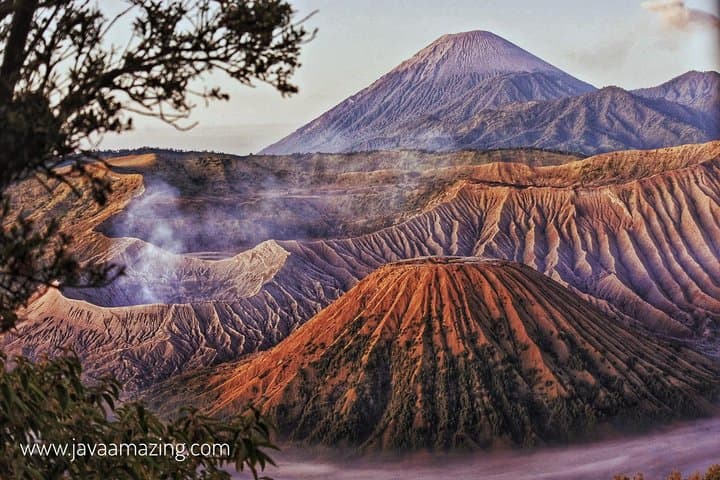
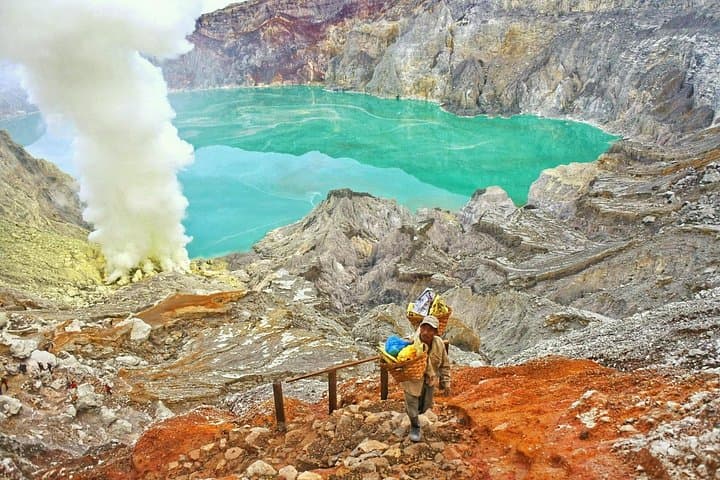
At 03:30 a 4WD cuts through black sand toward a rim of light; the sky above Mount Bromo blanches to pink while wind pushes grit across the plain. Travelers arrive before dawn at Penanjakan, watch the sun pry itself from the crater line, then ride across a lunar sea to Bromo’s smoking caldera. Later, after an overnight transfer toward Banyuwangi, hikers set off in the small hours for Ijen, where the crater’s electric blue flames still the breath and sulfur miners shoulder luminescent loads.
Verified experiences and guided adventures in the surrounding area.
Operated by Java Amazing · Surabaya, East Java
At 03:30 a 4WD cuts through black sand toward a rim of light; the sky above Mount Bromo blanches to pink while wind pushes grit across the plain. Travelers arrive before dawn at Penanjakan, watch the sun pry itself from the crater line, then ride across a lunar sea to Bromo’s smoking caldera. Later, after an overnight transfer toward Banyuwangi, hikers set off in the small hours for Ijen, where the crater’s electric blue flames still the breath and sulfur miners shoulder luminescent loads.
Geology here is active and immediate: Bromo and Ijen are young members of the Tengger massif and the Ijen volcanic complex, respectively — both shaped by repeated eruptions and the slow lifting of Java’s volcanic arc. The Tenggerese people maintain cultural ties to Bromo with periodic offerings at the crater; Ijen carries the human story of traditional sulfur extraction by hand.
Expect steep, uneven trails, coarse volcanic sand, and sharp sulfur fumes near Ijen’s rim — guides provide gas masks, but olfactory irritation is common. Plan for temperature swings: pre-dawn cold at higher elevations and intense sun on the caldera floor.
Practical notes: pace your hikes (Ijen is a steep 2–3 hour ascent from base), carry 2 liters of water, warm layers and a reliable headlamp, and use a mask when sulfur levels rise. Start hikes well before sunrise to avoid crowds and to see the blue fire and golden light at their best. Respect miners and local customs; stay on trails and pack out waste to minimize impact.
challenging.
3 days.
Suitable for travelers with good cardiovascular fitness; able to hike 2–3 hours on steep, uneven terrain and tolerate early-morning starts.
This is a challenging itinerary: early starts, a jeep crossing of sandy caldera and a steep 2–3 hour ascent at Ijen. Travelers should have moderate to good fitness.
Blue fire is visible at night but depends on wind and sulfur activity; starting the hike very early increases odds of seeing it before sunrise.
Yes — the tour provides basic gas masks for Ijen, but carrying a higher-quality reusable mask is recommended for sensitive noses.
The tour includes 4WD for Bromo, transfers between sites, and a ferry ticket from Java to Bali as listed in the inclusions.
Bromo is central to the Tenggerese culture with continuing ritual offerings; Ijen’s rim has been mined for sulfur for generations, a difficult hand-labor tradition.
Tourism and artisanal sulfur mining stress fragile crater ecosystems — stay on paths, avoid litter, and follow guides to minimize impact.
Java Amazing operates guided outdoor trips and adventures with an emphasis on safety, stewardship, and memorable experiences.
At 03:30 a 4WD cuts through black sand toward a rim of light; the sky above Mount Bromo blanches to pink while wind pushes grit across the plain. Travelers arrive before dawn at Penanjakan, watch the sun pry itself from the crater line, then ride across a lunar sea to Bromo’s smoking caldera. Later, after an overnight transfer toward Banyuwangi, hikers set off in the small hours for Ijen, where the crater’s electric blue flames still the breath and sulfur miners shoulder luminescent loads.
At 03:30 a 4WD cuts through black sand toward a rim of light; the sky above Mount Bromo blanches to pink while wind pushes grit across the plain. Travelers arrive before dawn at Penanjakan, watch the sun pry itself from the crater line, then ride across a lunar sea to Bromo’s smoking caldera. Later, after an overnight transfer toward Banyuwangi, hikers set off in the small hours for Ijen, where the crater’s electric blue flames still the breath and sulfur miners shoulder luminescent loads.
Geology here is active and immediate: Bromo and Ijen are young members of the Tengger massif and the Ijen volcanic complex, respectively — both shaped by repeated eruptions and the slow lifting of Java’s volcanic arc. The Tenggerese people maintain cultural ties to Bromo with periodic offerings at the crater; Ijen carries the human story of traditional sulfur extraction by hand.
Expect steep, uneven trails, coarse volcanic sand, and sharp sulfur fumes near Ijen’s rim — guides provide gas masks, but olfactory irritation is common. Plan for temperature swings: pre-dawn cold at higher elevations and intense sun on the caldera floor.
Practical notes: pace your hikes (Ijen is a steep 2–3 hour ascent from base), carry 2 liters of water, warm layers and a reliable headlamp, and use a mask when sulfur levels rise. Start hikes well before sunrise to avoid crowds and to see the blue fire and golden light at their best. Respect miners and local customs; stay on trails and pack out waste to minimize impact.