THE ADVENTURE COLLECTIVE® · Independent discovery and booking for outdoor travel

Walk through two millennia of art and archaeology with an expert guide at the British Museum. From the Rosetta Stone to Parthenon marble and Easter Island’s moai, this two-hour tour highlights objects that changed how we understand the past.
Walk through two millennia of art and archaeology with an expert guide at the British Museum. From the Rosetta Stone to Parthenon marble and Easter Island’s moai, this two-hour tour highlights objects that changed how we understand the past.
You step through the museum’s grand portico and the city’s noise thins to a hum—stone and light take over. The guide leads you into the Enlightenment Gallery, where cabinets and glass cases hold objects that once rearranged the world’s ideas; the room itself reads like a map of collecting culture.
Verified experiences and guided adventures in the surrounding area.
Operated by The Heritage Guide · London, England
You step through the museum’s grand portico and the city’s noise thins to a hum—stone and light take over. The guide leads you into the Enlightenment Gallery, where cabinets and glass cases hold objects that once rearranged the world’s ideas; the room itself reads like a map of collecting culture.
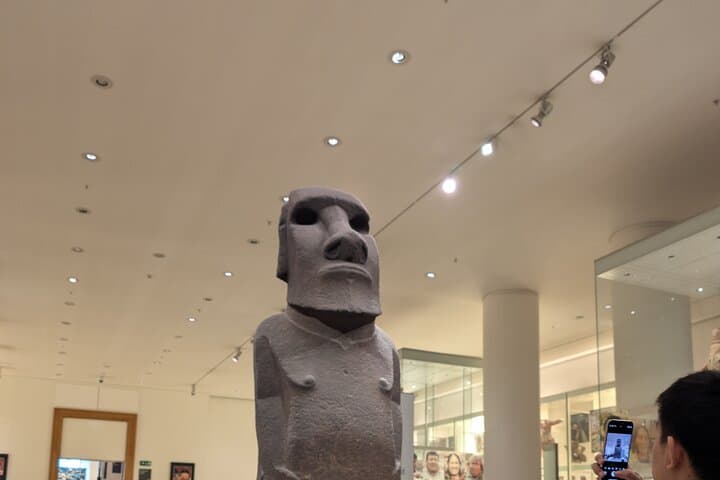
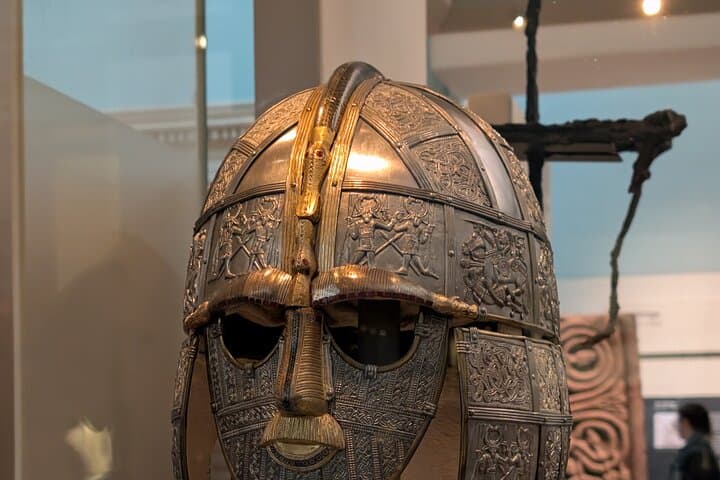
Ancient languages, imperial marbles and glazed terracotta sit side by side. The Rosetta Stone still demands attention: a hard, weathered slab that unlocked Egyptian script. The Parthenon Sculptures show the tensile grace of carved marble after 2,500 years, while the Easter Island moai Hoa Hakananai'a, sculpted from basalt, holds a compact, volcanic presence. Tang dynasty tomb figures bring glazed color and ceramic finesse; Sutton Hoo’s metalwork whispers of Anglo-Saxon courts. These objects are shorthand for broad histories—the museum was founded in 1753 from collectors’ cabinets and built around the Enlightenment pursuit of knowledge.
Practicalities follow the reverence. Tours run about two hours and cover several rooms—expect a steady walk, frequent stops for interpretation, and security screening at entry. Photography is usually allowed without flash, but special exhibits can restrict images. The museum is wheelchair accessible with lifts and a cloakroom for larger bags. Arrive early or late afternoon to avoid the peak flow between 11:00–15:00. Bring comfortable shoes, a light layer for climate-controlled galleries, and a water bottle (there are cafés and water stations). Allow time afterward to linger in the museum’s less-visited rooms or step out to Bloomsbury’s quiet squares to let the artifacts’ voices settle before you move on.
easy.
2 hours.
Suitable for all fitness levels—requires walking on flat indoor floors and standing for short interpretive stops.
Yes—your guide stops at the Rosetta Stone and provides context about its inscriptions and significance.
The tour’s cancellation policy allows a full refund if you cancel at least 24 hours prior; check your booking confirmation for specifics.
Yes—the British Museum has step-free access, lifts between floors, accessible toilets, and staff assistance available on request.
Non-flash, non-commercial photography is normally permitted in permanent galleries, but the guide will alert you to any restricted displays.
The British Museum opened in 1759 from collections including Sir Hans Sloane’s cabinet and expanded through global collecting during the 18th and 19th centuries; the Enlightenment Gallery preserves that early collecting ethos.
Galleries are climate-controlled to preserve fragile materials, and the museum participates in provenance research and ongoing public discussions about repatriation and ethical collecting.
The Heritage Guide operates guided outdoor trips and adventures with an emphasis on safety, stewardship, and memorable experiences.
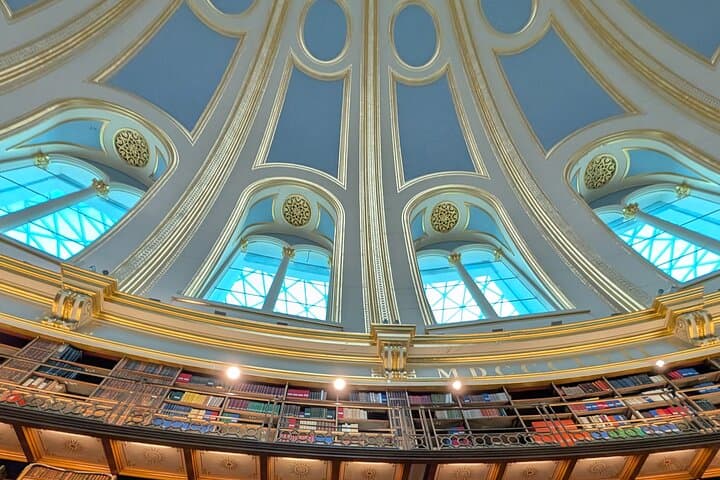
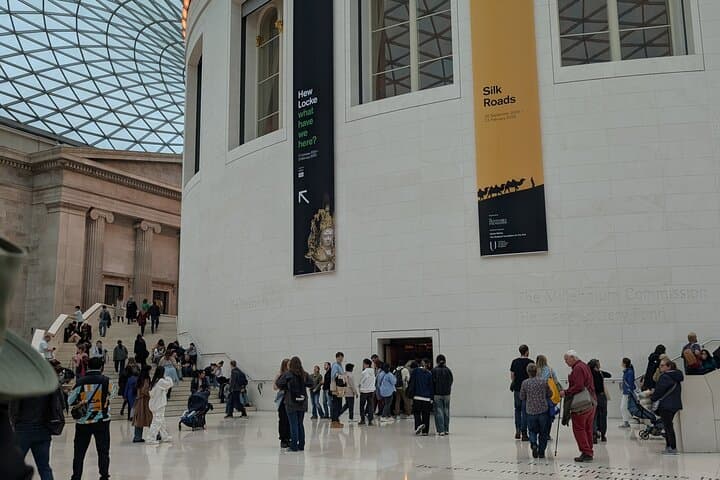
You step through the museum’s grand portico and the city’s noise thins to a hum—stone and light take over. The guide leads you into the Enlightenment Gallery, where cabinets and glass cases hold objects that once rearranged the world’s ideas; the room itself reads like a map of collecting culture.
You step through the museum’s grand portico and the city’s noise thins to a hum—stone and light take over. The guide leads you into the Enlightenment Gallery, where cabinets and glass cases hold objects that once rearranged the world’s ideas; the room itself reads like a map of collecting culture.
Ancient languages, imperial marbles and glazed terracotta sit side by side. The Rosetta Stone still demands attention: a hard, weathered slab that unlocked Egyptian script. The Parthenon Sculptures show the tensile grace of carved marble after 2,500 years, while the Easter Island moai Hoa Hakananai'a, sculpted from basalt, holds a compact, volcanic presence. Tang dynasty tomb figures bring glazed color and ceramic finesse; Sutton Hoo’s metalwork whispers of Anglo-Saxon courts. These objects are shorthand for broad histories—the museum was founded in 1753 from collectors’ cabinets and built around the Enlightenment pursuit of knowledge.
Practicalities follow the reverence. Tours run about two hours and cover several rooms—expect a steady walk, frequent stops for interpretation, and security screening at entry. Photography is usually allowed without flash, but special exhibits can restrict images. The museum is wheelchair accessible with lifts and a cloakroom for larger bags. Arrive early or late afternoon to avoid the peak flow between 11:00–15:00. Bring comfortable shoes, a light layer for climate-controlled galleries, and a water bottle (there are cafés and water stations). Allow time afterward to linger in the museum’s less-visited rooms or step out to Bloomsbury’s quiet squares to let the artifacts’ voices settle before you move on.