THE ADVENTURE COLLECTIVE® · Independent discovery and booking for outdoor travel

A private 2.5-hour walkthrough of the British Museum highlights the Rosetta Stone, Egyptian mummies, Parthenon sculptures and Sutton Hoo finds with an expert guide. This practical guide explains what you’ll see, how to plan your visit, and lesser-known spots worth lingering at.
A private 2.5-hour walkthrough of the British Museum highlights the Rosetta Stone, Egyptian mummies, Parthenon sculptures and Sutton Hoo finds with an expert guide. This practical guide explains what you’ll see, how to plan your visit, and lesser-known spots worth lingering at.
You step up the stone steps into a vast glass-roofed atrium where the murmur of visitors threads between cases of ancient stone and metal. The air carries the cool, dry scent of old stone and packing foam; cases reflect marble faces that have seen millennia. A private guide draws a line through time—Rosetta Stone, Egyptian mummies, Parthenon sculpture—each object a hinge in a long story.
Verified experiences and guided adventures in the surrounding area.
Operated by Fun London Cultural Tours · London, England
You step up the stone steps into a vast glass-roofed atrium where the murmur of visitors threads between cases of ancient stone and metal. The air carries the cool, dry scent of old stone and packing foam; cases reflect marble faces that have seen millennia. A private guide draws a line through time—Rosetta Stone, Egyptian mummies, Parthenon sculpture—each object a hinge in a long story.
Founded from Sir Hans Sloane’s 18th-century collection, the British Museum now houses roughly eight million objects. Its galleries map human movement: Mesopotamian cylinder seals, Persian treasure, Anglo-Saxon regalia like the Sutton Hoo helmet, and the fragments of the Mausoleum at Halicarnassus. Geology and materiality matter here—marble chips from Athens, basalt reliefs from Assyria, and goldwork whose surfaces still catch the light.
The collection’s scope carries cultural complexity: imperial-era collecting practices sit beside modern debates about provenance and repatriation. Your guide will likely address those conversations while explaining conservation work visible in on-site labs.
Practical side: plan 2–3 hours for a private highlights tour; reserve in advance to guarantee your slot and tailor the route to interests. The museum is largely wheelchair accessible and photography is usually permitted without flash or tripods—watch for signage around sensitive objects. Mornings on weekdays are quieter; special exhibitions often require paid tickets even though general admission is free. Carry a charged phone, wear comfortable shoes, and allow a buffer to browse shop books or use the cloakroom. A guided private visit turns an overwhelming collection into a coherent sequence of moments—clear, context-rich, and tuned to what you want to see.
easy.
2–3 hours.
Suitable for general mobility; involves standing and walking on level and stair surfaces for up to 2–3 hours.
General admission to the British Museum is free; the private tour fee covers the guide service—special exhibitions may require separate paid tickets.
The standard private tour runs about 150 minutes and can be tailored to focus on Egyptology, Greece, Mesopotamia, or other topics—state preferences when booking.
Yes. Most galleries, entrances and restrooms are wheelchair accessible; notify the guide of mobility needs so they can plan accessible routes.
Photography is generally allowed for personal use without flash or tripods, but check gallery signage and exhibition rules as some items have restrictions.
Established from Sir Hans Sloane’s 18th-century collection, the museum opened in 1759 and grew into a global repository of antiquities collected over centuries.
The museum hosts active conservation labs and research programs; visitors are encouraged to respect signage and avoid touching objects to support long-term preservation.
Fun London Cultural Tours operates guided outdoor trips and adventures with an emphasis on safety, stewardship, and memorable experiences.
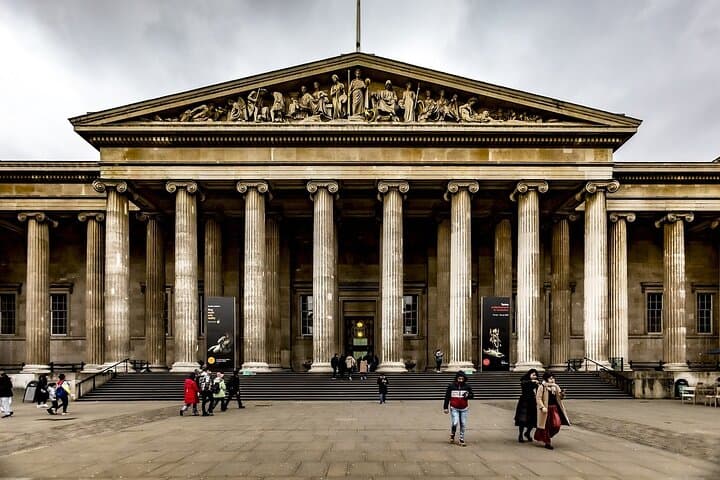
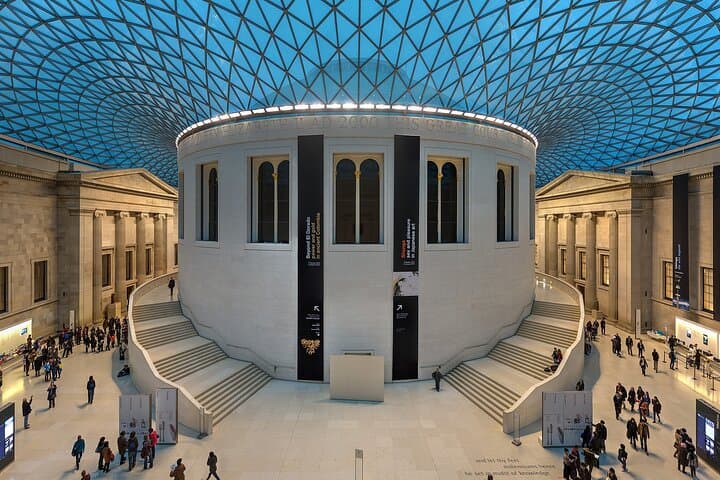
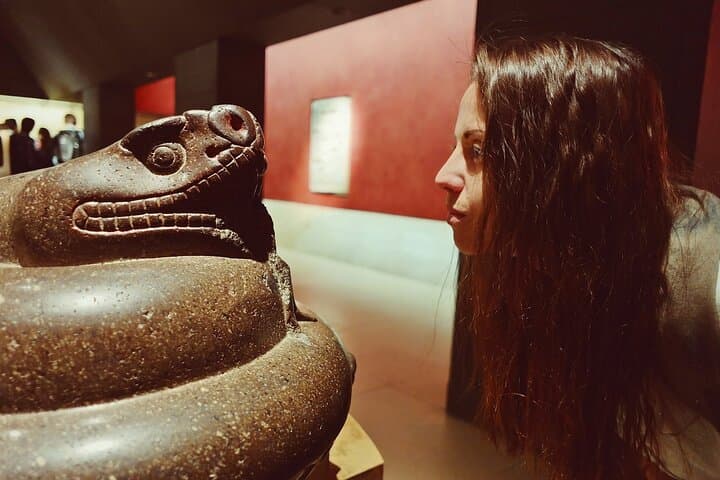
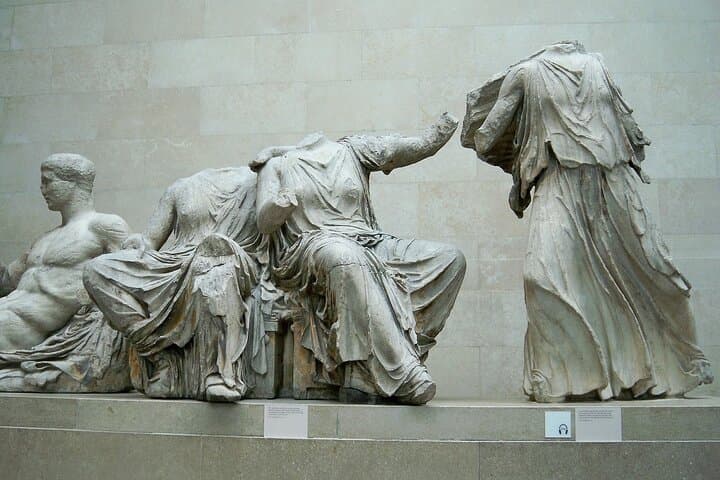
You step up the stone steps into a vast glass-roofed atrium where the murmur of visitors threads between cases of ancient stone and metal. The air carries the cool, dry scent of old stone and packing foam; cases reflect marble faces that have seen millennia. A private guide draws a line through time—Rosetta Stone, Egyptian mummies, Parthenon sculpture—each object a hinge in a long story.
You step up the stone steps into a vast glass-roofed atrium where the murmur of visitors threads between cases of ancient stone and metal. The air carries the cool, dry scent of old stone and packing foam; cases reflect marble faces that have seen millennia. A private guide draws a line through time—Rosetta Stone, Egyptian mummies, Parthenon sculpture—each object a hinge in a long story.
Founded from Sir Hans Sloane’s 18th-century collection, the British Museum now houses roughly eight million objects. Its galleries map human movement: Mesopotamian cylinder seals, Persian treasure, Anglo-Saxon regalia like the Sutton Hoo helmet, and the fragments of the Mausoleum at Halicarnassus. Geology and materiality matter here—marble chips from Athens, basalt reliefs from Assyria, and goldwork whose surfaces still catch the light.
The collection’s scope carries cultural complexity: imperial-era collecting practices sit beside modern debates about provenance and repatriation. Your guide will likely address those conversations while explaining conservation work visible in on-site labs.
Practical side: plan 2–3 hours for a private highlights tour; reserve in advance to guarantee your slot and tailor the route to interests. The museum is largely wheelchair accessible and photography is usually permitted without flash or tripods—watch for signage around sensitive objects. Mornings on weekdays are quieter; special exhibitions often require paid tickets even though general admission is free. Carry a charged phone, wear comfortable shoes, and allow a buffer to browse shop books or use the cloakroom. A guided private visit turns an overwhelming collection into a coherent sequence of moments—clear, context-rich, and tuned to what you want to see.